Australia logs first H5N1 mammal case as rare-earths fight for environmental footing
Canberra confirmed H5N1 in a local mammal on 23 August 2026. Days earlier, Nikkei asked who pays for the environmental cost of Australia's rare-earths push beyond China.
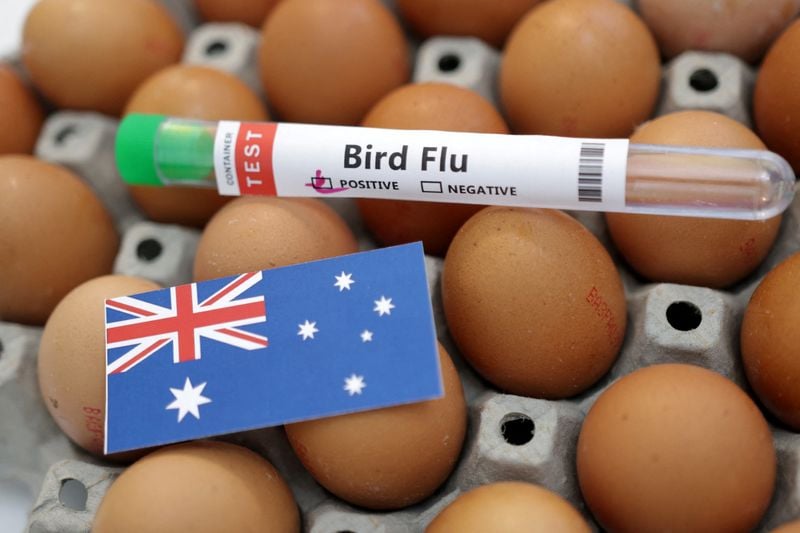
Australia confirmed its first H5N1 avian influenza detection in a local mammal on 23 August 2026, according to a wire carried by Investing.com, a finding that places a second biosecurity burden on a country already trying to pivot its mining sector away from Chinese dominance. The detection lands in the same news cycle as a Nikkei Asia examination of who shoulders the environmental cost of Australia's rare-earths build-out, a question the two stories are likely to be read alongside for the rest of the week.
The parallel is uncomfortable for Canberra. The government wants to be both a responsible supplier of critical minerals outside China and a regional health actor that manages zoonotic risk without drama. Both ambitions require trust in Australian regulatory institutions. Neither is free of cost.
The detection, and what was confirmed
Per Investing.com's 23 August 2026 dispatch, Australian authorities have confirmed a first case of H5N1 in a local mammal. The wire did not specify the species, the jurisdiction, or whether the animal was on a commercial property. The available source items do not specify the mammal, the location within Australia, or the clinical circumstances of the detection. That is a normal posture for early bulletins; it is also the reason the headline number, "first mammal case," carries weight.
H5N1 has circulated globally in wild birds, poultry and, more recently, dairy cattle. Each mammalian spillover is treated as a signal rather than an emergency. The Australian confirmation puts the country on the same operating list as the United States, parts of Europe and increasingly South America, where the lineage has been moving through livestock and marine mammals over the past two years. The detection's significance is not that it changes the regional risk calculus overnight; it is that Australia now sits inside an active continental surveillance regime rather than watching one from outside.
The rare-earths question Nikkei put on the table
On 22 August 2026, Nikkei Asia published a piece running under the framing, "Who bears environmental cost of push for rare earths beyond China?" The Telegram relay of the article's opening lays out the trade clearly: as Australia courts buyers looking to diversify away from Chinese supply, the question of whether those buyers will share the environmental burden of expanded extraction is now the live commercial question, not a footnote.
This is the part the policy marketing tends to skip past. "Responsible supplier" is a marketing phrase until the auditor shows up. Rare-earth processing in particular is water-intensive and produces tailings that are difficult to rehabilitate. If Australian ore replaces Chinese ore at scale, the planet-relevant footprint moves with the cargo. The structural argument the Nikkei framing implies is straightforward: the more Australia pitches itself as the alternative to a constrained supplier, the more it inherits the politics that constrained supplier had to manage at home. Tailings management, community consent on country, and the carbon bill for downstream separation become items on the buyer's procurement checklist, not the seller's CSR report.
The Chinese counter-position is also worth registering plainly. Beijing's dominance of mid-stream separation and oxide production emerged because the environmental cost was, for two decades, absorbed inside China's regulatory perimeter. The argument advanced by Chinese industry voices is that proposed Western substitutes must now absorb costs China once carried invisibly, and that buyers are asking for a discount without offering to subsidise the difference. That framing has weight; it is also the reason "China-plus-one" procurement strategies have moved more slowly than the press releases suggest.
Two stories, one credibility ledger
Monexus analysis: the detection and the rare-earths question are linked in a way that is not obvious from either headline. Both tests run through the same credibility ledger. A country that wants to be trusted with a continent's pathogens and with the ores that move the energy transition has to keep both regulatory regimes sharp at once. The first mammal case will be examined by veterinarians, by trading partners, and by a domestic audience that does not separate biosecurity failures from political ones. The rare-earths expansion will be examined by export-credit agencies, by downstream manufacturers in Japan and Europe, and by Indigenous communities whose consent has become a precondition for new project approvals across multiple jurisdictions.
The plain-language version of the structural frame: extractive industries and biological risk both externalise until they cannot. The countries that survive the next decade are the ones that figure out how to internalise both before the market forces the issue.
Stakes and what to watch
Three things matter over the next month. First, the species and setting of the H5N1 detection. A feral animal or a wild marine mammal is a different operational story from a dairy herd or a commercial poultry site; the surveillance response scales accordingly. Second, the Australian government's posture on tailings rehabilitation and water licensing as the next tranche of critical-minerals approvals clears federal and state review. Third, the price and contract structure of the rare-earths deals being negotiated with Japanese and Korean offtakers. Whether buyers accept a premium tied to verifiable environmental performance is the proxy for whether "responsible supplier" remains a phrase or becomes an audited line item.
The harder, unresolved question is whether the environmental cost can be priced in at all. Tailings, biodiversity offsets and rehabilitation bonds can be quantified; consent is harder to underwrite. Until that piece is solved in plain English on the page, both stories will keep surfacing in the same news cycle.
Desk note: Monexus framed the H5N1 wire and the Nikkei rare-earths brief as parallel credibility tests, both legible through the same regulatory ledger. The available source items do not specify the mammal species, location, or commercial impact of the Australian detection; the piece leaves those gaps marked rather than filled.
Wire provenance
This editorial synthesis draws on the following public wire/social posts:
- https://www.investing.com/news/world-news/australia-confirms-first-h5n1-bird-flu-case-in-local-mammal-4872413
- https://t.me/NikkeiAsia/21428
- https://t.me/nikkeiasia/21428