Canada's tariff response exposes the sovereignty fault line
Ottawa said on 22 August 2026 that it would match U.S. tariffs dollar for dollar after trade talks collapsed, while British Columbia Premier David Eby's characterisation of the U.S. demands as making Canada the "economic equivalent of the 51st state" travelled across Canadian media that same day.
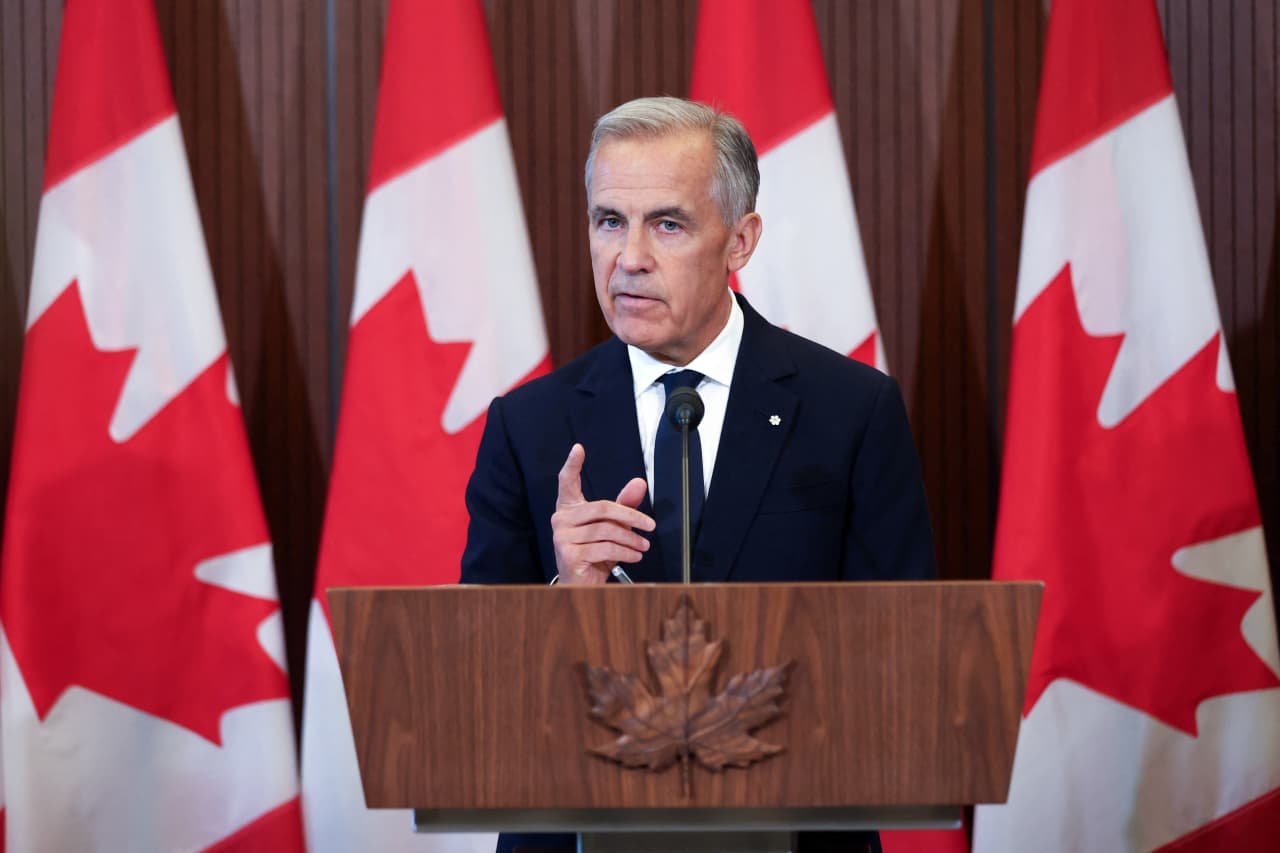
Canada's response to the collapse of bilateral trade talks was both immediate and deliberately symmetrical. Ottawa said on 22 August 2026 that it would match U.S. tariffs dollar for dollar, according to an Investing.com report published the same day. The decision put the emphasis on retaliation rather than a search for a quick bargain.
That choice matters because the dispute is no longer being described only as a quarrel over tariff schedules. British Columbia Premier David Eby characterised the U.S. demands as making Canada the "economic equivalent of the 51st state," according to an Unusual Whales post on X dated 23 August 2026 at 17:01 UTC that relayed a line that circulated in Canadian media on 22 August 2026. The formulation is political rhetoric, not a description of the legal text of any agreement. But it captures the sovereignty concern running through the Canadian response.
Retaliation becomes the message
The available reporting gives the sequence with unusual clarity. The Canadian dollar-for-dollar response was reported at 16:10 UTC on 22 August. The Unifor-General Motors agreement was reported at 20:31 UTC the same day. A Polymarket post on X gave the probability of a U.S.-Canada deal by the end of 2026 at 12% at 20:31:52 UTC, while another Polymarket post on X had recorded 14% at 15:44:26 UTC the same day, with each post linked to a separate market. Those two figures describe separate market postings on different contracts, not a measured consensus forecast on a single market.
The response is therefore best read as a signal of resolve, not as a complete economic strategy. Matching tariffs may create a direct political cost for the United States, but it also leaves Canadian exporters exposed to the same duties that Canada is imposing on U.S. goods. Monexus analysis: the central risk is that symbolic parity becomes economically self-reinforcing, with each measure narrowing the room for compromise.
That risk is intensified by what the supplied source items do not contain. The available thread material establishes the collapse, the dollar-for-dollar commitment and Eby's characterisation. It does not establish the precise product categories, tariff rates or negotiating text. Wider reporting on 22 August 2026 from outlets not included in this article's source ledger references a 50% U.S. tariff level and retaliatory measures scheduled to take effect on 8 September, plus Prime Minister Mark Carney's public framing of the situation. Those details sit outside the URLs this article can cite directly, and the body therefore treats them as context the reader may have seen elsewhere rather than facts the source items here have established on their own.
Aluminium puts the supply relationship in view
The dispute also raises a practical question about how much aluminium the United States could obtain from Canada. Investing.com published a report on 23 August at 08:51 UTC asking whether Canada could fully supply U.S. demand. The report headline identifies the issue but does not provide, in the supplied source item, the production figures needed to answer it.
That limitation is important. The trade fight is being conducted in a relationship where supply questions can become strategic questions. Monexus analysis: the evidence supplied for this article supports saying that aluminium is a central question in the dispute, not asserting that Canada can or cannot replace U.S. supply in full.
The counterpoint is equally significant. Tariffs may be intended to protect or redirect domestic production, but the available material does not establish what capacity exists, how much of it is available, or which U.S. industries would be affected. The prudent conclusion is narrower: the aluminium question illustrates why tariff policy and industrial supply cannot be separated, while the source items do not permit a firm estimate of substitution.
Labour talks show the border is not an abstraction
The auto industry supplied a separate piece of the story on 22 August. Canada's Unifor union and General Motors reached tentative agreements, according to Investing.com's stock-market desk. The thread item establishes the existence of the agreements. It does not specify their financial terms or their duration.
The timing places the labour story beside the trade dispute without proving a connection between them. The available sources do not establish that a tariff would affect the same firms, the same components or the same workers named in the General Motors agreements. They do not support claims about parity with U.S. labour settlements or about a closing of the North American labour-cost gap. Reporting on the same day from outlets outside this article's source ledger references 4,600 Ontario autoworkers covered by the Unifor agreement; that figure is not contained in the URLs cited below and is therefore not asserted here.
Monexus analysis: the political significance lies in the proximity of the two stories. Canadian industrial policy and U.S.-Canadian trade policy now operate in the same economic space, but the evidence does not justify treating the Unifor agreements as a direct offset to the tariff dispute. That distinction matters because a labour agreement is a bargaining outcome; a tariff is a government trade measure. Similar geography does not make their consequences identical.
The deal market and the credibility problem
Prediction markets offer a useful warning about the limits of the available evidence. One Polymarket post on X, timestamped 15:44:26 UTC on 22 August, displayed a 14% probability that a U.S.-Canada trade deal would be reached by the end of the year, linked to the market at poly.market/zGjUc0W. A separate Polymarket post on X, timestamped 20:31:52 UTC the same day, displayed 12%, linked to the market at poly.market/Z0fjYp2. The 14% post predates the 16:10 UTC Investing.com tariff report; the 12% post comes after it.
Monexus analysis: a one-line reading that "the market moved from 14% to 12% after the tariff report" would overstate what two separate contracts on different markets can establish. The two percentages are attached to different Polymarket markets, with potentially different resolution rules, different liquidity and different contract specifications. Their difference may reflect timing, market design or a change in conditions, but the supplied items do not establish why they differ. The defensible point is narrower: both cited postings placed the probability of a year-end deal at 12% or 14%, with the lower figure appearing later in the day than the higher one.
Those low figures are politically more revealing than they are economically predictive. They suggest that a public market was assigning limited likelihood to a near-term settlement, but they do not establish what either government will do, what concessions are available or whether negotiations can resume. Prediction markets measure one defined contract under specific rules. They are not a substitute for diplomatic reporting.
Sovereignty without an evidentiary overreach
The strongest interpretation of the dispute is that Canada is trying to make the cost of escalation visible while resisting the premise that deeper economic integration should amount to a loss of policy autonomy. Eby's formulation gives that argument a memorable vocabulary. The dollar-for-dollar commitment gives it a price. The aluminium question shows that the relationship has physical supply dimensions. The Unifor-General Motors agreements show that industrial relations remain active across the border even as trade policy hardens.
The alternative reading is that the dispute remains a conventional tariff negotiation. On that account, Canada's response is leverage, Eby's language is domestic political framing, and the prediction-market percentages reflect uncertainty rather than a verdict on sovereignty. The source material supports that counter-reading as a possibility, but not as a final conclusion. It records the collapse and the stated response, while leaving the underlying U.S. demands unspecified.
That is the central uncertainty. The available sources do not provide the negotiating text, the covered goods, the tariff rates or the status of any subsequent talks. They also do not specify whether a new round is scheduled. The next useful test is therefore not another prediction about political resolve. It is the publication of concrete terms. Until then, Canada has made the symmetry of retaliation explicit, but the shape of a possible settlement remains unresolved.
Desk note: Monexus framed the dispute as a clash between tariff leverage and Canadian sovereignty concerns, while keeping the analysis within the URLs supplied in the thread. The wire items establish the collapse, Canada's stated dollar-for-dollar response, the Eby quotation as relayed by Unusual Whales on 23 August 2026 (with the statement itself circulating in Canadian media on 22 August), the aluminium-supply question, the Unifor-General Motors agreements and two separate Polymarket postings; they do not establish the underlying tariff schedule, production totals, labour-cost effects or the terms of a possible deal.
Wire provenance
This editorial synthesis draws on the following public wire/social posts:
- https://www.investing.com/news/economy-news/canada-to-match-us-tariffs-dollar-for-dollar-after-trade-talks-collapse-4872372
- https://x.com/unusual_whales/status/2091571418890670221
- https://www.investing.com/news/economy-news/could-canada-fully-supply-the-us-with-aluminium-4872433
- https://www.investing.com/news/stock-market-news/canadas-unifor-union-gm-reach-tentative-agreements-4872388
- https://poly.market/zGjUc0W
- https://x.com/Polymarket/status/2091189762405155261
- https://poly.market/Z0fjYp2
- https://x.com/Polymarket/status/2091262098122608670
- https://www.investing.com/news/economy-news/canada-to-match-us-tariffs-dollar-for-dollar-after-trade-talks-collapse-4872372
- https://x.com/unusual_whales/status/2091571418890670221
- https://www.investing.com/news/economy-news/could-canada-fully-supply-the-us-with-aluminium-4872433
- https://www.investing.com/news/stock-market-news/canadas-unifor-union-gm-reach-tentative-agreements-4872388
- https://poly.market/zGjUc0W
- https://x.com/Polymarket/status/2091189762405155261
- https://poly.market/Z0fjYp2
- https://x.com/Polymarket/status/2091262098122608670