Ghalibaf's boomerang: Tehran bets its economic pain narrative on US fatigue
Iran's parliament speaker warns Trump's economic war will recoil on the US. The claim is loud; the underlying economic signal is harder to read.
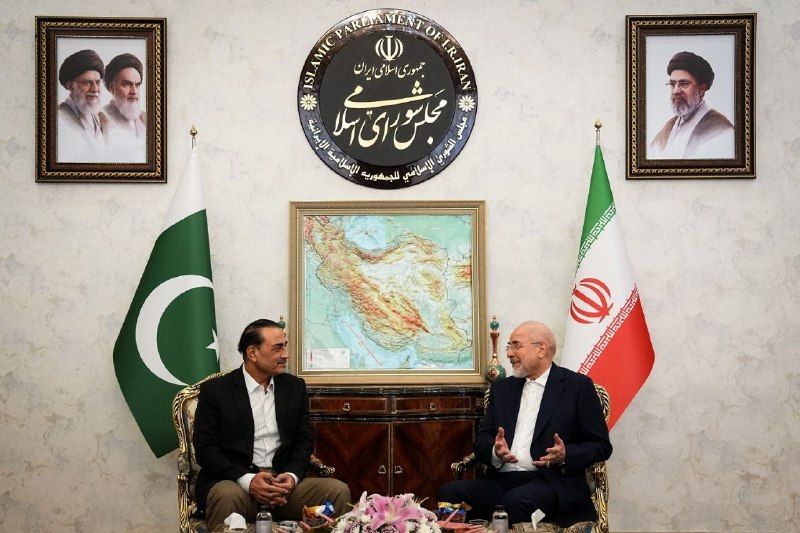
On 23 August 2026, Iran's parliament speaker Mohammad Bagher Ghalibaf took to X and to the cameras with a single, repeating warning: Donald Trump's new campaign to isolate Iran economically, he said, would "boomerang" on the United States. Within an hour, Press TV and IRNA English had syndicated the line in two slightly different formulations. One called it "Trump's economic terrorism." The other called it "Trump's economic war." The substance was identical: the cost of squeezing Tehran, Ghalibaf argued, would come back to bite Washington.
That is the framing Tehran wants the world to hear. The more interesting question is whether the Iranian economy has anything close to the retaliatory leverage the metaphor implies, or whether this is rhetoric designed to do a different job entirely: talk down rial pressure, give a nervous middle class a story, and signal to Beijing and Moscow that Iran's leadership is not the weak link.
The line, and what it actually claims
Ghalibaf's posts, as carried by Press TV and IRNA, make a tight, two-part argument. First, that the Trump administration has escalated economic pressure on Iran rather than de-escalated it. Second, that this escalation will recoil on the US economy. The "boomerang" is doing all the rhetorical work. It implies causation: action A in Washington produces pain B in Washington. There is no number attached, no specific channel named, no timeframe given. The available source items contain only the quote, not the underlying economic data it gestures at.
That absence matters. A boomerang, in trade and sanctions talk, usually refers to one of three things: higher oil prices that hit US consumers at the pump; a payments system shock that ripples through dollar-clearing banks; or a counter-block from China and Russia that redirects trade flows away from US-aligned rails. Ghalibaf did not specify which.
The structural reading
Monexus analysis: the more honest read is that this is a domestic-audience signal dressed in foreign-policy clothing. Iran's rial has been under pressure for the better part of two years. Sanctions enforcement is uneven, but the gap between the official and the bazaar rate tells you what ordinary Iranians already think about the regime's negotiating position. A speaker telling the public that the US is the one being hurt is, in that context, doing what speakers do everywhere: managing expectations.
There is also a diplomatic register. Iran is mid-negotiation, in some form, with Washington over sanctions relief and nuclear constraints. Publicly conceding economic strain would weaken the hand of negotiators. Publicly claiming the US is the loser costs Tehran nothing at the table, because the audience for the claim is not the US side.
Where the boomerang could land
The case for the metaphor is not zero. Two channels are genuinely available. Oil markets remain the obvious one. A serious disruption to Iranian exports, or a serious threat of one, would tighten a global market already running close to spare-capacity limits in 2026. US drivers would not be insulated from that. The second channel is secondary sanctions enforcement on Chinese refiners and the UAE-based traders who quietly handle Iranian crude. If those flows are choked off, the adjustment happens inside Asian refineries, but the price still shows up at the wholesale level.
What the available reporting does not establish is whether either channel is currently active, or whether Ghalibaf is describing a policy that has not yet been implemented. The Press TV and IRNA dispatches do not specify.
The counter-narrative
The alternative read is that Tehran is buying time. Sanctions fatigue in Washington is real, and not evenly distributed across the political class. But economic pain in Iran is documented, not hypothetical, and is concentrated in ways that foreign-policy rhetoric cannot relieve. Ghalibaf's own X account, in a separate post on the same day, mocks the government's reliance on frozen-meat imports to control consumer prices. That is a leaked signal: the speaker himself is acknowledging, in the same news cycle, that the domestic pressure he claims the US is suffering is, in fact, a problem Iran is trying to manage with import substitution and price controls.
What to watch
Two things, in order. First, whether the Iranian rial steadies, weakens, or spikes over the next 30 days; the FX market will tell you faster than any statement whether Ghalibaf's rhetoric landed. Second, whether Chinese refiners and the UAE trading hubs quietly reduce Iranian lifts in September, as some Western tracking has begun to suggest; that would be the cleanest single indicator of how seriously the "maximum pressure" campaign is biting.
Until either moves, the boomerang is a slogan, not a result. Tehran's speakers are entitled to deploy it. Western readers are entitled to notice that the Iranian leadership's own public messaging, on the same day, tells a more complicated story.
How this publication framed this: the available source items on Ghalibaf are two Iranian state outlets (Press TV, IRNA English) and one third-party channel (War/Foreign Witness) carrying his X post. We carried the claim on its own terms, then weighed it against a second, less public post from the same speaker that points the other way.
Wire provenance
This editorial synthesis draws on the following public wire/social posts:
- https://t.me/presstv/203921
- https://t.me/Irna_en/38408
- https://t.me/wfwitness/108017