Iran warns of 'tit-for-tat' response as Washington readies new sanctions and Hormuz talks stall
Tehran has warned countries joining Washington's economic offensive of retaliation, while two US tanker aircraft pulled out of Bulgaria and Iraqi tankers were granted selective passage through Hormuz.
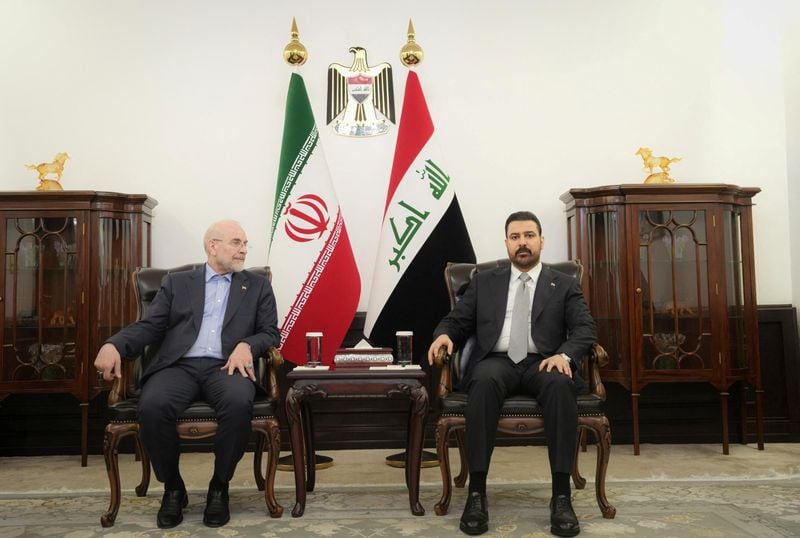
At 23:56 UTC on 22 August 2026, Al Jazeera's breaking-news feed carried an Iranian warning that any country joining what state-linked media are calling the United States' "economic D-Day" against Tehran would face "tit-for-tat" retaliation. The threat, framed in Tehran's own language, came hours after Tehran publicly condemned US preparations for a new sanctions package and as two US Air Force tanker aircraft departed their temporary base in Bulgaria, roughly a month after their deployment had drawn Iranian protests.
The sequence reads as a single coordinated message. Washington is tightening. Tehran is signalling that the next move will not be absorbed quietly, and that pressure will travel outward through Iran's neighbours, its oil customers, and its sanctions-bypass networks. The signal is directed less at Washington, which already expects hostility, than at the governments now being asked to choose a side.
The warning, and what it points at
Iran's warning, as aired by Al Jazeera at 23:56 UTC on 22 August, is not a doctrinal document. It is an attempt to set the cost of compliance for third-party governments before US secondary sanctions are formally announced. Iranian state-aligned messaging has used the "economic D-Day" framing repeatedly in recent weeks, paired with the threat that states signing onto US enforcement architecture will be treated as participants in the economic war. South China Morning Post's coverage of Iran's condemnation, published at 21:25 UTC, frames the new sanctions package as the immediate trigger. The Investing.com commodities desk reported the same Tehran condemnation earlier in the day at 17:18 UTC, attributing the warning to senior Iranian officials.
Monexus assessment: the warning's function is deterrence, not escalation. Tehran wants third-country governments to calculate the cost of joining Washington's enforcement regime before they sign. The threat of "tit-for-tat" retaliation is the only leverage Iran has against sovereign decisions made in Beijing, Ankara, Baghdad, and the Gulf capitals.
The Bulgarian withdrawal, and the Hormuz drip
The two US KC-46 or KC-135 tanker aircraft that touched down in Bulgaria in late July 2026 had been a small but visible tripwire, the kind of forward deployment that signals intent without committing forces. Reuters reported their departure at 21:10 UTC on 22 August. Their exit does not mean de-escalation. It means one irritant has been quietly removed from a crowded board, with the tanker aircraft now repositioned to bases where their operational reach over the Eastern Mediterranean and the Black Sea is unchanged.
In the same window, Hormuz traffic became a policy instrument rather than a transit corridor. Investing.com reported at 08:42 UTC on 22 August that Iran had granted selective permission for Iraqi oil tankers to transit the strait. Selectivity, not openness, is the point. The same strait that was open in name became a permission regime in practice, and Iraqi crude became a quiet hostage to Iran's enforcement choices. By 09:34 UTC, Investing.com's economy desk reported Iranian leaders publicly urging an end to the war while the United States prepared the tougher sanctions package, the public posture and the private pressure running on parallel tracks.
Polymarket and the price of a deal
Polymarket's contract on whether the United States and Iran will reach a Hormuz deal by the end of September 2026 stood at 13% at 17:14 UTC on 22 August, per the platform's own market feed. That number is a trader's estimate, not a diplomat's, but it is the clearest public read on whether outside observers think a managed arrangement is plausible inside the next month. Thirteen per cent is not zero, but it is well outside the range at which traders price a near-term settlement. Monexus assessment: the market is saying that the visible moves on both sides are preparing for a longer confrontation, not the closing weeks of a deal cycle.
What Tehran is signalling to its neighbours
Iran's "economic D-Day" framing is aimed inward at Iran's own coalition as much as outward at the United States. The Iranian military-affiliated account IRIran_Military, posting at 19:33 UTC on 22 August, framed the warning in moral language: "If the world refuses to hold war criminals accountable, Iran will." The post does not name the war criminals. It does not need to. In Iran's public messaging ecosystem, the targets are understood, and the message is that Iran intends to act on its own definition of accountability if international mechanisms continue to fail.
For Iraq, Oman, the UAE, and the smaller Gulf shippers whose tankers must pass Hormuz daily, the practical message is that compliance with US secondary sanctions will be tracked, and that selective passage, already visible in the Iraqi-tanker decision, is the new normal. For China and India, the largest crude buyers in the Hormuz system, the message is more delicate: continued purchases are tolerable as long as they do not become a sanctions enforcement tool for Washington.
The structural frame, in plain prose
What the sources describe is the routine architecture of a sanctions war moving from declaration into operational enforcement. Washington announces. Tehran retaliates in kind. Third countries are asked to choose, then given a price for choosing. Energy corridors become permission regimes. Tanker aircraft rotate quietly to new bases, and the visible tripwire disappears while the underlying capability does not. The pattern is familiar from earlier Iran sanctions cycles, but the difference in 2026 is the breadth of the enforcement architecture being assembled and the speed at which Tehran is moving to make compliance with it costly.
Monexus finds that the most natural read of the available sources is that this is the preparatory phase of a sustained economic confrontation rather than the closing weeks of a negotiation. The Polymarket contract, the tanker pull-out from Bulgaria, the Iraqi-tanker permission regime at Hormuz, and the public Iranian warning all point in the same direction: a longer horizon, with the next milestones being the formal US sanctions announcement and the first concrete third-country enforcement decisions that follow it.
Stakes, and what to watch
The stakes are concentrated in three places. First, the price and routing of crude moving through Hormuz: any disruption that survives more than a few days feeds directly into global energy pricing and into the political room that Iran has to escalate. Second, the behaviour of Iraq, Oman, and the UAE under US secondary-sanctions pressure: whether they comply, hedge, or quietly resist will determine whether Tehran's "tit-for-tat" threat finds live targets. Third, the trajectory of the US sanctions package itself, which is the only formal event on the visible calendar and the one piece of timing that both Washington and Tehran are currently coordinating around.
What the sources do not specify is the formal announcement date of the new US sanctions, the list of countries Washington is asking to join enforcement, or the specific Iranian countermeasures that will follow. These are the items to watch over the next 72 hours. The Polymarket contract on a Hormuz deal by the end of next month is the cleanest external read on whether that window is realistic, and at 13% on 22 August 2026, it is not.
Desk note: Monexus treats the Iranian warning as primary reporting rather than as background colour, in line with the publication's standing practice of giving Iranian state and state-aligned framing equal analytical weight to Western wire coverage. Reuters is cited where its reporting appears in the thread; the Bulgarian deployment and withdrawal are sourced to a Reuters post at 21:10 UTC, and no claim about the aircraft's destination or mission set beyond departure has been drawn from the available items.
Wire provenance
This editorial synthesis draws on the following public wire/social posts:
- https://www.aljazeera.com/video/newsfeed/2026/8/22/iran-threatens-countries-that-join-us-economic-d?traffic_source=rss
- https://www.scmp.com/news/world/middle-east/article/3364944/iran-condemns-us-plans-announce-new-sanctions
- https://x.com/Reuters/status/2091271732485075438
- https://t.me/IRIran_Military/9754
- https://www.investing.com/news/commodities-news/iran-condemns-us-plans-to-announce-new-sanctions-4872376
- https://x.com/Polymarket/status/2091212379979669583
- https://www.investing.com/news/economy-news/us-iran-trade-warnings-as-new-sanctions-loom-and-hormuz-oil-flows-stall-4872251
- https://www.investing.com/news/commodities-news/iran-grants-permission-for-a-number-of-iraqi-oil-tankers-to-pass-through-hormuz-4872318
- https://www.aljazeera.com/video/newsfeed/2026/8/22/iran-threatens-countries-that-join-us-economic-d?traffic_source=rss
- https://www.scmp.com/news/world/middle-east/article/3364944/iran-condemns-us-plans-announce-new-sanctions
- https://x.com/Reuters/status/2091271732485075438
- https://t.me/IRIran_Military/9754
- https://www.investing.com/news/commodities-news/iran-condemns-us-plans-to-announce-new-sanctions-4872376
- https://x.com/Polymarket/status/2091212379979669583
- https://www.investing.com/news/economy-news/us-iran-trade-warnings-as-new-sanctions-loom-and-hormuz-oil-flows-stall-4872251
- https://www.investing.com/news/commodities-news/iran-grants-permission-for-a-number-of-iraqi-oil-tankers-to-pass-through-hormuz-4872318