Three killed in Gaza and a child shot dead in Nablus: another day in the West Bank and Strip
Israeli strikes killed three Palestinians in Gaza on 23 August 2026 and a separate shooting in Nablus left a child dead, according to medics and wire reporting, with a heavy air raid hitting a warehouse in central Gaza.
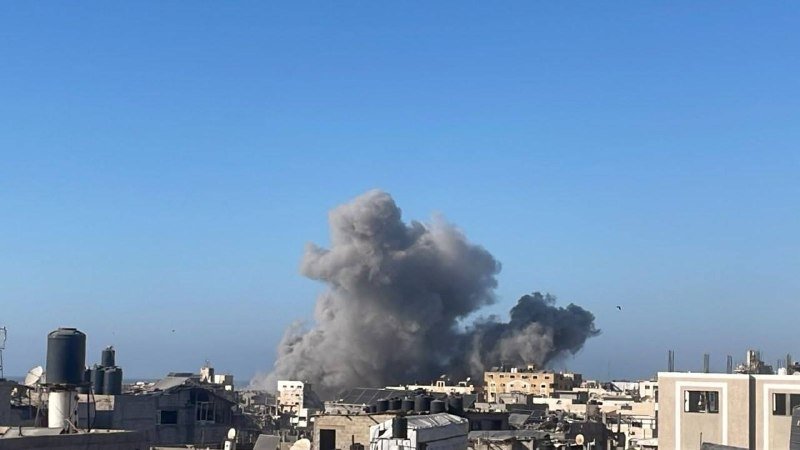
Three Palestinians were killed by Israeli forces in Gaza on the afternoon of 23 August 2026, with medics saying a four-year-old boy was among the dead, and a separate shooting in the occupied West Bank city of Nablus left a Palestinian child dead, according to wire reporting and regional outlets that drew on local medical sources.
The pattern fits a now-routine shape: airstrikes on individual homes, a heavy raid on a warehouse in central Gaza, and live fire in a West Bank city, all reported within a single news cycle. Read together, the day's incidents are less a single story than a recurring ledger, and they raise a narrower question: at what scale do individually defensible operational accounts become a structural story, and who is left to count the dead?
What the wires carry
At 14:20 UTC, Reuters reported that Israeli airstrikes in Gaza killed two people, including a four-year-old boy, according to medics on the ground. Just over an hour later, Middle East Eye reported that Israeli forces killed three Palestinians in Gaza and separately shot a child dead in Nablus, attributing the deaths to ground and air operations in both territories. Al Jazeera's English-language newsfeed, breaking at 13:20 UTC, said a heavy Israeli air strike had hit a warehouse in central Gaza.
The temporal stacking matters. Three independent dispatches, three different formats (wire, regional outlet, video newsfeed), converge on the same day and on overlapping geography. None of them independently establishes a total daily toll; the available source items do not specify how many additional Palestinians, if any, were wounded across these incidents, nor do they specify the precise target of the warehouse strike beyond "central Gaza."
Where the deaths were reported
Reuters's two fatalities were in Gaza, the four-year-old among them. Middle East Eye's three fatalities were also in Gaza, with a fourth killing – the child – attributed to a shooting in Nablus, a West Bank city that has been a recurring flashpoint through the war. Al Jazeera's warehouse strike sits inside Gaza, the report's "central Gaza" phrasing matching the strip's densely populated Deir al-Balah / central governorate geography without naming a specific neighbourhood. The available items do not specify the precise locations, the weapons used in the Nablus shooting, or whether those killed in Gaza were women, men, or, beyond the four-year-old, children.
The structural read
What stands out is not any single day's toll but the regularity. A four-year-old killed in an airstrike; a child shot in Nablus; a warehouse levelled in central Gaza. Each incident is reported by outlets with different editorial lineages, yet the cadence is consistent: Israeli military action produces Palestinian civilian death at a pace that keeps the daily reporting apparatus busy and the political counter-pressure thin.
There is a counter-read worth taking seriously. Israeli security services operate against an adversary that has, in past rounds, embedded command infrastructure in civilian sites and used the proximity of non-combatants as cover. Where the Israel Defense Forces publish strike-by-strike justifications and target lists, the framing is that civilian harm is incidental rather than systemic, and that operational refinements are narrowing the gap between intended and actual casualties. By that accounting, individual deaths are tragic but not structural.
Monexus assessment: the counter-read holds for any single strike, less so for the aggregate. Wire reporting across multiple outlets, on this as on most other recent days, treats civilian deaths as the residue of operations rather than their organising fact. The arithmetic of war is produced upstream of the press conference; by the time a four-year-old's name appears on a wire, the decision that produced his death is several hours old, the strike package is dispersed, and the evidentiary trail is whatever the IDF Spokesperson chooses to publish. A reporting regime built around this asymmetry will tend to record deaths without explaining them.
The limits of the public record
Several things remain unsettled. The available source items do not specify whether the Palestinian Authority or Hamas's civil authorities in Gaza issued casualty statements on 23 August 2026; they do not specify whether the IDF Spokesperson addressed the Nablus shooting, the warehouse strike, or the day's overall civilian toll at the evening briefing; and they do not specify whether international agencies on the ground, including UN OCHA and the International Committee of the Red Cross, were granted access to verify the deaths within the reporting window. Reuters, Middle East Eye, and Al Jazeera are relay stations at this stage, citing local medics and on-the-ground footage; the underlying primary records – morgue intake logs, IDF after-action reviews, UN OCHA flash updates – are downstream of the day's reporting and not yet visible in the wire.
That gap is itself part of the story. A four-year-old killed in Gaza, a child killed in Nablus, and a warehouse strike in central Gaza will be processed, in the next 24 hours, into the IDF's daily statement, the OCHA daily tracker, and the slow-moving database of the war. By the time those records are public, the news cycle will have moved on. The asymmetry between the speed of the strike and the speed of the audit is where the structural story sits.
What to watch
Three threads are worth following over the next 48 to 72 hours. First, the IDF Spokesperson's official statement on the warehouse strike and on the day's Gaza deaths – whether the strike is acknowledged as targeting a specific militant site and whether the four-year-old's death is addressed in the same release. Second, OCHA's humanitarian update for Gaza and the West Bank, which typically aggregates daily casualty figures across multiple incidents into a cumulative running total. Third, the Palestinian Red Crescent and the Gaza Ministry of Health daily report, which the wire reporting of the day relies on and which the IDF frequently contests in its morning briefings.
None of those three threads is yet in the available reporting. They are the next pages of the ledger, and the next test of whether the structural read holds or breaks.
Desk note: Monexus frames the day's incidents as a recurring ledger rather than a single breaking story, in keeping with the editorial position that established facts of civilian harm are reported with full weight while each strike is treated on its own operational merits. The wire reporting here (Reuters, Middle East Eye, Al Jazeera) converges on civilian deaths but diverges on context; the structural read is the desk's own, signalled in place.
Wire provenance
This editorial synthesis draws on the following public wire/social posts:
- https://www.middleeasteye.net/news/israeli-forces-kill-three-palestinians-gaza-shoot-child-death-nablus
- https://x.com/MiddleEastEye/status/2091543493080486354
- http://reut.rs/4c7OY6O
- https://x.com/Reuters/status/2091530956809101464
- https://www.aljazeera.com/video/newsfeed/2026/8/23/heavy-israeli-air-strike-hits-warehouse-in-central-gaza?traffic_source=rss
- https://www.middleeasteye.net/news/israeli-forces-kill-three-palestinians-gaza-shoot-child-death-nablus
- https://x.com/MiddleEastEye/status/2091543493080486354
- http://reut.rs/4c7OY6O
- https://x.com/Reuters/status/2091530956809101464
- https://www.aljazeera.com/video/newsfeed/2026/8/23/heavy-israeli-air-strike-hits-warehouse-in-central-gaza?traffic_source=rss