Two OSINT claims frame the same long-range contest, but evidence stops at the post
Two Telegram posts circulated by OSINTdefender on 23 August 2026 describe a Russian long-range one-way attack drone and a proposed US carrier air-to-air missile that names China as the adversary. The available items identify the channel as the actor making each claim and supply no first-party confirmation for either programme.
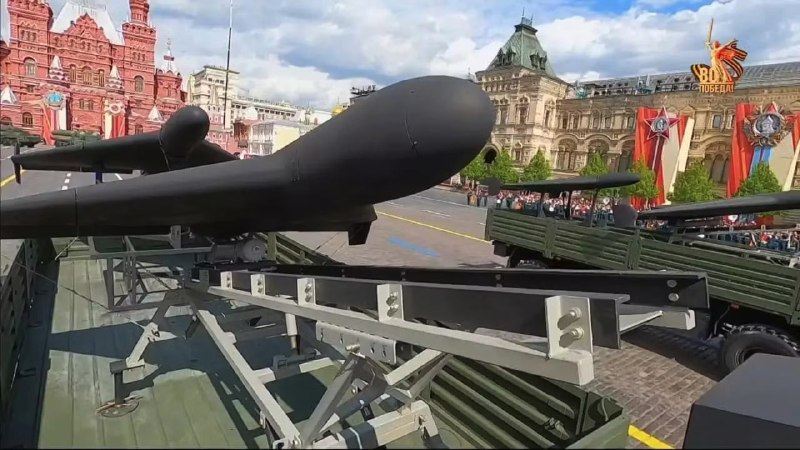
Two Telegram posts from the same channel on 23 August 2026 describe weapons that point in opposite directions but at the same strategic problem. The first, posted by OSINTdefender at 04:23 UTC, claims that Russia has launched the Garpia-A1E, a long-range one-way attack drone able to strike targets at distances of at least 1,000 kilometres and carrying a warhead exceeding 50 kilograms. The second, posted by OSINTdefender two minutes earlier at 04:21 UTC under the tags "#USA #China," describes the AIM-424 Malice as designed to enhance the defensive capabilities of US Navy carrier air wings, enabling F-35C and F/A-18E/F fighters to engage long-range strike aircraft "from adversaries like China." The actor on both posts is the channel itself; the available items do not specify a first-party Russian or US source, a programme office, a test record or a deployment confirmation for either system.
The headline is therefore about the channel and the framing it is selling, not about either weapon's operational status. The most careful reading of the source material is that OSINTdefender is asserting a Russian launch of a long-range drone with stated parameters, and is separately asserting a US design intent for a carrier-based air-to-air missile presented in the channel's own text as a counter to Chinese long-range strike aircraft. The China tag on the second post matches the named adversary in the body, and the channel is on the record placing the AIM-424 inside a US-versus-China threat picture rather than leaving the adversary implicit.
What the channel is actually claiming
The Garpia-A1E post is concise. It says Russia has launched the drone, gives the 1,000-kilometre and 50-kilogram figures, and stops. The post does not specify a guidance system, propulsion type, launch platform, production status or an independently confirmed combat use. It also does not specify whether "launched" refers to a programme announcement, a first flight, a serial production start or another event. The text is therefore best read as a parameter claim made by OSINTdefender about a Russian-linked system, not as a Russian first-party announcement.
The AIM-424 Malice post is similarly thin on procurement detail but is not generic on the adversary question. It uses the language of design intent: the missile is designed to enhance carrier air wings, it identifies F-35C and F/A-18E/F as the host aircraft, and it names China as the adversary type the system is meant to counter. The post does not specify a manufacturer, a contracting agency, a seeker type, a propulsion design, a test record or an integration timeline. Its evidentiary value is limited to the proposition being circulated, but on the question of who the channel says the missile is aimed at, the source is explicit.
Two different postures, one information environment
The two posts describe opposite sides of a stand-off contest. A long-range one-way attack drone, on the channel's account, extends the launcher's reach far beyond a defended point and forces defenders to detect, classify, track and intercept incoming threats at a distance. A long-range air-to-air missile, again on the channel's account, would extend the defender's reach by allowing carrier-based fighters to fire from further out against strike aircraft. Neither post is about an aircraft dogfight within visual range; both are about who can act first before the two sides meet.
The structural lesson is straightforward and does not depend on either system existing as described. A weapon does not need to match a manned aircraft's cost or sophistication if its mission is to multiply the defender's interception burden. Conversely, a missile does not need to be a perfect interceptor if its mission is to push the air wing's defensive engagement envelope outward, so that opposing strike aircraft cannot fire and turn away unopposed. Monexus analysis: the direction of pressure described in both posts is the same, push the relevant combat action outward, away from the defended asset, and the China reference in the AIM-424 post tells the reader which defended asset and which offensive reach the channel has in mind.
Where the evidence stops
The two posts are dated two minutes apart and come from the same channel. That proximity is consistent with a curated news digest, but it is also consistent with two independent posts from a single account. The available text does not specify whether OSINTdefender is repackaging a Russian press release, an industry report or an analyst's note, and it does not specify whether the AIM-424 description draws on a US Navy announcement, a contractor briefing or another source. Treating the pair as a coordinated dossier would exceed the evidence; treating them as a coincident pair of channel posts is the more defensible reading.
The OSINTdefender posts also do not establish that the two systems are being developed in reaction to one another. The Garpia-A1E description says nothing about the target set, and the AIM-424 description names China as the post's stated adversary rather than tying the two programmes together. Any claim of a direct action-reaction relationship between the two would therefore exceed the evidence in the available material; the China reference on the AIM-424 side stands on its own.
What a more honest frame looks like
The discipline this story demands is the actor-versus-claim distinction. OSINTdefender is the actor making each claim. Russia is the subject of the Garpia-A1E post. The United States is the subject of the AIM-424 post, and China is named in the AIM-424 post's own text as the adversary type the system is described against. Those four roles are clear in the source material and should not be blurred. Once they are kept separate, the substance of the article is the channel's framing rather than either country's operational posture.
That framing is itself newsworthy. Long-range one-way attack drones have reshaped discussions about reach versus defence for several years, and carrier-based long-range air-to-air weapons have been a recurring US Navy procurement interest, with Pacific deterrence as a recurring rationale. Both are legitimate categories of public concern. What the OSINTdefender posts add is a parameter figure on the drone side and a name-plus-platform pairing on the missile side, with no further corroboration in the available items. A responsible read of the day is therefore that two specific claims circulated in one channel's morning posts, one of them naming China inside the body text, while the broader debate they sit inside remains substantively unchanged.
The next useful records would be first-party Russian and US statements, programme notices, flight-test data, procurement documents and independent technical assessments. Until those records appear, the responsible conclusion is modest: on 23 August 2026, OSINTdefender circulated two long-range weapons claims, named China as the AIM-424's stated adversary in the body of the post, and supplied no first-party confirmation for either programme.
Desk note: Monexus read the Telegram posts as claims made by the channel about Russia and the United States, kept the China reference from the AIM-424 body text visible in the reporting, and avoided treating either parameter or design statement as a verified deployment.
Wire provenance
This editorial synthesis draws on the following public wire/social posts:
- https://t.me/osintdefender/19960
- https://t.me/OSINTdefender/19960
- https://t.me/osintdefender/19959
- https://t.me/OSINTdefender/19959