Pakistan's army chief to visit Tehran on Monday, Iran says
Iranian state media announced on 23 August 2026 that Pakistan's army chief will travel to Tehran on Monday in a trip framed as a de-escalation effort between Washington and the Islamic Republic.
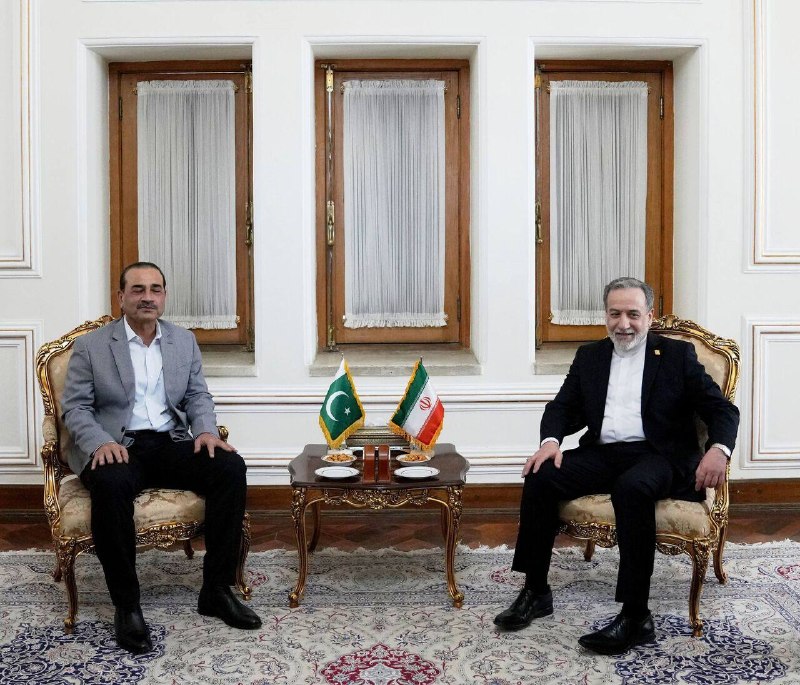
Iran's government said on 23 August 2026 that Pakistan's army chief, Field Marshal Asim Munir, will travel to Tehran on Monday. Reuters carried the announcement at 12:00 UTC, citing Iranian state media. The Telegram channel Fotros Resistance, which tracks Iranian security and opposition movements, posted the same item earlier in the day and framed the visit as an effort to de-escalate tensions between the United States and Iran.
The trip lands in the middle of an unusually quiet diplomatic stretch between Washington and Tehran. No source item names an agenda, lists participants on the Iranian side, or cites any US comment on the announcement. What the cited material does establish is that the visit was announced by Tehran first, that Pakistan's military public-affairs office has not put out a separate confirmation in the available reporting, and that the framing in at least one relay explicitly ties the trip to US-Iran de-escalation.
What the announcements actually say
Two relays of the same Iranian announcement are in the public record for 23 August 2026. The Reuters wire, posted to X at 12:00 UTC, reports the visit under the headline "Iran says Pakistan's army chief to visit Tehran on Monday," attributing the announcement to Iran. Investing.com carried the same Reuters item the same day. The Fotros Resistance Telegram channel posted a version of the item at 14:39 UTC, adding the editorial framing that Munir's trip is meant to de-escalate US-Iran tensions.
The phrasing matters because it locates the framing. Reuters is reporting what Iran said; Fotros Resistance is supplying a read of why. Monexus analysis: treating Fotros Resistance's de-escalation framing as a direct quote of Iranian state media overstates what the thread evidence shows. The cleaner read is that Tehran announced the visit, and an Iran-focused opposition channel read it as a de-escalation effort.
The Pakistani silence in the cited material
The Pakistani side is thinner in the source items. None of the three cited pieces carries a statement from the Inter-Services Public Relations directorate, Pakistan's foreign office, or Prime Minister Shehbaz Sharif's office confirming or commenting on the trip. The available reporting names the visit and the principal but does not specify whether the Pakistani civilian government was briefed in advance, whether the agenda was coordinated with Washington, or what Munir intends to raise once he is in Tehran.
That asymmetry of sourcing is itself the story. In Monexus's reading, when one side announces and the other does not, the framing of the visit is being set by the announcer. The next data point that would shift this picture is a Pakistani readout naming a US-Iran specific item, or a US statement acknowledging, praising, or distancing itself from the trip.
Why the trip matters, and what it does not tell us
The interest of the visit sits in what it implies about the state of the US-Iran channel rather than in any announced deliverable. Tehran and Washington have gone through long stretches with limited working contact this decade, and Pakistan has a combination of geography, military-to-military access, and recent diplomatic engagement with both capitals that makes it a plausible go-between. The cited source items, however, do not specify the agenda, the Iranian participants, or any US comment, and this article has not independently established those details.
Three signals over the next 48 to 72 hours will indicate whether the trip produced anything beyond the visit itself. First, whether the Pakistani readout, when it lands, names a US-Iran specific item. Second, whether Iranian state media carries the meeting on its Monday evening news and whether the framing there is consultation, mediation, or both. Third, whether the US State Department or White House comments at all, and whether the comment is endorsement, neutrality, or distance.
Monexus analysis: the most likely outcome on the available evidence is a Monday meeting that produces an Iranian readout emphasising regional stability and a quieter Pakistani acknowledgment, with any substantive US-Iran movement handled through existing channels rather than announced in Tehran. Forecast: a written agreement is unlikely; a closed-door conversation that resets the temperature between capitals is the realistic ceiling. The trip's value lies less in what it produces on Monday than in keeping a channel open during a window in which the alternative is silence.
The available source items do not specify the agenda, the Iranian participants, the level of US prior coordination, or whether Pakistan's civilian foreign office was briefed. This article has not independently established those details. The picture will sharpen when the first Pakistani readout lands and again when Washington's next Iran-related briefing takes place.
This article is built on three relays of the same Iranian announcement and one Iran-focused channel's framing. Where the source items do not specify a detail, the article says so. Monexus analysis is labelled in place, and the desk expects the picture to shift within 48 to 72 hours once Pakistani and US readouts appear.
Wire provenance
This editorial synthesis draws on the following public wire/social posts:
- http://reut.rs/4ip1wKL
- https://x.com/Reuters/status/2091495766556627224
- https://t.me/FotrosResistancee/23462
- https://www.investing.com/news/commodities-news/iran-says-pakistans-army-chief-to-visit-tehran-on-monday-4872425