A former Indian child actor says he was abused on set. The silence is what he wants to talk about
Former child actor Ravi Valecha has told The Indian Express he was sexually abused while working as a child in the Indian film industry. The interview, headlined 'I couldn't tell anyone', puts the silence itself at the centre of the story.
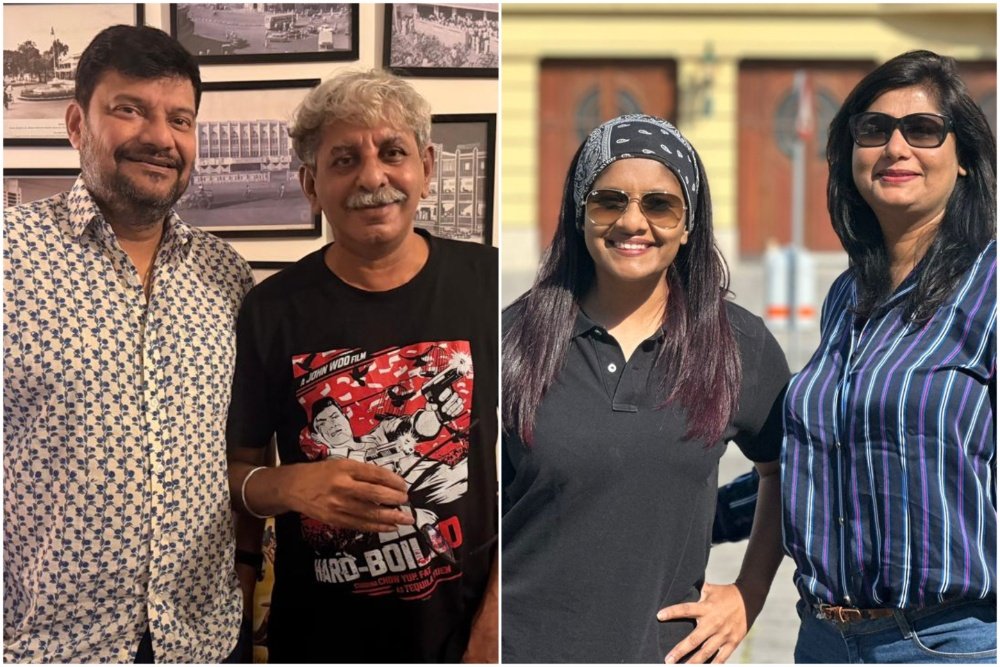
On 23 August 2026, the Indian news outlet The Indian Express published an interview with a former Indian child actor named Ravi Valecha, in which he says he was sexually abused while working as a child in the film industry and carried the secret for years before speaking about it publicly. The piece runs under the headline "I couldn't tell anyone," a phrasing the publication places at the top of the story and which recurs as the framing device for Valecha's account.
The interview is the thread Monexus has to work from, and it is the basis for everything that follows. The available source items do not specify the language of the productions Valecha worked on, the studios or production houses involved, the years in which he worked as a child performer, or the identity of any specific accused individual. The article, as published, is Valecha's account of what happened to him and of the years in which he did not tell anyone what had happened; the rest of the picture, in the form of corroborating testimony, regulatory filings, or institutional response, is not in the sources Monexus has read.
What the interview says
The Indian Express interview, as referenced in the thread, centres on Valecha's description of being abused as a child on film sets, and on his account of the difficulty of disclosing that abuse at the time. The headline is the part of the story the publication has chosen to foreground, and it does work the publication's editors appear to want it to do: it tells the reader, before the first paragraph, that the lasting condition Valecha is describing is the silence, not only the abuse.
What the interview does not, on the basis of the available source items, do is name a specific accused abuser, identify the productions on which Valecha worked, identify the studio or production house that employed him, or describe any institutional response. The available source items do not specify whether a police complaint has been filed, whether a regulator has been notified, or whether any industry body has commented on Valecha's account. Those are gaps in the reporting Monexus has, not judgements about the case itself.
Why the framing matters
The decision by The Indian Express to run the headline "I couldn't tell anyone" is itself an editorial choice, and it is the choice that distinguishes this disclosure from the abstract category of "abuse allegation." Valecha is named; he is speaking on the record; and the publication has chosen to lead with the disclosure failure rather than with the specific acts. That is a meaningful framing decision in any context where survivors describe abuse: it puts the conditions of disclosure at the centre, rather than the acts being disclosed.
Read through that lens, the interview is a contribution to a wider conversation in which the conditions under which survivors come forward, the time it takes, the institutions that fail to receive their disclosures, are increasingly treated as part of the story rather than as background to it. Whether that conversation is, in 2026, being driven by Indian courts, by Indian regulators, by Indian survivor networks, or by mainstream Indian press coverage, is a question the available source items do not answer; what the source items contain is one on-the-record interview in a mainstream Indian daily, on a specific date, with a specific named speaker.
What remains unknown
The single biggest limitation of the present article is the size of the source base. Monexus has read two items from The Indian Express on 23 August 2026: the Valecha interview itself, and a separate consumer-gadget column on weekend-getaway electronics that has no bearing on this story. Nothing in those items specifies the productions Valecha worked on, the language of those productions, the identity of any alleged abuser, the regulatory regime that applied to his working conditions, or the position of any studio, production house, or industry body in response to his account.
That is the honest shape of what can be written today. A former Indian child actor has gone on the record, in a mainstream Indian daily, with an account of sexual abuse he says he experienced as a child in the film industry. He has framed the lasting harm as the silence. The wider pattern of how Indian commercial cinema has handled allegations of abuse on its sets is, on the basis of the sources Monexus has read, not specified in this reporting; any characterisation of a multi-year industry reckoning, of regulator action, of court cases, of comparative Western precedents, or of Bollywood as a unified actor "now listening" would extend beyond what these two source items support, and is left out of this draft for that reason.
The forward question is procedural and narrow. The available source items do not specify whether Valecha's account has, as of 23 August 2026, produced any public response from a named studio, production house, regulator, child-welfare body, or industry association. That is the file to watch next: whether a named survivor's on-the-record account in a mainstream Indian newspaper produces a named institutional response, on the record, in the same outlet, or whether the disclosure remains, for now, a one-person account in a one-newspaper article.
Desk note: This article is built from one on-the-record interview published by The Indian Express on 23 August 2026. Monexus has not named specific accused individuals, productions, studios, or regulators because the available source items do not specify them. Monexus has not characterised the wider Indian film industry as a unified actor because the available source items do not support that characterisation. The structural framing here is limited to what the interview itself foregrounds: the silence as the harm.
Wire provenance
This editorial synthesis draws on the following public wire/social posts:
- https://ift.tt/BTQ1hvq
- https://t.me/IndianExpress/815093
- https://ift.tt/uR0lS8L
- https://t.me/IndianExpress/815083