Russell turns the tables at Zandvoort: pole threat, sprint win, and a teammate title race that has flipped on itself
A pole lap denied by rain, a sprint converted into maximum points, and a championship leader who insists the pressure is gone: George Russell has reset the Mercedes duel in three acts at Zandvoort.
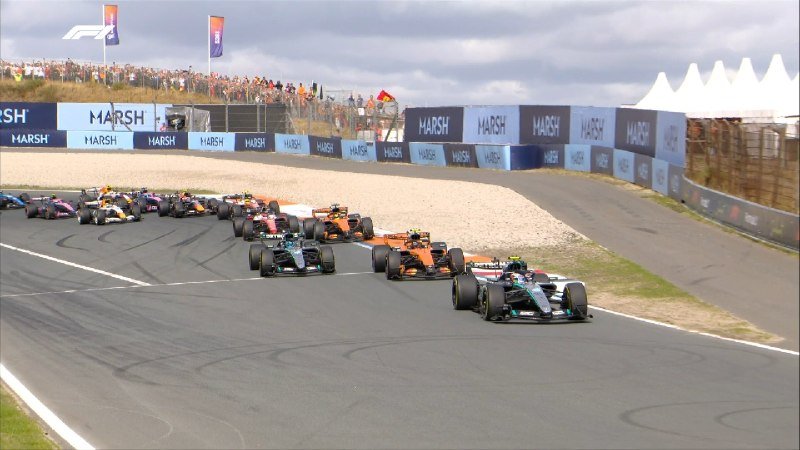
At 14:17 UTC on 22 August 2026, Lando Norris threaded his McLaren between the clouds at Zandvoort and pipped George Russell to pole for the Dutch Grand Prix by the width of a drying line. Six hours earlier, Russell had controlled the sprint from start to finish to take eight points and trim the championship deficit to his Mercedes team-mate Kimi Antonelli. By Saturday evening, the only consistent story at the seaside circuit was the inconsistency of every story: a driver written out of the title fight by the books had just done the two things that make a driver a title fighter, in the same day.
The tactical reading is straightforward. Russell's sprint victory at 10:30 UTC, converting pole into a lights-to-flag win ahead of Charles Leclerc, put the Briton back on the board before the main event had even begun. His subsequent qualifying lap, set before a late rain shower scrambled the order, was good enough to deny Norris on a dry track but not quite enough to hold him off once the McLaren hooked up on the rubbered-in line. The result is the kind of split weekend that tells you more about a championship than a clean sweep does: maximum points in the support race, second-best in qualifying, all of it on a circuit where overtaking is a structural problem rather than a tactical one.
Pressure, redefined
Russell framed the turnaround in terms the paddock has been waiting to hear. Speaking before the weekend's running, he said the "pressure is off" now that he no longer views the season as a head-to-head with Antonelli, attributing his Zandvoort form to a calmer mental state rather than a step change in machinery (ESPN, 22 August 2026). The claim sounds like sporting cliché until you plot it against the results: a sprint pole on Friday, a sprint win on Saturday morning, a front-row start for the grand prix in the afternoon. Whatever the underlying cause, the output is the same.
The structural point is that intra-team title fights inside a works Mercedes are not supposed to be this fluid. The W12-era Hamilton-Rosberg duel ground a constructor's championship into dust; the modern Brackley outfit, with Antonelli installed as the championship leader and Russell as the experienced counterweight, was supposed to settle into a hierarchy by mid-summer. It has not. What Zandvoort shows is a driver pairing that has refused to settle, in which the senior partner is still capable of taking a weekend by the throat when the car and the conditions line up.
The alternative reading
There is a second interpretation the data will support. Russell's qualifying lap was set before the rain; Norris's was set after. On equal track-evolution footing, the McLaren may simply have been faster, and the pole deficit of a tenth or two may reflect genuine chassis advantage rather than driver form (BBC Sport, 22 August 2026). Under that reading, Russell's sprint win is the outlier and his qualifying second is the median, and the Mercedes-versus-McLaren fight is still tilted decisively toward Woking on single-lap pace.
Monexus analysis: that second reading is plausible but incomplete. The sprint was a 24-lap race run in mixed wind and tyre-strategy conditions, not a qualifying sim. The fact that Russell controlled it from the front, with Norris and Leclerc unable to live with the Mercedes in dirty air, is itself a data point about race-trim performance and tyre management, not just one-lap speed. Read together, the two sessions suggest a Mercedes that is closer to McLaren in race conditions than in qualifying, and a Russell who has remembered how to extract that gap.
What is actually at stake
The points mathematics matter more than the rhetoric. Russell's eight points from the sprint, on top of his qualifying bonus, cut into a championship lead that Antonelli has held for most of the summer and that, by Sky Sports' count after the sprint, is now smaller than at any point since the European rounds (Sky Sports, 22 August 2026). Norris's pole, meanwhile, keeps McLaren firmly in the constructors' fight and underlines that even a weekend in which Mercedes takes the sprint and the front row will likely be claimed by papaya on Sunday pace.
The forward calendar sharpens the picture. Zandvoort is the first of a back-to-back European block that ends with Monza, a power circuit that historically punishes any chassis deficit in slow corners. If Mercedes has genuinely closed the gap to McLaren, Monza will be the circuit that proves it. If Russell's sprint was the high-water mark, the sea-level lap times at Monza will say so within a week.
The remaining uncertainty is the one the sources do not resolve: how much of Russell's form is driver, how much is car, and how much is the particular weather-and-tyre lottery that Zandvoort has become. The Dutch circuit rewards qualifying precision and rewards track position; it penalises strategy gambles and rewards tyre whisperers. None of the available reporting specifies the exact championship points gap Antonelli held entering the weekend, and the split between sprint and grand prix results leaves the title picture genuinely open in a way it was not a fortnight ago. That is not a flaw in the reporting. It is the race.
Desk note: the wire treated Saturday at Zandvoort as two separate stories (a sprint win, then a pole for Norris), which understates how much the two together have re-priced the Mercedes intra-team fight. Monexus reads them as one weekend.
Wire provenance
This editorial synthesis draws on the following public wire/social posts:
- https://www.espn.com/f1/story/_/id/49610336/george-russell-title-fight-teammate-kimi-antonelli-pressures-gain-dutch-grand-prix-formula-1-zandvoort
- https://www.bbc.co.uk/sport/formula1/articles/cgr7rwqyn0xo?at_medium=RSS&at_campaign=rss
- https://www.bbc.co.uk/sport/formula1/articles/cn0n03rn711o?at_medium=RSS&at_campaign=rss
- https://www.skysports.com/f1/news/12040/13575695/dutch-gp-sprint-george-russell-wins-from-charles-leclerc-to-trim-kimi-antonellis-f1-world-championship-lead-at-zandvoort
- https://www.skysports.com/watch/video/13575733/dutch-gp-george-russell-holds-p1-as-lando-norris-holds-of-charles-leclerc
- https://www.espn.com/f1/story/_/id/49610336/george-russell-title-fight-teammate-kimi-antonelli-pressures-gain-dutch-grand-prix-formula-1-zandvoort
- https://www.bbc.co.uk/sport/formula1/articles/cgr7rwqyn0xo?at_medium=RSS&at_campaign=rss
- https://www.bbc.co.uk/sport/formula1/articles/cn0n03rn711o?at_medium=RSS&at_campaign=rss
- https://www.skysports.com/f1/news/12040/13575695/dutch-gp-sprint-george-russell-wins-from-charles-leclerc-to-trim-kimi-antonellis-f1-world-championship-lead-at-zandvoort
- https://www.skysports.com/watch/video/13575733/dutch-gp-george-russell-holds-p1-as-lando-norris-holds-of-charles-leclerc