Three Iran tracks on 23 August 2026: a sanctions package, a detention claim, and a deployment rumour
On 23 August 2026, wire reporting weighs a sanctions package on Iran, Iran says it holds pilots in 'poor physical condition,' and an Iran-watching Telegram channel claims a southern Iran deployment is being prepared.
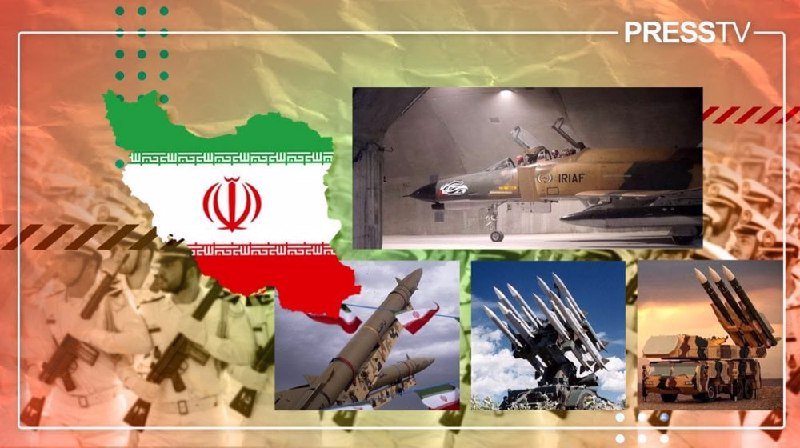
On 23 August 2026, three threads ran in parallel across the Iran file. SBS News Australia published an explainer at 03:29 UTC on what the Trump administration is weighing against Tehran, framing the menu of options as sanctions "never been seen." The Indian Express ran two pieces within hours of each other: at 01:52 UTC, a piece carrying the headline "They were being held on water: Iran says detained pilots in 'poor physical condition'"; and at 02:52 UTC, a parallel guide to the same economic pressure track on Iran. At 05:49 UTC, the Telegram channel IRIran_Military published overhead imagery with the text claim that the footage shows "the landscape of southern Iran, where Trump and Hegseth are planning to deploy US troops."
Read together, the three threads describe a Trump administration pulling on three levers at once: economic strangulation, a detention claim, and signalling of a regional military footprint. The pieces do not amount to a coordinated announcement, and they should not be treated as one. They are an operating theory, not an executed plan, and the public record on the most consequential element (the southern deployment) rests, so far, on a single channel's framing.
The sanctions menu, as the wire framed it
The White House is working through a sanctions package that, in the editorial framing of SBS News Australia on 23 August, goes beyond what readers may have seen before. The outlet's headline characterises the package as "never been seen"; the explainer walks through a stack of options reportedly under inter-agency review. The Indian Express ran a parallel guide the same morning, walking through what economic pressure would do and why the administration prefers it.
The trade-off both outlets flag is the standard one. Sanctions cost less than a kinetic option and produce visible pain before visible retaliation. They also harden Iranian incentives to find workarounds, deepen Tehran's ties with Beijing and Moscow, and tend to entrench the actors most capable of moving money around the formal financial system.
Monexus analysis: the genuinely new variable in any sanctions package is not the list of tools but the list of targets. Snap-back architecture built into the 2015 nuclear deal framework is well worn; what shifts the political risk calculus is whether the package reaches buyers of Iranian crude rather than only Iranian sellers. The available reporting on 23 August does not specify which measures are already signed into executive action and which remain under inter-agency review. That distinction matters: signed measures change market behaviour immediately; under-review measures produce price movement and political signalling without legal effect.
The detention file
The Indian Express at 01:52 UTC on 23 August carried a piece with the headline "They were being held on water: Iran says detained pilots in 'poor physical condition.'" The phrasing the outlet put in scare quotes, "on water" and "poor physical condition," appears in the headline as Iranian-side language that The Indian Express is quoting, not as the outlet's own medical or legal characterisation. The available thread evidence does not specify the pilots' nationalities, their employer (civilian, private, or military), the legal grounds for detention, the number of individuals held, or whether any third government has publicly acknowledged their citizenship.
This publication's reading is that the case is plausible on the timeline and that the operational logic of using foreign-national detainees as a pressure point during periods of maximum US pressure has documented precedent, though the Indian Express item itself does not characterise the detention that way on the available evidence. The public reporting on 23 August carries only the Iranian-side framing of condition and motive. Each of the gaps above is itself a pressure point, and the absence of on-record third-party acknowledgement does not, on this evidence, allow a determination of which side's framing will eventually prevail.
One thing to keep separate: a separate, mid-August 2026 episode reviewed during drafting involved Iran claiming that Qatar was holding Iranian bomber pilots, with Qatar denying the claim. That episode runs in the opposite direction from the 23 August Indian Express item, which concerns pilots Iran says it is itself detaining. The available thread evidence does not specify whether the two episodes overlap, share personnel, or are entirely unrelated, and the framing of one should not be carried into the other.
The southern Iran deployment chatter
At 05:49 UTC on 23 August, the Telegram channel IRIran_Military published overhead imagery and the text claim that the footage depicts "the landscape of southern Iran, where Trump and Hegseth are planning to deploy US troops." The post is not corroborated by a Western wire in the available 23 August record. It carries the channel's framing and should be read as the channel's framing.
The structural point that does survive the corroboration gap is that the question is being discussed inside an Iran-watching community that treats the southern coast as the most plausible flashpoint. The Strait of Hormuz sits inside that same geography, and any structural change to the US-Iran military geometry would shift the deterrent balance around it, though the available reporting on 23 August does not quantify traffic through the strait or specify which naval assets would be affected. Monexus analysis: the gap between a Telegram post and a confirmed deployment is the entire story. The public record does not specify scale, duration, legal authority, or host-government posture for any such deployment, and those are the four questions that determine whether the post is a forecast, a provocation, or a leak test. Without on-record confirmation from the Pentagon, the White House, or a Gulf partner, the most defensible read is that this is signalling, not posture.
Stakes and what to watch
The three threads converge on a single political question: whether pressure, in the absence of an off-ramp, becomes a negotiating instrument or a collision course. The administration's stated preference, on the available reporting, is the former. The risk, also visible in the reporting, is that sanctions bite, detentions harden third-country relations, and deployment talk forces Tehran to spend on defence what it would otherwise spend on survival programmes, producing a ratchet that neither side intended.
For readers tracking the file, three concrete items are worth watching over the next 72 hours: any executive action signed on the sanctions package, which would convert signalling into legal fact; any third-country acknowledgement of the detained pilots' citizenship, which would shift the case from an Iranian domestic matter to a bilateral dispute; and any on-record Pentagon or White House statement on southern Iran, which would either corroborate or close down the deployment chatter. Until at least one of those moves, the operating theory is a forecast, not a fact.
Desk note: the wire lead on 23 August was the detention item, with the sanctions explainer running as parallel coverage; IRIran_Military's deployment post is the visual frame that Iranian state-adjacent channels will likely amplify through the day. This publication read the three as a single compound pressure track, weighted toward economic measures with detention and military signalling on the side, and kept the mid-August 2026 episode involving Iran's claim that Qatar was holding Iranian pilots as a separate item that runs in the opposite direction from the 23 August Indian Express detention story.
Wire provenance
This editorial synthesis draws on the following public wire/social posts:
- https://www.sbs.com.au/news/article/trump-iran-sanctions-options/oku
- https://www.sbs.com.au/news/article/trump-iran-sanctions-options/okubc6bmn
- https://ift.tt/8NR0z9U
- https://ift.tt/hcwK5I8
- https://t.me/IRIran_Military/9758
- https://t.me/SBSNewsAustralia/47559
- https://t.me/IndianExpress/815001
- https://t.me/IndianExpress/814971
- https://www.sbs.com.au/news/article/trump-iran-sanctions-options/oku
- https://www.sbs.com.au/news/article/trump-iran-sanctions-options/okubc6bmn
- https://ift.tt/8NR0z9U
- https://ift.tt/hcwK5I8
- https://t.me/IRIran_Military/9758
- https://t.me/SBSNewsAustralia/47559
- https://t.me/IndianExpress/815001
- https://t.me/IndianExpress/814971