The envoy who isn't flying
A planned Moscow mission by Washington's two top Russia-fixers slipped past its slot, announced first through Russian wires, and the small print matters more than the headline.
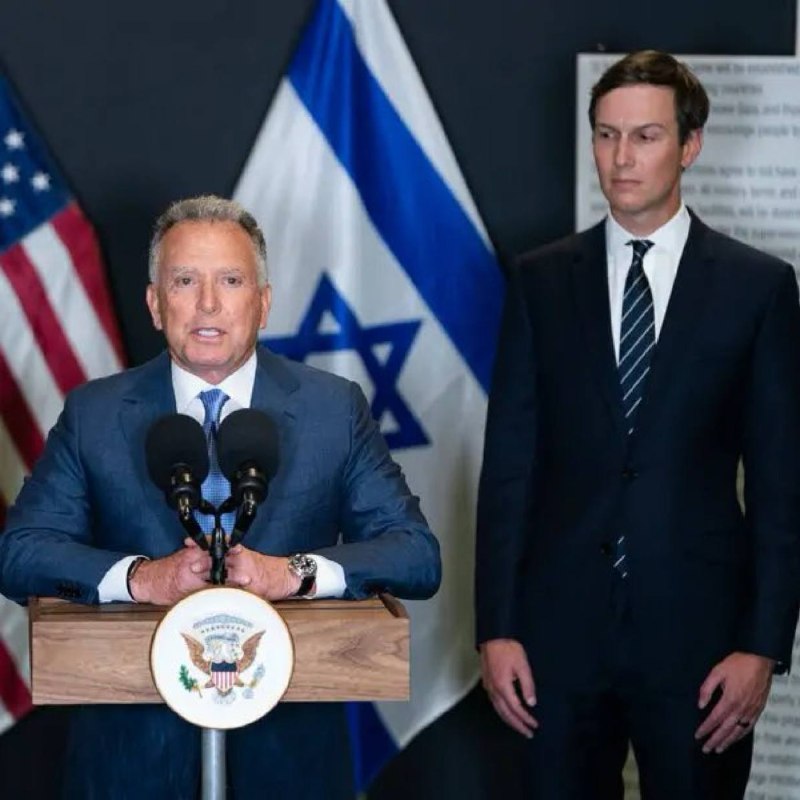
A Moscow trip that had been pencilled in for days slipped off the calendar at 14:05 UTC on 23 August 2026, when a Telegram channel carrying TASS wire copy reported that US presidential envoy Steve Witkoff and Jared Kushner would not be flying into the Russian capital before the end of the month. By 14:12 UTC the same line was being reproduced on X by an Ireland-based journalist citing TASS. By 14:18 UTC, a Russian-language milblogger channel had carried the same news with the addition of Kyiv to the cancelled itinerary. By 15:52 UTC, the postponement was being recirculated in another Western-facing Telegram channel that had begun with the TASS-sourced Moscow framing. Four posts, ninety minutes apart, and the choreography of late-summer war diplomacy had visibly slipped a beat.
The postponement matters less for the absence than for who set the tempo. Two envoys central to the Trump administration's back-channel with Moscow have now had their Russian trip pushed back, with the news surfacing first through Russian state wire copy rather than through a US government readout. Read narrowly, that is a scheduling item. Read structurally, it is a signal about who is currently managing pace in the relationship.
What was actually said
The four cited items carry a consistent factual core and diverge on framing. The earliest, a 14:05 UTC Telegram post citing a TASS source, said the visit was "unlikely to take place before the end of August" and conjured an image of the envoys by describing Witkoff as a US "Real Estate Developer" and Kushner as "Trump's … son-in-law," language that signals the framing of a Russian wire copy looking at American figures. The 14:12 UTC X post by Brian McDonald reported the postponement in identical TASS-sourced terms. The 14:18 UTC intelslava post collapsed the two capitals into one item. The 15:52 UTC DDGeopolitics post led on Moscow, with Kyiv implicit.
All four posts stop short of stating what the envoys intended to discuss, who decided to delay, or whether the Russian side was consulted or merely informed. The cited posts do not specify the underlying reason for the postponement. That gap is the story: a postponement announced through Russian wire copy rather than a State Department readout is a small but legible reversal of which capital is currently setting the tempo of the channel.
Monexus analysis: what the absence of detail tells us
Three structural reads are consistent with the four cited items, and they are not mutually exclusive.
First, this is a tempo signal. The news travelled through a Russian state wire and its amplifiers before any Western-allied source had a chance to characterise the cancellation. Whatever the underlying cause, the public-facing announcement originated in Moscow's information space, not Washington's. In diplomatic grammar, who breaks the news is a data point.
Second, this is a coordination failure inside the channel. The four cited posts agree the trip included both Kyiv and Moscow. The cited posts do not specify whether the Kyiv leg was postponed on the same terms as the Moscow leg, nor whether the two capitals received different messaging. The available items also do not state whether the postponement was initiated by Washington, by Moscow, or jointly. That ambiguity is itself an answer of sorts: a clean cancellation has one author; a contested postponement has several.
Third, this is a Russia-track cooling. The cited posts do not specify that the cancellation extends to any other US–Russia diplomatic work, and this article has not independently established whether Treasury's OFAC or the State Department has published Russia-related action in the same window. The trip's postponement does not, on the cited evidence, prove a broader freeze. It does, however, remove the most visible deliverable expected in the late-August window.
Counterpoint: the routine-reading case
A more innocent reading is available. Diplomatic travel slips for mundane reasons: scheduling conflicts, security reviews, host-country availability. The four cited items support the bare fact of postponement and nothing more. Under the routine-reading case, the TASS-sourced framing is not a tempo signal but simply the path of least resistance for an announcement neither side wanted to own with a formal readout.
The routine reading holds if a US government confirmation appears within days, in plain State Department language, and if a rescheduled window is named. It weakens if no such confirmation surfaces and the trip is allowed to migrate silently into September, where it can be folded into UN General Assembly bilateral contact in New York. The cited items do not let this article resolve between the two reads; readers should weight the structural reads above as the desk's assessment, not as fact.
What to watch next
Three near-term markers will tell readers whether the postponement is tactical or structural. First, whether the State Department publishes any travel-related readout for Witkoff or Kushner inside ten days, or whether the trip migrates into September and overlaps with the UN General Assembly in New York, where bilateral contact can happen without the optics of a Moscow arrival. Second, whether Treasury issues any Russia-related designations in the same window; action on that front would suggest Washington is substituting pressure for negotiation. Third, whether Zelenskyy's office publishes any readout from a parallel Kyiv engagement, signalling that the Ukraine file is being kept warm even as the Russia file cools.
Monexus's expectation, framed as the desk's read rather than as instruction: a one- to two-week delay is more likely than a cancellation on the cited evidence, but the cited posts do not specify the substance on offer when the plane does land, and this article has not independently established whether the underlying agenda has been narrowed.
Desk note: Monexus sourced the postponement through Russian-wire relays (TASS via DDGeopolitics and intelslava) and the X post that reproduced the TASS copy. The cited items agree on the postponement and the late-August language; they do not specify a reason, a rescheduled date, or the envoys' agenda. The structural reads above are the desk's analysis, not facts in evidence.
Wire provenance
This editorial synthesis draws on the following public wire/social posts:
- https://t.me/DDGeopolitics/191728
- https://t.me/intelslava/93034
- https://x.com/BrianMcDonaldIE/status/2091529111063711861
- https://t.me/DDGeopolitics/191722