Alibaba's $10.2bn AI placement and Shein's Hong Kong IPO land in the same week
Alibaba raised HK$80bn ($10.2bn) for AI in a Sunday placement that sent shares down 8%. Shein launched a Hong Kong IPO in the same window. The two deals test the same venue from opposite ends of the order book.
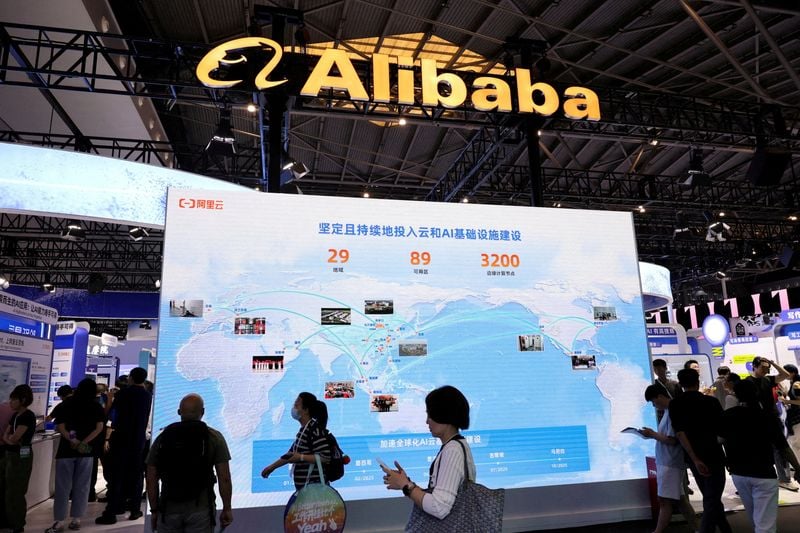
At 02:00 UTC on 24 August 2026, Investing.com's morning note recorded Alibaba Group trading down 8% in Hong Kong, a day after the company announced a share placement. Investing.com first reported the placement plan at 07:50 UTC on 23 August 2026; a separate Investing.com filing-level report at 03:24 UTC on 24 August carried the same headline. Nikkei Asia's wire, posted to Telegram at 09:01 UTC on 23 August, confirmed the HK$80 billion ($10.2 billion) figure. Inside the same 48-hour window, fast-fashion platform Shein launched an up-to-$1.8 billion Hong Kong IPO, a figure Investing.com carried at 22:30 UTC on 23 August and again at 02:43 UTC on 24 August.
Read together, the two transactions describe the same underlying shift. Hong Kong is being asked, in a single trading week, to absorb a large follow-on from a domestic tech incumbent raising for AI capex and a politically complex consumer listing from a company that has spent years searching for a venue. Both moves say something about where capital is willing to land in Chinese-adjacent equities this quarter, and both are testing how deep that willingness runs.
A Sunday-night raise
Alibaba's placement was announced on Sunday, according to the Investing.com and Nikkei Asia coverage cited above. The company's announcement specified the use of proceeds as AI investment, the same category of capex where peers across the industry have already committed tens of billions. Nikkei Asia's 09:01 UTC Telegram post carried the HK$80bn ($10.2bn) figure and the AI mandate from the announcement.
The price action was the harder signal. The 8% slide recorded at the 02:00 UTC report and tracked again at 03:24 UTC was the day-one market verdict on the placement. Monexus analysis: the slide is consistent with two readings at once, dilution arithmetic and a market repricing of what AI capex will earn back over time. Distinguishing the two requires data the available coverage does not contain, including allocation skew by investor type and the geographic split of demand.
Shein's path, and the fee line
Shein's float is the more politically loaded of the two transactions. Investing.com's retrospective at 01:42 UTC on 24 August traces the route: a New York filing, then London, and now Hong Kong. The same outlet's 22:30 UTC report on 23 August and the morning follow-up at 02:43 UTC on 24 August frame the offering as a test of demand for the listing.
A third Investing.com report at 03:19 UTC on 24 August puts a finer point on deal economics. The headline of that report describes Shein as paying nearly $40 million in fees across an expanded roster of Hong Kong IPO banks. The available reporting does not specify the size of the syndicate, the per-bank allocation, or how the fee number compares with comparable Hong Kong floats. The $40 million is best read as a single line item on the prospectus economics sheet, not a characterisation of bank behaviour.
Why the same week matters
The counter-narrative, the one circulating in Western sell-side notes, is that both transactions reflect Hong Kong's shrinking rather than its expansion: that Hong Kong is the venue Chinese issuers still have access to under tightening U.S. capital-market controls, rather than the venue they would pick on a level playing field. There is something to that read. A more accurate framing, in Monexus's assessment, is competitive. Hong Kong is offering itself as a venue the U.S. system is making harder to bypass, and willing issuers are responding, with both Alibaba's capex need and Shein's venue search pointing them to the same city in the same week.
For Alibaba specifically, the read is more conventional. The company needs scale capital to stay in the AI infrastructure race, and Hong Kong's placement channel can absorb an HK$80bn follow-on in a way that other Chinese venues may not. Monexus analysis: the 8% day-one slide is a cost of admission to that race, not a verdict on the venue choice itself. Reading the move as rejection of Hong Kong overstates what the tape, on a single session, can tell us.
Stakes, and what to watch next
Both deals put pressure on the bipartisan Washington consensus that financial decoupling from Chinese issuers can be costless to U.S. capital markets. That is a longer-arc argument; the near-term evidence is in the order books. On Alibaba, the names to watch over the next 72 hours are the syndicate banks, with allocation skew toward long-only institutional anchors the key signal of durable demand. On Shein, the key signal is whether the offering clears the marketed range at pricing. The available coverage does not specify which banks sit on the Hong Kong-led syndicate, the size of the bank roster, or the geographic split of demand for either transaction.
What remains uncertain, and what the available coverage does not pin down, is the demand picture beneath the dollar figures. The Alibaba filings cite long-only anchor demand but do not specify the geographic split. Shein's prospectus coverage, as cited in the thread, names a Hong Kong-led syndicate but does not detail U.S. or Middle East participation. The reading, that Hong Kong is functioning as a substitute venue at scale in this window, holds as analysis. The fine print of who is actually buying is still being written.
This article traced the Alibaba placement through Investing.com filings-level coverage and Nikkei Asia's wire confirmation, and the Shein IPO through three Investing.com reports published between 22:30 UTC on 23 August and 03:19 UTC on 24 August. The thread coverage converges on the headline dollar figures and the Shein fee number but does not specify syndicate size, allocation geography, or stabilisation schedules; those items remain to be confirmed against primary syndicate filings.
Wire provenance
This editorial synthesis draws on the following public wire/social posts:
- https://www.investing.com/news/stock-market-news/alibaba-stock-slumps-in-hong-kong-after-102-billion-share-placement-to-fund-ai-4872593
- https://www.investing.com/news/stock-market-news/shein-to-pay-nearly-40-million-fees-to-expanded-roster-of-hong-kong-ipo-banks-4872590
- https://www.investing.com/news/stock-market-news/shein-launches-up-to-18-bln-hong-kong-ipo-after-years-of-scrutiny-4872584
- https://www.investing.com/news/stock-market-news/alibaba-shares-fall-8-after-10-billion-hong-kong-share-sale-4872570
- https://www.investing.com/news/stock-market-news/sheins-pursuit-of-an-ipo-from-new-york-to-london-to-hong-kong-4872563
- https://www.investing.com/news/stock-market-news/shein-launches-up-to-18-billion-hong-kong-ipo-4872479
- https://t.me/NikkeiAsia/21437
- https://www.investing.com/news/company-news/alibaba-plans-record-102-billion-hong-kong-share-sale-to-fund-ai-4872426
- https://www.investing.com/news/stock-market-news/alibaba-stock-slumps-in-hong-kong-after-102-billion-share-placement-to-fund-ai-4872593
- https://www.investing.com/news/stock-market-news/shein-to-pay-nearly-40-million-fees-to-expanded-roster-of-hong-kong-ipo-banks-4872590
- https://www.investing.com/news/stock-market-news/shein-launches-up-to-18-bln-hong-kong-ipo-after-years-of-scrutiny-4872584
- https://www.investing.com/news/stock-market-news/alibaba-shares-fall-8-after-10-billion-hong-kong-share-sale-4872570
- https://www.investing.com/news/stock-market-news/sheins-pursuit-of-an-ipo-from-new-york-to-london-to-hong-kong-4872563
- https://www.investing.com/news/stock-market-news/shein-launches-up-to-18-billion-hong-kong-ipo-4872479
- https://t.me/NikkeiAsia/21437
- https://www.investing.com/news/company-news/alibaba-plans-record-102-billion-hong-kong-share-sale-to-fund-ai-4872426