Bessent's 'D-Day' and the slow-motion strangulation of Iran
Washington is converting a financial pressure campaign into a doctrinal posture: any country that does business with Tehran is to be treated as an adversary of the US Treasury. The mechanics are mundane. The consequences are not.
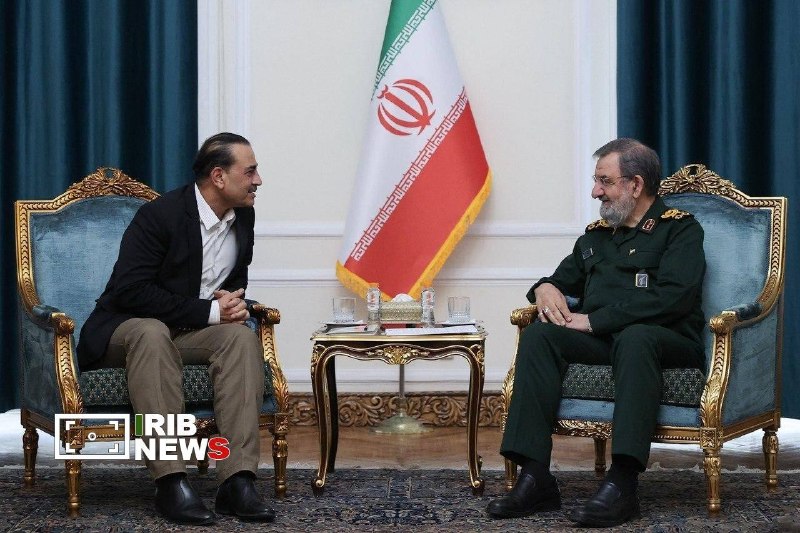
On 24 August 2026, US Treasury Secretary Scott Bessent told the BBC that the United States would sever economic ties with Iran and isolate any nation that continued to partner with Tehran financially, a framing the BBC carried under the headline "Iran faces 'economic D-Day'" (BBC News, 24 August 2026, 10:39 UTC). The choice of word matters. Bessent is not threatening a kinetic operation; he is announcing an ultimatum delivered through the financial plumbing, and the bet is that most governments, given a choice between discounted Iranian barrels and continued access to the dollar system, will blink.
This is not improvisation. Earlier the same day, at 12:54 UTC, an Investing.com dispatch reported that the US Treasury was preparing to broaden the scope of secondary sanctions on Iran, citing a source familiar with the matter (Investing.com, 24 August 2026, 12:54 UTC). The Bessent interview functioned as the public explanation of a technical move already underway. Monexus reads the BBC interview and the sanctions expansion as a single coordinated posture rather than two parallel stories.
What "secondary" actually means now
Secondary sanctions, in their standard form, let the US government penalise non-American firms that do business with a sanctioned party. The mechanism has been available for decades; what changes from week to week is the tolerance. The Investing.com wire frames the move as a procurement question for buyers of Iranian crude and condensates (Investing.com, 24 August 2026, 12:54 UTC). Read in that light, the practical effect is to raise the price of doing business with Tehran high enough that the remaining counterparties self-select out. The available source items do not specify which sectors, banks, or jurisdictions Treasury intends to target; they establish only that the scope is to be widened.
The market's first read on 24 August was modest. US stock index futures slipped as traders waited for the Iran sanctions news and a stack of inflation prints, according to a separate Investing.com economy wire (Investing.com, 24 August 2026, 12:00 UTC). That measured response suggests the street is still pricing this as pressure rather than rupture. Monexus assessment: traders are under-pricing the second-order effect, because even partial enforcement against a meaningful share of Iran's remaining buyers would compress heavy-crude balances in the fourth quarter of 2026. That is a desk forecast, not a sourced claim.
The Netanyahu variable
A Telegram channel, ClashReport, carried a single headline at 16:26 UTC on 24 August 2026: "Netanyahu: Iran tried to assassinate one of my sons" (ClashReport, 24 August 2026, 16:26 UTC). The available source items do not specify where Netanyahu made the remark, which son he referred to, the date of the alleged plot, or the operational mechanism behind it. The headline cannot be verified, in this set of items, beyond its own existence on one channel. Read narrowly, it is a political signal to a domestic Israeli audience. Read alongside Bessent's Treasury remarks, it functions, in our assessment, as part of a single message: the cost of continued Iranian state violence is now to be paid not only by Tehran, but by anyone who finances Tehran's ability to attempt it.
The macro undertow
The same news cycle saw a $950 billion cash account at the Treasury being readied to fund a bond buyback surge, per a separate Investing.com dispatch (Investing.com, 24 August 2026, 12:02 UTC). The available source items do not specify what drove the cash balance to that level, nor do they attribute the bond buyback plan to Bessent personally. The two stories sit in the same news cycle but not, on the evidence available, on the same desk. What can be said: when Washington is simultaneously tightening the screws on dollar-clearing access for Iran-linked counterparties and retiring some of its own outstanding paper, the marginal cost of doing business outside the dollar system rises. That is structural, not personal. The Treasury Secretary who articulates the Iran policy is not, on this evidence, the same actor who decides the cash management posture, even if both bear on global dollar conditions.
The design logic, in plain prose
The doctrine, stated bluntly, is to convert dollar hegemony from a background condition into an active weapon. A country that wants to import Iranian oil has, until now, been able to thread the needle: pay in dirhams through an intermediary, settle in yuan, route the cargo through a shipowner willing to switch off a transponder. Each workaround relies on access to a small set of dollar-clearing banks. The Treasury posture reported on 24 August would treat that access as conditional on visible disengagement from Tehran (Investing.com, 24 August 2026, 12:54 UTC). The Bessent framing, as the BBC recorded it, supplies the diplomatic cover: this is a quarantine of Iran's partners, not a punishment of Iran alone.
Iran's counter-options are real but bounded. Deeper discounts keep marginal buyers inside the tent. Barter with Chinese industrial goods absorbs some of the overhang. The small universe of non-dollar messaging systems handles a fraction of the rest. None of those, on any honest accounting, can replace the dollar system at scale. That asymmetry is what Bessent is betting on.
What this article has not established
The thread evidence here is narrow. The BBC interview establishes Bessent's framing and the "D-Day" language. The Investing.com commodities dispatch establishes only that secondary sanctions are being broadened, by an unnamed source, in scope unspecified. The Investing.com markets wire establishes only that a $950 billion cash account exists and is being readied for bond buybacks; it does not attribute the decision to Bessent. The Investing.com economy wire establishes only that futures slipped as markets waited on Iran and inflation news. The ClashReport headline establishes only that one Telegram channel carried one sentence attributed to Netanyahu; it does not establish the underlying claim.
Several background facts that an opinion piece would normally cite are simply not in evidence here: that other governments have spent recent months trying to keep diplomatic channels open, that Iran has been subject to a sustained military campaign, or that specific buyer blocs have been kept alive by named waiver mechanisms. Those claims may be true. They are not what the source items support, and this article does not assert them. The next test is not a vote at the Security Council. It is the next refiner, broker, or shipowner who has to choose between a discounted Iranian cargo and a correspondent account in New York. That choice is now closer than it was on 23 August.
Desk note: Monexus treats the Bessent doctrine as the leading structural story of the late-summer 2026 sanctions cycle, and reads the Netanyahu assassination claim as part of the same message rather than a separate event. Wire coverage on the morning of 24 August ran the Treasury and market stories as parallel tracks; we are reading them as a single policy posture. The Netanyahu claim rests, at this stage, on a single Telegram channel headline and remains uncorroborated by any other item in the source set. The $950 billion cash story sits in the same news cycle but is not, on the available evidence, attributable to Bessent personally.
Wire provenance
This editorial synthesis draws on the following public wire/social posts:
- https://www.bbc.co.uk/news/articles/c0qxew81y83o?at_medium=RSS&at_campaign=rss
- https://www.investing.com/news/commodities-news/us-treasury-to-broaden-scope-of-secondary-sanctions-on-iran-source-says-4873545
- https://www.investing.com/news/stock-market-news/treasurys-950b-cash-account-seen-funding-bond-buyback-surge-4873381
- https://www.investing.com/news/economy-news/sp-nasdaq-futures-slip-as-markets-await-iran-sanctions-nvidia-results-4873000
- https://t.me/ClashReport/93520
- https://www.bbc.co.uk/news/articles/c0qxew81y83o?at_medium=RSS&at_campaign=rss
- https://www.investing.com/news/commodities-news/us-treasury-to-broaden-scope-of-secondary-sanctions-on-iran-source-says-4873545
- https://www.investing.com/news/stock-market-news/treasurys-950b-cash-account-seen-funding-bond-buyback-surge-4873381
- https://www.investing.com/news/economy-news/sp-nasdaq-futures-slip-as-markets-await-iran-sanctions-nvidia-results-4873000
- https://t.me/ClashReport/93520