Bessent's "economic D-Day" and Iran's English-language reply: what the source evidence actually shows
US Treasury Secretary Scott Bessent is set to unveil what he calls the largest financial offensive ever assembled against a single country. Tehran's reply arrived within hours.
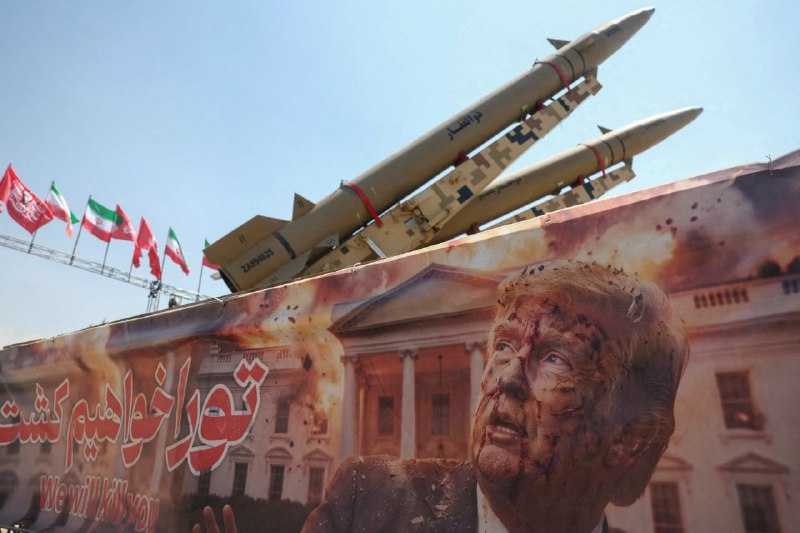
At 11:27 UTC on 24 August 2026, NPR's Up First newsletter carried a single Treasury-side line into the morning cycle: Secretary Scott Bessent would detail new economic pressures on Iran. By 10:31 UTC, the framing had already escaped the briefing room. Telegram channel wfwitness was circulating what it presented as a Financial Tribune summary of a Bessent address that went well beyond the "largest financial offensive ever assembled" line. The exchange that followed reads as the announcement itself, plus an Iranian reply measured in hours rather than days. What the available source material does not yet establish is the operational content of the package, the dollar volumes involved, or the specific instruments Bessent intends to name. This article treats the superlatives as Bessent's framing, not independently verified scale claims, and flags below what the cited posts do and do not specify.
The Treasury announcement, as the sources describe it
The NPR preview at 11:27 UTC places Bessent's announcement inside a wider US economic-statecraft week: the Treasury item runs alongside a Canada story on retaliatory tariffs against the United States, and the juxtaposition is part of how the morning wire framed the day. The Treasury-side substance, as relayed by wfwitness from a Financial Tribune report, runs through a cluster of Bessent claims rather than a single line. The Telegram excerpt attributes to Bessent: the "economic D-Day" framing; the superlative that this is the "largest financial offensive ever assembled against a single adversary"; a stated intent to dismantle Iran's military capability; a warning that countries continuing to purchase Iranian oil will face accelerating isolation; and a promise of a swift US response to any attack on US forces or Gulf states. The excerpt also describes the broader effort as the largest financial offensive ever built against a single adversary.
The cited Telegram item carries these as Bessent-attributed statements inside a relayed Financial Tribune summary, not as primary text. The source items do not specify which legal instruments will be detailed: there is no mention in the cited posts of secondary sanctions, of shadow-fleet designations, of correspondent-banking restrictions, of oil-export volumes, or of named entities. The available material establishes the framing and the rhetorical claims attached to it. Any read of the operational toolkit, the dollar volumes, or the named-target list is, at this point, extrapolation rather than reporting. Treasury readouts and Federal Register filings would be the documents that convert the rhetoric into mechanism.
Tehran's English-language reply
The Iranian counter-signal arrived in two pieces, both on X, both timestamped 24 August. Iranian Deputy Foreign Minister Kazem Gharibabadi directly challenged Bessent's threats, according to The Cradle coverage on Telegram, which cited his X post. A separate Iranian voice, analyst Mohammad Marandi, posted on X what reads as a reply quoting Bessent, writing that Iran "will crush your proxies and bring down your economy" and adding that Bessent "and the Pharaoh will be cursed by the American people" for bringing misery upon them. Marandi's post is reproduced verbatim in the cited material; the Bessent quotation he is replying to is presented in the thread context only via a third-party Nitter mirror, and this article has not independently confirmed the original Bessent post text against a primary X URL.
Gharibabadi's reply is established by the cited posts only as a direct challenge to Bessent on X. The cited Telegram and X material does not specify the language of his post, the venue beyond X, or the framing of the challenge beyond what The Cradle summarises. Marandi's reply, by contrast, is captured verbatim in the source material and is unambiguous in its content. Both posts are addressed to Bessent by name; both are public; both landed within the same news cycle as the Treasury announcement.
What the language does
Bessent's choice of "D-Day," paired with the cluster of military, oil-buyer, and Gulf-state warnings in the relayed Financial Tribune summary, is a rhetorical escalation that reframes a long-running sanctions posture as a single decisive operation, against a backdrop that includes threats of military-dismantlement language and warnings to third-country oil buyers. Whether the underlying policy is incremental or discontinuous is not something the source items resolve; the announcement is new, the framing is new, and the operational substance is not in the record yet. The Marandi reply, in turn, is shaped for an English-language audience: it invokes a biblical-Quranic pharaoh motif in a direct reply to a US cabinet official, in a cycle already crowded with US-Canada tariff headlines.
Monexus analysis: the exchange reads as simultaneous signalling to two different audiences. The Treasury side is framing a sanctions-and-isolation package as a single decisive operation, with military-dismantlement language and third-country warnings attached. The Iranian side is responding in English on X within hours, in language designed to land on the same global feed that carries the Treasury announcement. Neither side is yet on the operational hook; both are on the rhetorical one. The medium matters: the Iranian reply is English-language, public, and addressed to Bessent by name, which is a different posture from a closed MFA briefing.
What the cited material does and does not establish
The cited posts establish, on the US side: an NPR preview placing the announcement in the morning wire; a relayed Financial Tribune excerpt, via Telegram monitor wfwitness, attributing to Bessent the "economic D-Day" phrase, the "largest financial offensive ever assembled against a single adversary" characterisation, a stated intent to dismantle Iran's military capability, a warning to countries buying Iranian oil about accelerating isolation, and a promise of a swift US response to any attack on US forces or Gulf states; and a Nitter mirror URL that the thread context associates with Bessent's X account, the original content of which this article has not independently verified. On the Iranian side, the cited posts establish: a Telegram report by The Cradle that Gharibabadi directly challenged Bessent on X, without specifying the language of the post; and Marandi's verbatim X reply quoted above.
The cited material does not specify: the legal instruments the package will employ; the dollar volumes or entity lists; whether OFAC designations or Federal Register filings are imminent within any particular window; the language of Gharibabadi's post beyond The Cradle's summary; the original text of Bessent's X post beyond the Nitter mirror reference; or whether Iran has been pushed into a sub-network of non-correspondent banks, yuan- and dirham-settled oil sales, or opaque-flag tankers. Such plumbing claims belong to a wider body of reporting that this article has not independently verified, and are outside what the cited posts support.
The 72 hours ahead will determine whether the rhetoric was the policy or merely the announcement of one. Three documents are worth watching: any Treasury readout that names a specific dollar volume or entity list; any Iranian central-bank or oil-export counter-move visible on the wire; and any escalation or de-escalation in the X exchange between Bessent's account and Iranian officials. Until those documents appear, Monexus treats the "largest financial offensive" claim and the military-dismantlement language as Bessent's characterisation, not as independently established scale or operational claims.
Desk note: This article leans on Treasury-side reporting from NPR's morning wire, the Financial Tribune framing relayed by Telegram monitor wfwitness, and the Iranian counter-signal as captured by The Cradle on Telegram and on X. The cited posts do not specify the operational content of the package, and this publication has not independently verified any banking, shipping, or sanctions-designation claims that have appeared in adjacent commentary; such claims are treated as outside the scope of this article.
Wire provenance
This editorial synthesis draws on the following public wire/social posts:
- https://www.npr.org/2026/08/24/g-s1-139736/up-first-newsletter-iran-economic-pressures-canada-tariffs-trump-visa-ban
- https://t.me/wfwitness/108094
- https://t.me/thecradlemedia/66710
- https://t.me/TheCradleMedia/66710
- http://nitter.perennialte.ch/SecScottBessent/status/2091664440785502582
- https://x.com/s_m_marandi/status/2091822873014862149
- https://www.npr.org/2026/08/24/g-s1-139736/up-first-newsletter-iran-economic-pressures-canada-tariffs-trump-visa-ban
- https://t.me/wfwitness/108094
- https://t.me/thecradlemedia/66710
- https://t.me/TheCradleMedia/66710
- http://nitter.perennialte.ch/SecScottBessent/status/2091664440785502582
- https://x.com/s_m_marandi/status/2091822873014862149