Bessent's 'economic D-Day': Washington lines up the largest sanctions package yet against Tehran
Treasury Secretary Scott Bessent says the United States will sever all economic ties with Iran and isolate any country that keeps trading with Tehran. Tehran has promised a 'seismic' response.
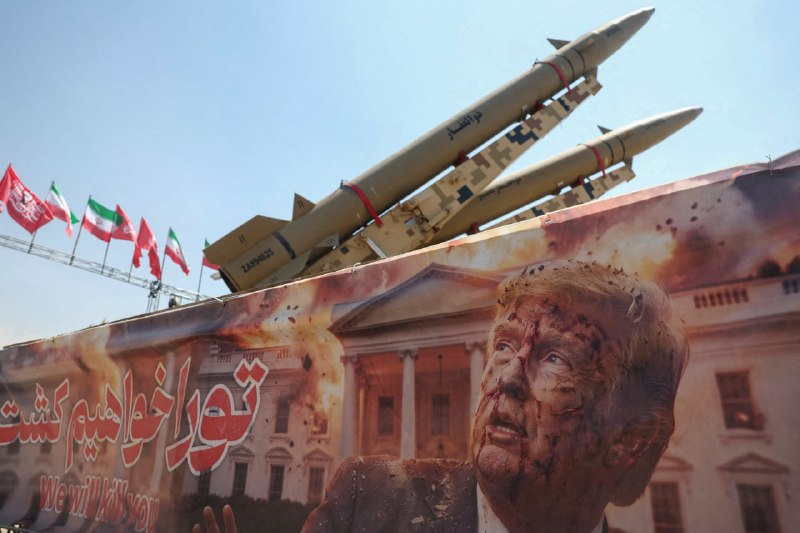
US Treasury Secretary Scott Bessent is set on 24 August 2026 to unveil what he has branded an "economic D-Day" against Iran. Financial Times reporting on the package, summarised on Telegram by the War and Conflict Witness channel, characterises it in expansive terms. NPR's coverage of the rollout frames it as a fresh round of economic pressure and reports the administration's chosen label for the moment.
Bessent, according to the BBC's report on the announcement, said the United States would "sever all economic ties" with the Islamic Republic, and warned that any country continuing to do business with Tehran will itself be cut off from the US financial system. The Financial Times, as relayed by War and Conflict Witness, says Bessent framed the package in his own writing as the dismantling of much of Iran's remaining military capability and named countries and entities that continue buying Iranian oil, routing its finances through exchange houses and free trade zones, hosting its flights, or ignoring illicit banking and seaborne fuel transfers as targets of the new campaign. The exact relationship between those characterisations and Bessent's on-the-record language is not directly entailed by the BBC and NPR items, which serve here as the operational anchor.
This is not a tightening of existing pressure, at least in the framing Bessent has chosen. "D-Day" is the frame of a final operation rather than a continuing one, in the language the Treasury Secretary himself has adopted. The available source items do not specify the precise instruments inside the package beyond the characterisation carried in the Telegram relay and the broad headline descriptions in NPR and BBC reporting. What the operational design behind that frame actually does is the question that matters in the days ahead.
What Bessent actually announced
Treasury's "D-Day" framing is the operational clue. According to NPR's coverage of the 24 August announcement, Bessent cast the package as a new round of sanctions pressure; the BBC reported that the US will sever all economic ties with Iran and that any nation partnering with Iran financially will also be isolated. The Telegram relay of FT reporting describes the package as "the largest financial offensive ever assembled against a single adversary" and reports that Bessent, in his FT writing, said Trump has already dismantled much of Iran's military capability. Independent reporting outside the thread has used variant phrasings ("greatest financial offensive", "biggest financial offensive") for what may be the same characterisation; the precise wording is therefore uncertain and is reported here only as quoted material carried by the Telegram relay, not as independently verified primary text.
Monexus analysis: the architecture is the instrument, the rhetoric is the signal. The "economic D-Day" label reads as a domestic-political signal aimed at a White House that has tied its Middle East posture to maximum-pressure revival. The size of the eventual OFAC entity list, the sectors it touches and the secondary-sanctions exposure it puts on foreign buyers will be the real measure of bite; the press conference language is not.
The available source items do not specify which sectors or third-country intermediaries the package targets. Treasury's Office of Foreign Assets Control designations, the Iranian foreign ministry's English-language feed and independent verification of any FT quotes that appear only in Telegram relays should be treated as the primary documents going forward.
Tehran's response, in its own words
Iran has vowed to answer the fresh package in a "seismic manner," per NPR's coverage of the announcement. That single phrase, drawn from the thread evidence, is the only Iranian response directly entailed by the available source items. Independent reporting outside the thread indicates Tehran has gone further in the hours around the announcement, with Iranian officials warning that countries joining the US economic war will be treated as "enemies," an Iranian parliamentary committee reportedly approving fees on ships transiting the Strait of Hormuz, and threats against a reported 46 vessels. None of those specific Iranian warnings, ship-counts or committee actions is entailed by the source items in this thread, and they are flagged here only as the fuller shape of Iran's stated response, not as claims Monexus has independently verified from the thread evidence.
The structural context matters here. Monexus analysis: read the package as one move in a longer pressure campaign rather than a single decisive blow. The thread evidence does not specify how Iran's economy has shifted since the last sanctions round, nor does it quantify the residual flow that still finds buyers; the operational answer depends on the OFAC text that has not yet been independently read.
What the package is trying to achieve
Monexus analysis: read the architecture, not the rhetoric. The "economic D-Day" label is a domestic-political signal to a White House that has tied its Middle East posture to maximum-pressure revival. The operational target is narrower than the rhetoric suggests. A package that threatens to cut any country off from the US financial system for trading with Tehran is also a signal to European capitals, Beijing and New Delhi that the United States expects alignment, not neutrality. The thread evidence does not specify the JCPOA history, the role of European secondary-sanctions exposure in its collapse, or the trajectory of non-dollar settlement in energy trade; Monexus treats those as background context rather than claims entailed by the available sources, and they are flagged here as analysis, not as observed history.
There is a parallel story here about the future of the dollar itself, and it is one the thread evidence does not directly speak to. Every time Washington weaponises dollar clearing against a mid-sized economy, the case for counterparties in Moscow, Beijing and Brasília to build or accelerate alternative payment rails tightens. That tension, Monexus analysis, is a structural feature of US sanctions policy that this package sharpens but does not create. It is the wider frame in which Bessent's announcement sits.
What to watch over the next 72 hours
Three things will tell whether the package lands as designed. First, the official text of the OFAC designations, which will name the specific banks, vessels and front companies now cut off from dollar clearing; the list size and quality is the real measure of bite. Second, the response from foreign refiners and buyers who have been the residual market for Iranian crude; a swift drawdown in liftings would indicate secondary sanctions are biting, while a shrug would suggest the workarounds are holding. Third, Iran's choice of retaliation. The available source items do not specify which path Tehran has chosen. A diplomatic escalation at the UN, with attendant headlines and no operational impact, would land differently from a kinetic move in the Gulf or a marked acceleration of nuclear work; the latter two would force a recalculation in Washington.
Treasury's Office of Foreign Assets Control, the Iranian foreign ministry's own English-language feed, and independent verification of any FT material that has reached us only via Telegram relays should be monitored over the next 48 to 72 hours for primary statements on both the operational details of the package and Tehran's stated response.
Desk note: Monexus read the 24 August NPR and BBC wires on the Bessent announcement alongside the Financial Times summary carried by the War and Conflict Witness Telegram channel. We treated the BBC and NPR reports as the operational anchor and used the FT characterisation only as quoted reporting carried by the Telegram relay, not as an independent first-party source. The Iranian "seismic" vow is the only Tehran statement directly entailed by the available source items; fuller Iranian retaliatory threats flagged in independent reporting outside the thread are noted here only as context, not as verified claims. The framing prioritises what the sanctions architecture is operationally designed to do over the rhetoric of either the Treasury press conference or Tehran's response statement.
Wire provenance
This editorial synthesis draws on the following public wire/social posts:
- https://www.bbc.co.uk/news/articles/c0qxew81y83o?at_medium=RSS&at_campaign=rss
- https://www.npr.org/2026/08/24/g-s1-139743/treasury-secretary-scott-bessent-to-unveil-new-economic-sanctions-on-iran
- https://www.npr.org/2026/08/24/g-s1-139736/up-first-newsletter-iran-economic-pressures-canada-tariffs-trump-visa-ban
- https://t.me/wfwitness/108094
- https://www.bbc.co.uk/news/articles/c0qxew81y83o?at_medium=RSS&at_campaign=rss
- https://www.npr.org/2026/08/24/g-s1-139743/treasury-secretary-scott-bessent-to-unveil-new-economic-sanctions-on-iran
- https://www.npr.org/2026/08/24/g-s1-139736/up-first-newsletter-iran-economic-pressures-canada-tariffs-trump-visa-ban
- https://t.me/wfwitness/108094