Life sentence for Hui Ka Yan leaves China's property crisis exactly where it started
A Guangzhou court has handed Hui Ka Yan, founder of China Evergrande, a life sentence. The verdict closes one chapter of China's property bust without addressing the structural forces that produced it.
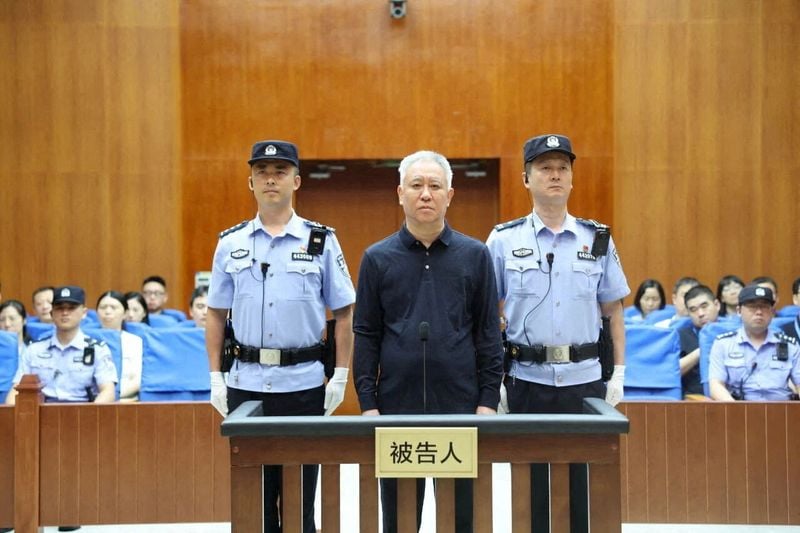
The sentencing took place in a Guangzhou court last week, and the news arrived in Western wires on 23 August 2026 with the cadence of an obituary: Hui Ka Yan, the founder of China Evergrande Group, was sentenced to life in prison, a punishment that closes the most-watched criminal chapter of China's property bust without resolving a single one of the structural conditions that produced it. Reuters reported the development in a series of dispatches on 23 and 24 August 2026, framing the verdict as a marker that the legal reckoning for the boom years has arrived even as the market itself grinds on. The headline number in those reports is simple and stark. The harder question is what comes next.
The property crisis that Evergrande came to symbolise did not begin with one man's fraud, and it will not end with his conviction. Hui Ka Yan built China's largest developer by leaning into the same set of incentives that the Chinese state itself was offering in the late 2000s and 2010s: leverage against land, land against local government revenue, and local government revenue against an urbanisation drive that pulled hundreds of millions of households into newly built cities. When the credit cycle turned, the developer did not bend; it broke, and the buildings, suppliers, and homebuyers broke with it. Reuters's analysis thread, syndicated by Investing.com on 23 August, makes the point that the verdict is a punctuation mark in a much longer sentence the Chinese economy is still trying to finish.
The verdict and the man
Hui Ka Yan, once ranked as Asia's richest person, was sentenced to life imprisonment by a Chinese court in the week of 18 August 2026, according to Reuters reporting carried on X on 24 August. The charge set and the duration of the sentence are unusually severe by the standards of white-collar cases involving Chinese private-sector founders, signalling that the court treated the conduct as something close to a betrayal of the development model rather than a garden-variety breach of fiduciary duty. Reuters's summary, relayed on its official X account at 01:43 UTC on 24 August, noted that Hui had "come to personify the boom and bust of China's property market," a phrasing that captures how completely one individual's biography has been folded into the country's macroeconomic narrative.
The Western wire framing emphasises individual culpability. That framing has a real factual basis: Evergrande's pre-default disclosures, the offshore-bond payment fiascos of 2021 and 2022, and the diversion allegations around pledged shares are matters of record. But the same records also show a developer that was responding to incentives designed at a higher level, and the most analytically honest reading is that the sentence punishes one node in a network whose other nodes remain in place. State-owned developers continue to operate under implicit guarantees that private developers never enjoyed. Local government financing vehicles continue to monetise land. Households continue to treat property as the dominant store of wealth. The man is locked up; the structure is not.
The market that didn't move
The most striking number in the Reuters analysis piece is the absence of one. In the trading sessions following the sentencing, the offshore-listed securities of major Chinese developers barely twitched. Investors who had been waiting years for a clean event to mark the bottom of the property cycle had been told that a life sentence for Hui Ka Yan was the cleanest such event available; the markets, characteristically, declined to act on the cue. Reuters's analysts framed the verdict as a procedural milestone in the restructuring pipeline, not as a turning point for housing demand or developer credit. That is the analytical core.
Two years after the formal onset of the property contraction, the overhang is still being measured in uncompleted units, in the stock of unsold inventory in tier-three and tier-four cities, and in the balance sheets of the property management and construction supply chains that depend on developer cash flow. The Hui verdict does not retire a single one of those balances. It does, however, retire the possibility that the system's most prominent founder could return to negotiate a restructuring under his own name, and in that narrow sense it removes a piece of optionality that some creditors had been pricing in. The Reuters analysis piece, republished by Investing.com on 23 August 2026, treats the sentencing as a marker of legal closure, not of market clearance.
The state that built the boom
To read the sentencing purely as a moral story is to miss where the leverage actually came from. Evergrande's model depended on access to bank credit, on the willingness of local governments to sell land at auction, and on the implicit policy support that treated scale in property development as a strategic asset. China's property sector accounted for roughly a quarter of GDP at its peak when measured through the broader value chain of construction, related services, and household wealth-effect consumption, an aggregate that policy-makers were not indifferent to. When the state decided that the model had run too hot, the deleveraging campaign beginning in 2020, the so-called "three red lines" regime, was administered first and most harshly to the private developers, including Evergrande, while state-backed peers were given more runway.
Chinese official commentary, including the People's Daily and Xinhua editorial lines, has consistently framed the deleveraging as a deliberate policy choice to redirect capital from property into manufacturing, advanced technology, and what officials describe as "new quality productive forces." CGTN's English-language coverage of related infrastructure partnerships, such as the China-aided cancer treatment centre whose groundbreaking in Tunisia was reported on 24 August 2026, sits within that same editorial frame: a country pivoting from a credit-fuelled property engine to a state-directed investment and industrial-policy engine. The structural argument is that the Evergrande model was always going to be wound down; the question is what replaces it. The sentencing is one piece of that winding-down. It is not, on its own, the replacement.
The buyers who were never made whole
The human cost of the property bust has been carried disproportionately by households who bought into developments that were never finished, paid mortgages on units that will never be delivered, and watched the equity value of their primary residence decline in step with the national housing price index. Reuters's reporting on the Evergrande saga has tracked the slow grind of these cases through China's court system and through pre-sale escrow arrangements that were designed to protect buyers but did not, in practice, fully cover them. The Hui sentencing does not address those claims directly; Chinese courts have processed some homebuyer suits on an expedited basis, but the bulk of the consumer-facing remediation runs through project-level restructuring rather than through the founder's personal liability.
This is the part of the story where the Global South framing that Monexus typically applies to sovereign-debt restructurings begins to apply. The Evergrande situation is not a sovereign restructuring, but it shares certain features: a large pool of creditors of differing seniority, a strategic sector that the state is unwilling to allow to fully fail, and a process that maximises continuity at the cost of certainty for the most junior claimants. Offshore bondholders, suppliers, and trade creditors have all learned that the senior position in any resolution will be occupied by the state and by domestic households; their recoveries will be partial and delayed. The Reuters analysis piece flags this dynamic without resolving it.
What the next year looks like
The forward view is more important than the verdict. Three dates to watch in the coming year. First, the next quarterly round of developer earnings, which will be the first clean read on sales and completion rates in the post-Hui era. Second, the National People's Congress session in March 2027, where the post-pandemic property deleveraging will need to be reconciled with whatever growth target Beijing sets; the property sector's contribution to nominal GDP has already fallen from its peak, and a further leg down is incompatible with a five-per-cent-style growth target without a much stronger industrial-policy substitute. Third, the trajectory of household balance sheets, which will determine whether the wealth-effect drag on consumption abates or deepens through 2027.
Monexus assessment: the Hui sentencing is best read as evidence that Beijing is willing to pay the symbolic cost of closing the property era, even at the price of locking up the founder whose name the world associates with it. The structural question is whether the authorities are willing to pay the financial cost of a genuine write-down across the property complex. So far, the answer has been no. The state has used administrative guidance, project-level restructuring, and selective support to keep the system functioning while the overhang slowly amortises. That strategy can continue. It cannot, however, deliver a clean recovery in housing demand or a return of confidence among households that have already absorbed a substantial portion of the loss. The life sentence for Hui Ka Yan is the most legible single signal the Chinese state has yet sent about its willingness to break with the property-driven growth model. The markets, characteristically, read the signal and asked what comes after.
Desk note: Western wires, led by Reuters, framed the Hui verdict as a moral and legal milestone closing the property boom. Monexus reads it as a structural one, the legal system has caught up with the boom; the financing system that produced it has not.
Wire provenance
This editorial synthesis draws on the following public wire/social posts:
- https://www.investing.com/news/economy-news/analysischinas-property-crisis-grinds-on-after-evergrande-sentencing-4872486
- http://reut.rs/4xWEsrp
- http://reut.rs/4xkXPuq
- https://reut.rs/4zxfArM
- https://x.com/Reuters/status/2091702808085152083
- https://x.com/Reuters/status/2091732239235133522
- https://x.com/Reuters/status/2091670591254188403
- https://news.cgtn.com/news/2026-08-24/China-aided-cancer-treatment-center-breaks-ground-in-Tunisia-1PRwg5ELnXO/p.html
- https://x.com/CGTNOfficial/status/2091734290975650050
- https://www.investing.com/news/economy-news/analysischinas-property-crisis-grinds-on-after-evergrande-sentencing-4872486
- http://reut.rs/4xWEsrp
- http://reut.rs/4xkXPuq
- https://reut.rs/4zxfArM
- https://x.com/Reuters/status/2091702808085152083
- https://x.com/Reuters/status/2091732239235133522
- https://x.com/Reuters/status/2091670591254188403
- https://news.cgtn.com/news/2026-08-24/China-aided-cancer-treatment-center-breaks-ground-in-Tunisia-1PRwg5ELnXO/p.html
- https://x.com/CGTNOfficial/status/2091734290975650050