Tehran's oil threat meets Washington's 'economic D-Day', and traders shrug
Iran threatens to halt Gulf oil exports hours before Washington prepares a new sanctions package; crude slips roughly one percent as markets read posture more than power.
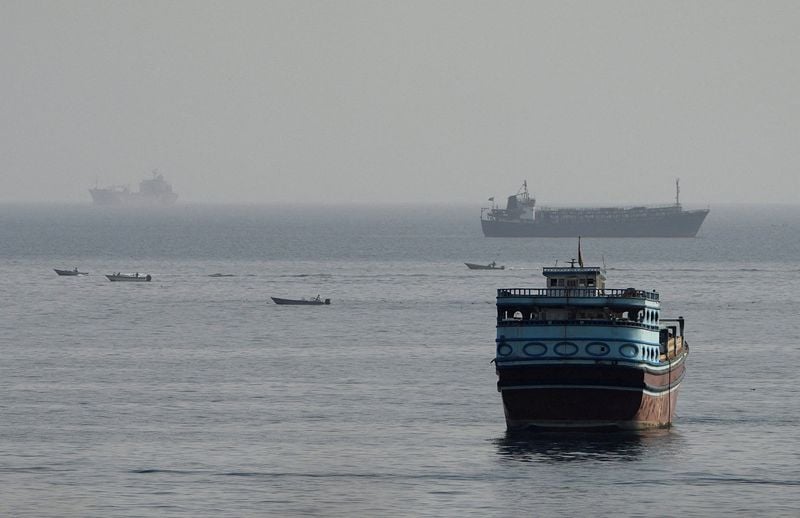
Brent slipped and U.S. equity benchmarks dithered through the early European session on 24 August 2026, as a Tehran warning to halt Gulf oil exports collided with Washington's pledge of an "economic D-Day" against Iran. Brent ticked lower despite the headline tension, falling close to one percent in the prior 24 hours on reports that the U.S. was preparing a further sanctions package, per Reuters and Investing.com wires carrying the late-Asia print. The pattern cuts against the usual script: a Strait of Hormuz blockade threat would, in another market regime, drive crude limit-up. Instead, traders appeared to price the rhetoric as posture.
The read-through matters because it exposes how thin the line is between a sanctioned-clampdown escalation that the market treats as incremental, and a real-flow disruption that it does not. Both Washington and Tehran spent the early Monday session signalling maximum resolve, and the crude complex still drifted south. Either the sanctions details will land softer than the preview, or the market is mispricing a genuine supply risk that re-emerges the moment a tanker is detained, a pipeline is shaken, or an insurance underwriter withdraws cover for the Gulf transit corridor.
The two clocks in the room
On one clock, Tehran. CGTN's English wire and a follow-on Investing.com report on 24 August 2026 carried an Iranian threat to halt all oil exports from the Gulf if U.S. measures proceed, language pitched at Tehran's domestic audience as much as at Washington. On the other clock, the U.S. Treasury and State Department machinery, with an announcement on additional sanctions scheduled for the U.S. day. Reuters flagged the market's wait-and-see posture in a 05:10 UTC note, observing that shares dithered while oil slipped into the announcement.
The asymmetry is structural. Iran's actual incremental export capacity is largely spoken for under existing sanctions and shadow-fleet arrangements; turning the Gulf itself into a chokepoint would mean confronting the physical transit of Saudi, Iraqi, Kuwaiti, Qatari and Emirati barrels, alongside Iran's. That is a multilateral coercion problem, not a unilateral one. The threat lands politically because it echoes a long-running Iranian negotiating posture; it lands financially only if Tehran can credibly threaten something other states care about.
Why crude slipped on a blockade warning
Three plausible reads, with no clean way to choose between them yet.
First, the market is treating Iran's language as a known negotiating instrument rather than a credible operational plan. Each round of U.S. sanctions pressure over the last several years has produced an Iranian counter-warning; the warning becomes the asset, not the disruption. Second, the additional sanctions expected from Washington are being read as tightening around the margins, designations on shadow-fleet operators, third-country intermediaries, ports-of-call, rather than a sweeping embargo that changes the supply curve overnight. Third, global supply is in a different shape than during past escalations: U.S. production has absorbed prior Iran barrels, and OPEC+ spare capacity sits at a level that absorbs incremental disruption.
Monexus analysis: the dominant read at the desk is a combination of the second and third, the market's lack of reaction is a signal that the announced package is expected to be an enforcement-action, not a structural one. That is a forecast, and it should be treated as such; if the announcement includes primary-purchase sanctions on Chinese refiners, the calculus flips.
The 'economic D-Day' frame and its limits
"Economic D-Day" is a phrase designed for translation, colour, not content. The phrase implies a coordinated, allied, multi-front operation; the reality of U.S. secondary-sanctions policy is bilateral, increasingly unilateral, and structurally dependent on dollar-clearing access. The leverage survives because the dollar remains the dominant settlement currency for hydrocarbons; the leverage frays at the edges as more bilateral trade settles in yuan and as more cargoes move under flags and insurers outside the U.S. reach.
That is why this escalation matters beyond oil. Each new package is read in Beijing, New Delhi, Ankara and Brasília as another data point on whether the dollar channel can be relied on for cross-border energy commerce. Iran's threat, even if not operationalised, performs a service for any capital-allocating actor trying to construct a non-dollar corridor: it reminds underwriters and shippers that the Gulf remains a contested transit zone.
What to watch before the bell
Three signals will move crude more than the press conference. First, the text of the Treasury package, designations on named vessels, ports, exchange houses, and any Chinese, Indian or Turkish intermediary. Second, any Iranian follow-through that is operational, not rhetorical: IRGC Navy movement in the Strait, flag-state notices to shipowners, or a public statement from the Islamic Republic of Iran Shipping Lines. Third, the response from the largest non-Iran Gulf producers, whether Saudi Arabia and the UAE treat this as their disruption to insure against, or Tehran's.
The available source items do not specify which agencies are issuing the package, which legal authorities are being invoked, or which non-Iran states have been consulted in advance. This desk will update the read once the Treasury text and any first-party Iranian reply are public.
Wire provenance
This editorial synthesis draws on the following public wire/social posts:
- https://news.cgtn.com/news/2026-08-24/US-vows-economic-D-Day-as-Iran-threatens-to-halt-Gulf-oil-exports-1PRAVYAsym4/p.html
- http://reut.rs/3UhLmsL
- https://www.investing.com/news/commodities-news/us-vows-economic-dday-as-iran-threatens-to-halt-all-oil-exports-4872522
- https://www.investing.com/news/commodities-news/oil-prices-drop-nearly-1-as-us-prepares-more-iran-sanctions-4872509
- https://www.investing.com/news/commodities-news/oil-falls-1-ahead-of-us-announcement-to-impose-further-sanctions-on-iran-4872489
- https://news.cgtn.com/news/2026-08-24/US-vows-economic-D-Day-as-Iran-threatens-to-halt-Gulf-oil-exports-1PRAVYAsym4/p.html
- http://reut.rs/3UhLmsL
- https://www.investing.com/news/commodities-news/us-vows-economic-dday-as-iran-threatens-to-halt-all-oil-exports-4872522
- https://www.investing.com/news/commodities-news/oil-prices-drop-nearly-1-as-us-prepares-more-iran-sanctions-4872509
- https://www.investing.com/news/commodities-news/oil-falls-1-ahead-of-us-announcement-to-impose-further-sanctions-on-iran-4872489