Kanter Freedom ejected from courtside seat after late-third-quarter clash with Cloud
Former NBA player Enes Kanter Freedom was ejected from his courtside seat during the Indiana Fever's game against the Chicago Sky on 23 August 2026 after a verbal confrontation with Sky guard Natasha Cloud late in the third quarter.
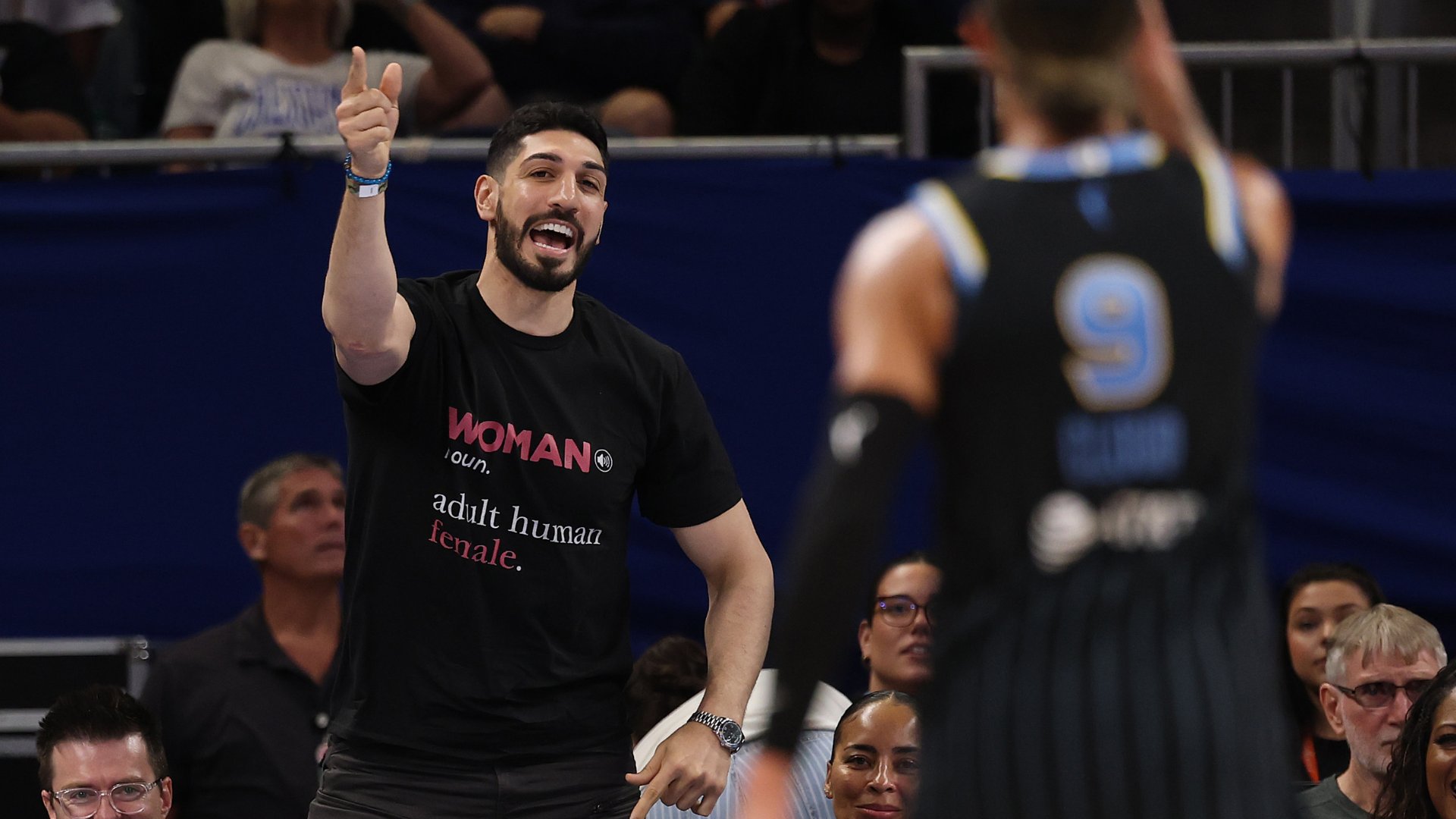
Late in the third quarter of the Indiana Fever's 23 August 2026 home game against the Chicago Sky, security escorted former NBA player Enes Kanter Freedom out of his courtside seat. The Guardian reports the sequence plainly: Cloud yelled and pointed in Kanter Freedom's direction after a made basket; Kanter Freedom rose and engaged her; the ejection followed. ESPN describes a verbal altercation that did not turn physical. The available source items do not specify what was said or what precisely triggered the exchange, only that Cloud's gesture and Kanter Freedom's response drew arena security's attention.
Kanter Freedom's presence at courtside was the second fact of the night. The former NBA center has publicly criticised the WNBA's transgender-inclusion policy and, according to CBS Sports, has requested eligibility for the WNBA draft, a step the wire framed as part of the row rather than a serious bid for a roster spot. Sunday's ejection, then, sat at the intersection of a months-long policy fight and a routine spectator-conduct call. What changed was the visibility of the disagreement, not the underlying rules. The WNBA's eligibility framework is set by the league office; referees do not adjudicate it on the floor, and security does not either.
How the night unfolded
According to the Guardian, Cloud directed a verbal volley at Kanter Freedom after she scored late in the third quarter, then pointed in his direction as she ran back on defence. Kanter Freedom rose from his courtside seat and engaged her. The available source items do not specify whether the two exchanged words before that moment, or what was said. ESPN's report describes the confrontation as verbal rather than physical, and both BBC Sport and the Guardian characterise the ejection as a security decision, since Kanter Freedom was not on the floor and not subject to on-court officiating.
CBS Sports noted that Kanter Freedom had earlier in the row requested WNBA draft eligibility, a procedural step that, on its own, would not have entitled him to a courtside seat at a regular-season game. The available source items do not specify who purchased his ticket or whether the league approved his courtside placement. Al Jazeera's overnight dispatch, filed at 12:04 UTC on 24 August, framed the moment simply as a courtside confrontation that ended with an ejection; the wire converged on those basic facts and diverged chiefly on how much weight to give the underlying policy fight.
Why the row exists in the first place
The dispute the league is trying to manage predates Kanter Freedom's arrival on the scene. The WNBA's eligibility framework has, for years, permitted transgender women players whose declared gender identity is female to compete, subject to medical and procedural criteria. Over the last twelve months, that framework has been litigated in op-eds, in congressional correspondence, and in a handful of state legislative proposals aimed at restricting transgender athletes in women's sport. Kanter Freedom entered the conversation as a self-styled critic of the policy. Sunday brought the argument into the building.
The asymmetry of the scene is worth marking. Cloud plays the games. Kanter Freedom attended as a spectator with a pre-existing media footprint and an explicit political project. The WNBA's policy does not depend on either party's preferences; it is set by the league office. What changed on Sunday was the visibility of the disagreement, not the policy itself. Security ejected a spectator who crossed a behavioural line. The wire coverage, on the whole, observed that distinction.
What this is actually about
The most natural reading is the unkind one: a publicity campaign colliding with a working league. The available source items do not specify when Kanter Freedom last played a competitive basketball game, or whether the WNBA's athletic thresholds would apply to his draft application if it were processed in the ordinary course. What the items do confirm is the pattern: a high-profile critic attending games, requesting a roster slot, and ending up at the centre of a courtside incident that the wire covered on its sports desks.
Monexus analysis: the structural pattern worth naming is that eligibility disputes in women's professional sport are no longer being resolved only by the bodies that govern the sport. They are being staged, in front of cameras, by actors with no operational role, on the expectation that a viral moment will force a governing body's hand. The WNBA, like FIFA and World Athletics before it, is learning to manage not just athletes and rules but a permanent adjacent audience of provocateurs. That is a governance problem the league's competition committee did not budget for, and it is one the wire coverage on Sunday reflected without quite naming.
Stakes and what to watch next
The immediate stakes for the league are procedural. CBS Sports' coverage did not record any further on-court incident. The longer stakes hinge on two questions the wire left open: whether the WNBA will respond formally to Kanter Freedom's draft application, and whether courtside credentials will continue to be issued to applicants with active political campaigns against league policy. ESPN's report and Al Jazeera's overnight item both leave those questions unresolved. If the league tightens courtside access, expect a First-Amendment-adjacent dispute; if it does not, expect more Sundays like this one.
Two dates are worth watching. First, the WNBA's regular season is approaching its closing stretch; the playoff picture will soon displace the eligibility fight as the news driver. Second, the league office has not, in the available source items, committed to a public timetable for responding to the draft application. The only thing the items confirm is that Sunday's ejection was not the end of the argument but, by Kanter Freedom's own design or not, the loudest minute of it so far.
Desk note: Monexus treated this as a sports-governance story first and a culture-war story second. The wire coverage converged on the basic facts, an ejection following a verbal confrontation late in the third quarter between a courtside spectator and a current WNBA player, and diverged on how much weight to give the underlying policy fight. We gave it some, but not so much that the incident becomes a referendum on the WNBA's eligibility rules. The argument is bigger than one courtside seat, but the seat is what happened.
Wire provenance
This editorial synthesis draws on the following public wire/social posts:
- https://www.bbc.co.uk/sport/basketball/articles/c87vg1j93pqo?at_medium=RSS&at_campaign=rss
- https://www.theguardian.com/sport/2026/aug/23/enes-kanter-wnba-ejected-natasha-cloud
- https://www.espn.com/wnba/story/_/id/49707455/kanter-freedom-ejected-confrontation-sky-cloud
- https://www.cbssports.com/wnba/news/enes-kanter-freedom-ejected-wnba-game-natasha-cloud-altercation/
- https://www.aljazeera.com/sports/2026/8/24/former-nba-player-enes-kanter-ejected-after-confrontation-with-wnbas-cloud?traffic_source=rss
- https://www.bbc.co.uk/sport/basketball/articles/c87vg1j93pqo?at_medium=RSS&at_campaign=rss
- https://www.theguardian.com/sport/2026/aug/23/enes-kanter-wnba-ejected-natasha-cloud
- https://www.espn.com/wnba/story/_/id/49707455/kanter-freedom-ejected-confrontation-sky-cloud
- https://www.cbssports.com/wnba/news/enes-kanter-freedom-ejected-wnba-game-natasha-cloud-altercation/
- https://www.aljazeera.com/sports/2026/8/24/former-nba-player-enes-kanter-ejected-after-confrontation-with-wnbas-cloud?traffic_source=rss