Washington names an economic offensive against Iran
On 24 August 2026, US Treasury Secretary Scott Bessent publicly launched “Operation Economic Outcast,” framed by the White House as including secondary sanctions. Treasury said no new measures had yet been imposed and cast the day as a “final warning.”
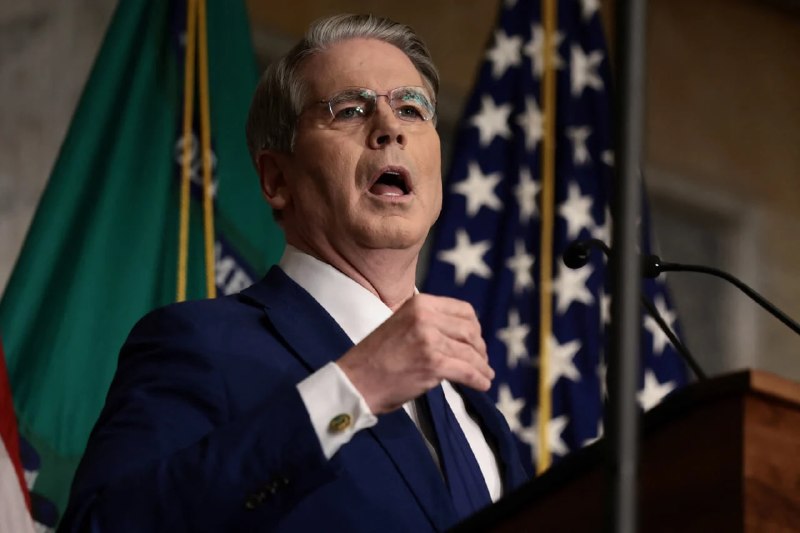
At 19:33 UTC on 24 August 2026, Telegram channels began carrying word that US Treasury Secretary Scott Bessent had publicly launched “Operation Economic Outcast” against Iran. A later update, at 21:31 UTC, added a first-party qualification that changes the read of the day: Treasury said no new sanctions had yet been implemented, and cast 24 August as a “final warning.” The campaign, according to a White House statement relayed by Middle East Spectator, is to include sanctions, secondary sanctions, and the cutting off of “every economic lifeline to the Iranian government.”
What matters now is less the operation’s theatrical name than what Treasury intends to do under it. A public announcement that explicitly contemplates secondary sanctions raises the deterrent stakes for every bank, shipper, insurer and energy buyer that still touches Iranian business. But the same Treasury that named the operation told reporters that nothing new had entered force, which leaves the launch as a warning shot rather than a measurable escalation.
The supplied reports do not yet provide what would normally accompany a sanctions announcement of this size: an initial designation, a list of named targets, a blocked-assets figure, a legal authority or an implementation timetable. What they do provide is the campaign’s stated scope, its rhetorical frame, and a clear signal from Treasury that the next step is binding, not symbolic.
An announcement with a stated scope
The four source items converge on the launch but diverge on its texture. The earliest report, at 19:33 UTC from Middle East Spectator, said President Donald Trump and Bessent had begun publicising the operation. A second Middle East Spectator post, at 21:31 UTC, sharpened the account by carrying the White House framing that the campaign would include sanctions, secondary sanctions, and an effort to sever “every economic lifeline” to Tehran. It also reported that Bessent had declined to specify whether Chinese banks could face secondary-sanctions exposure, citing concerns about “turning the world economy upside down.”
OANN’s 20:19 UTC item described the rollout of new sanctions intended to “cripple” Iran. Intel Slava’s 20:15 UTC post called the operation “unprecedented” and said it would target Tehran and “any supporters.” A separate channel, Redacted Intel, reported at 19:37 UTC that Trump and Bessent had jointly announced the start of the operation and quoted Bessent describing an “economic onslaught” against Iran’s financial networks.
Read together, the posts establish a campaign explicitly designed to reach beyond Iran’s borders through secondary sanctions. That is the central piece of news the launch contains. It also raises the question Treasury itself flagged in its 21:31 UTC remarks: where the line will fall, particularly on Chinese and other large-economy intermediaries.
Why the “final warning” framing matters
Treasury’s own characterisation of the day as a “final warning,” combined with the explicit statement that no new sanctions had yet been implemented, sets a different baseline than the launch language alone would suggest. The operation is being presented as a threshold event: a public commitment to impose costs that have not yet been specified.
That sequencing is consistent with how US sanctions campaigns have historically been opened. A high-profile designation or executive order can be self-implementing the moment it is signed. A warning without an instrument defers the bite while raising the political cost of non-compliance. The deterrent logic depends on credibility: the targets and intermediaries must believe that the next round will be sharper, more specific and harder to route around.
The 21:31 UTC remarks also imply a known ceiling. Bessent’s reported reluctance to extend secondary sanctions to Chinese banks, on the grounds of global economic disruption, is a first-party acknowledgement that the campaign’s scope is bounded by considerations Washington is unwilling to override. The supplied reports do not specify which other jurisdictions fall inside or outside that bound.
The structure of dollar-leveraged pressure
The operation sits inside a longer-running pattern in which US financial tools reach non-US commerce through the dollar clearing system and the threat of losing access to it. A foreign bank asked to choose between Iranian exposure and continued participation in US-dollar payments typically chooses the latter. The same arithmetic applies to shipping firms, insurers, energy buyers and correspondent banks that have no direct US nexus but cannot afford to be cut off from the US financial system.
Including secondary sanctions in the stated scope, as the 21:31 UTC report describes, widens the circle of potential pressure points. But widening the circle also raises the evidentiary bar. Washington must define prohibited conduct with enough precision that firms can screen transactions, and regulators must apply the rules consistently across jurisdictions. The supplied reports do not specify whether Treasury will publish guidance, an executive order or new regulations, nor do they name a legal authority.
There is a plausible alternative reading. The launch could be principally a signalling move, intended to encourage voluntary disengagement while detailed designations are still being prepared. That would explain why Treasury said no new measures had yet entered force while still naming the operation publicly. Monexus assessment: the more natural read of the 21:31 UTC remarks is that Treasury is reserving the next move as leverage, rather than announcing a complete programme on 24 August.
What to watch after 24 August
The first test is documentation. A Treasury press release, an executive order, an Office of Foreign Assets Control notice or a sanctions action would show whether “Operation Economic Outcast” is a new architecture, a label for accumulated measures or a forward-looking framework. None of those documents is identified in the supplied source items.
The second is target selection. A designation can have immediate legal effect, but the cited posts do not name an initial target, nor do they specify whether existing measures are being renewed, expanded or grouped under the new label.
The third is the treatment of third countries. Treasury’s own reported reluctance to sanction Chinese banks shows the operation’s ceiling is being negotiated in public. Whether Gulf, Turkish, Indian or other intermediaries face secondary-sanctions exposure will determine how widely the deterrent bite is felt.
The fourth is observable impact. Without designations, penalty notices or evidence of changed financial behaviour, no claim about the operation’s effect on Iranian revenue is supportable from the available material. This article has not independently established whether Tehran has issued a formal response; the supplied source items do not specify one.
The narrow, defensible conclusion is this. On 24 August 2026, Bessent publicly launched an operation explicitly framed to include secondary sanctions and explicitly described by Treasury as a “final warning” before any new measures are imposed. The initial designation, target list, legal instrument and timetable are not yet identified in the available reports. What comes next, particularly the first designation or enforcement guidance, will determine whether this is a genuine escalation or a more coordinated label for measures already in train.
Desk note: Monexus framed the launch as a policy signal with a stated secondary-sanctions scope because the 21:31 UTC Middle East Spectator post carries Treasury’s explicit “final warning” language and the White House reference to secondary sanctions, neither of which a thin-substance framing would have reflected.
Wire provenance
This editorial synthesis draws on the following public wire/social posts:
- https://t.me/Middle_East_Spectator/36037
- https://t.me/Middle_East_Spectator/36038
- https://t.me/OANNTV/17117
- https://t.me/intelslava/93133
- https://t.me/rnintel/65724