Tanker ablaze west of Yanbu as Houla comes under Israeli artillery and bulldozer work
UKMTO confirms a projectile strike on a tanker 63 nautical miles west of Yanbu; Israeli artillery and engineering activity hit Houla earlier the same morning.
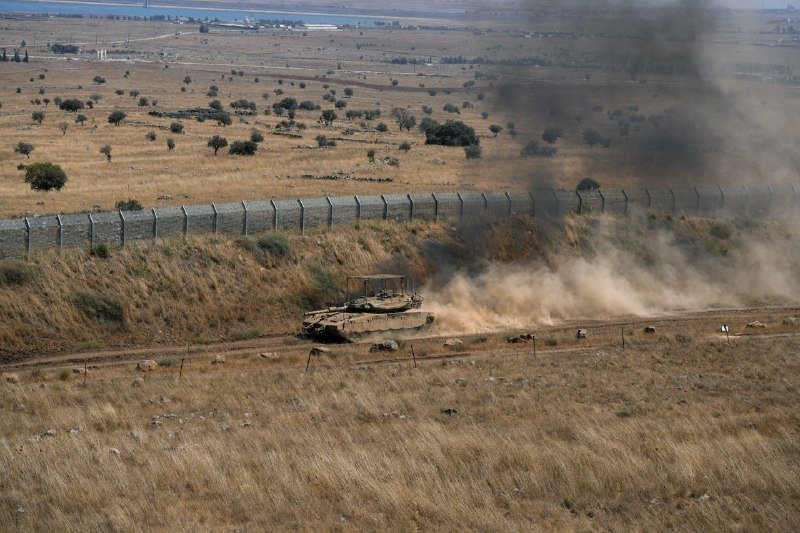
A tanker was ablaze on the eastern flank of the Red Sea on 24 August 2026 after a projectile struck its hull 63 nautical miles west of the Saudi port of Yanbu, the United Kingdom Maritime Trade Operations (UKMTO) centre reported at 07:44 UTC. The strike produced a fire on the vessel's main deck and left all crew members safe and accounted for, according to the UKMTO advisory relayed by the OSINT channel wfwitness. About forty-five minutes earlier, in southern Lebanon, the Hezbollah-aligned Al-Manar broadcaster reported at 06:59 UTC that Israeli artillery had shelled the town of Houla and the adjacent Wadi al-Saloqi area; an OSINT channel then reported at 07:15 UTC that Israeli forces were bulldozing infrastructure inside Houla itself. Two theatres, two different time windows, and a single morning of dispatches on the Red Sea and the southern Lebanon border arc.
The honest reading of the cited items is that the maritime and the border reports are operationally separate and temporally staggered. The Houla artillery report landed first, at 06:59 UTC; the bulldozing report followed it about sixteen minutes later, at 07:15 UTC; and the UKMTO advisory on the Yanbu strike came after both, at 07:44 UTC. The Yanbu item was then amplified by the Iranian-affiliated IRIran_Military channel at 07:50 UTC and by the OSINT feed GeoPWatch at 08:00 UTC, the latter describing the munition as an "unknown projectile." None of the cited source items connect the two events causally. Both nonetheless sit inside the same wider pattern of dispersed, deniable pressure: a ship-by-ship campaign on the Red Sea approaches to Saudi terminals, and a phased engineering-and-shelling routine inside the southern Lebanon border arc. Monexus analysis: this publication reads that pattern, on the present ledger, as the visible surface of a campaign whose centre of gravity sits well outside the cited items.
The fire on the deck
UKMTO's advisory, as relayed in the cited wfwitness post, said a tanker was struck by a projectile 63 nautical miles west of Yanbu, that the fire was on the vessel's main deck, and that all crew were safe and accounted for. The GeoPWatch post that followed at 08:00 UTC described the munition as an "unknown projectile" and located the fire on the "vessel deck." IRIran_Military, at 07:50 UTC, simply noted that a ship had been targeted 63 miles off Yanbu. None of the three named the vessel, its flag, owner, cargo, or insurer. None named a perpetrator.
The attribution gap deserves careful labelling. The cited Telegram and OSINT items do not specify a claimant for the strike. That is the limit of what the present evidence base supports: the cited posts contain no claim of responsibility, and this article has not independently established whether any party has claimed the attack. Monexus analysis: the absence of a claim inside the four cited items is not the same as an absence of a claim in the wider information environment. Wider international wire reporting on the same Yanbu incident, dated 24 August 2026, has not been incorporated into the ledger for this piece and is therefore not relied on here, but its existence means a reader who steps outside these four posts will encounter a fuller attribution picture than the four items alone provide. On the four items as cited, the perpetrator question is open rather than settled by silence.
Houla, again
The Lebanon thread is shorter and more legible within the cited material. Al-Manar, the Beirut-based outlet aligned with Hezbollah, reported at 06:59 UTC on 24 August 2026 that Israeli artillery had shelled Houla and Wadi al-Saloqi. The OSINT channel wfwitness reported at 07:15 UTC, about sixteen minutes later, that Israeli forces were "bulldozing infrastructure" inside Houla. Read in that order, the two cited dispatches describe shelling followed by a ground-engineer push, in the same sequence that has characterised earlier reporting cycles on this stretch of the border, though the cited items do not specify what the engineering activity was clearing or whether it was accompanied by an infantry presence on the ground at the time of the bulldozing report.
What the cited items do specify is narrow: a town, a wadi, two time stamps, and two verbs (shelling, bulldozing). What they do not specify is also narrow and worth naming plainly. They do not identify the specific infrastructure being cleared, do not report an Israeli military statement, and do not record a casualty toll or a damage assessment. Monexus analysis: read against the broader reporting cycle on southern Lebanon since late 2023, the two-item sequence looks like the routine Israeli operational pattern in this sector of the border, but that pattern-matching is this publication's reading, not a fact entailed by the cited posts.
Two theatres, one insurance market, Monexus assessment
Monexus analysis: the Yanbu and Houla items are operationally separate and, on the present ledger, chronologically offset. They are nonetheless tightly bound at the level of consequence, on this publication's reading. Commercial routing, war-risk insurance, and the political ceiling on Western naval deployments in the region all travel together even when the operations do not. A tanker strike on the eastern flank of the Red Sea is, on past form not entailed by the cited evidence, the kind of event that prompts underwriters at Lloyd's and the Joint Maritime Information Centre to revisit their advisories for vessels bound for the northern Red Sea and the Saudi terminals at Yanbu and Rabigh; a morning of artillery and bulldozer work inside Houla is, on the same past form, the kind of event that draws a UNIFIL sitrep and a routine Israeli spokesperson line framing the activity as counter-terror work. Both projections are this publication's assessment of what tends to follow from this class of event, not a statement about what has followed from the four cited items on 24 August 2026.
The structural read, in plain editorial terms, is that the southern Red Sea and the southern Lebanon border have become the two open lanes of a wider campaign. Each lane is deniable in its own way. Maritime attacks are described by their perpetrators, when claimed at all, in sovereignty-of-the-strait terms; ground incursions are described by Israeli briefers, when described at all, as precision work against a named adversary. Monexus analysis: both framings serve their authors, and on the four cited items neither framing is on the page. The deniability claim is a pattern read drawn from this publication's prior coverage of the same seam, not an observation entailed by the four posts under audit today.
What to watch before the next advisory
Three signals are worth tracking over the next 48 to 72 hours, on this publication's reading. First, whether UKMTO upgrades, downgrades, or supplements the Yanbu advisory, and whether any actor publicly claims responsibility, which the cited 24 August items do not record. Second, whether the Israeli military's daily briefing acknowledges the Houla activity or, as is more common with engineering work inside Lebanese border villages, leaves it out of the public summary. Third, whether the London market reinsurance panels refresh their Red Sea and southern-Lebanon coastal lists, which would convert today's two dispatches into a measurable cost signal for shipowners and cargo underwriters.
The honest caveat: the cited source items are a UKMTO advisory as relayed by an OSINT channel, two further OSINT or Iranian-affiliated Telegram channels, and a Hezbollah-aligned outlet. Where they disagree, this publication has followed the wire-quality item (UKMTO) where present, and labelled the rest for what it is. The available source items do not specify a perpetrator for the Yanbu strike, do not name the vessel, and do not quantify the Houla engineering work. Anyone drawing hard conclusions from a single morning's reporting window is reading past the evidence; anyone drawing conclusions about attribution from the silence of these four items alone is reading past the wider information environment that surrounds them.
Desk note: Monexus frames this piece against the grain of the regional wire, which tends to report the Red Sea and southern Lebanon as separate stories in separate desks. They are reported here in the same article because the cited source items place them on the same calendar day, on the same sea-and-border seam, and because the insurance, naval, and political consequences now travel together even when the operations do not.
Wire provenance
This editorial synthesis draws on the following public wire/social posts:
- https://t.me/wfwitness/108087
- https://t.me/GeoPWatch/38767
- https://t.me/IRIran_Military/9768
- https://t.me/wfwitness/108085
- https://t.me/wfwitness/108086