Bitcoin Pushes Past $80,000, Wipes $240M in Shorts as Labour Data Sits in the Background
A $240 million short squeeze lifted BTC past $80,000 in a single hour, while a Ludwig Institute analysis put the share of US workers who are unemployed, underemployed or earning poverty-level wages at nearly 25%, against an official jobless rate of 4.1%.
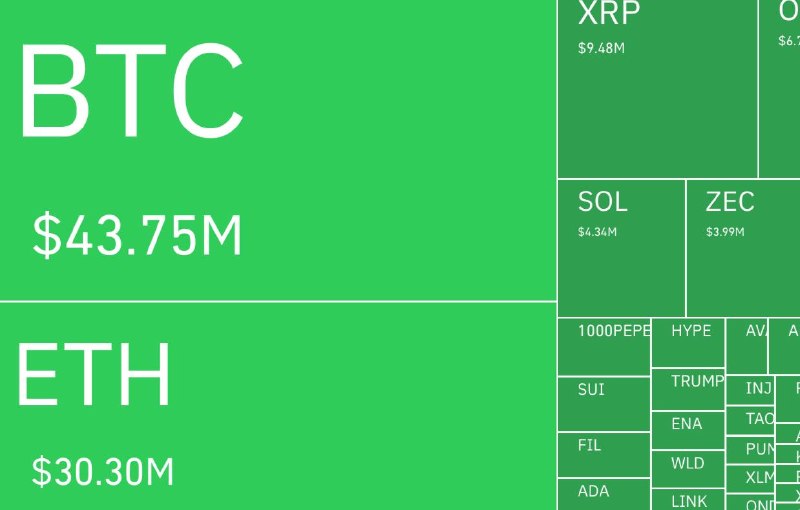
Bitcoin broke past $80,000 in the early hours of 25 August 2026, surging toward $81,000 and forcing more than $240 million in short positions into liquidation within a single hour, according to a Cointelegraph markets alert. The print was followed, later the same day, by a separate alert reporting over $115 million in long positions liquidated within an hour. Two liquidation clusters, on opposite sides of the book, inside one trading day.
Monexus assessment: the day's price action is real, and it tells a coherent story about leverage, but it is being read as a directional call when it is closer to a positioning reset. The more durable input sitting in the same news cycle is a Ludwig Institute analysis that put the share of US workers who are unemployed, stuck in part-time jobs or earning poverty-level wages at nearly 25% in July, against an official jobless rate of 4.1%. The official number and the lived number are not the same number, and the gap between them is the kind of underlying that tends to surface in the next quarter's surprises.
The tape, read carefully
The short squeeze was the more visually striking of the two prints. Over $240 million in shorts liquidated in sixty minutes, on a clean push through $80,000, is the kind of figure that pulls retail attention and forces the question of who was carrying that exposure. Crypto derivatives books routinely run a directional bias into round-number resistance, and a fast move through the level tends to trigger stops in sequence rather than as a distributed bleed. The Cointelegraph alert frames the move as a single dense cluster, not a gradual unwind.
Then the late session punished the other side. Over $115 million in longs liquidated within an hour, per a separate Cointelegraph market alert. The two prints together describe a market that lost directional discipline within the same trading day. Anyone treating the $80,000 break as a regime change was, by 21:20 UTC, looking at a positioning reset rather than a trend. The honest read is that leverage is a metronome, not a thesis.
The labour number markets are pricing past
A Ludwig Institute analysis put the share of US workers who are unemployed, underemployed or earning below the poverty line at nearly 25% in July, against an official unemployment rate of 4.1%. The Institute's framing sits closer to a U-6-style measure than to the headline number, though the available reporting does not specify the methodology in detail. What the figure describes is the distance between a labour market that is, by the Federal Reserve's preferred gauge, near full employment, and a labour market in which close to a quarter of the workforce is not converting available work into a living.
Crypto desks have a habit of treating macro releases as background colour. That habit has been wrong often enough to deserve retirement. If close to a quarter of US workers are functionally outside the wage-growth story the 4.1% number implies, the consumption backdrop that supports risk assets is thinner than the prints suggest. The squeeze on 25 August was a positioning event. The Ludwig Institute figure is the kind of slow-moving structural input that determines whether the next $10,000 move has fuel or friction behind it. The available reporting does not specify the methodology of the Institute's measure, and this article has not independently established the dataset behind the figure, but the gap between the official and the lived rate is large enough to be a story regardless of which side of the methodological debate one lands on.
Phantom, Sui, and the quiet thinning of the wallet layer
On 24 August, Phantom told users it would end support for the Sui network on 24 September, urging them to move funds or swap assets ahead of the cutoff, with fees waived. The available reporting does not specify why Phantom took the decision, whether Sui or Mysten Labs has issued a public response, or how many users the change affects. What is established is the action itself: a consumer wallet is removing support for a network, with a roughly one-month runway and a fee waiver attached to the migration.
Monexus analysis: the structural read is that consumer wallets are quietly concentrating on a smaller set of chains, and the chains that fall off supported lists pay in user attention long before they pay in token price. That framing is the desk's, not the sources'; the alerts in hand establish the action but not the broader pattern. The honest framing is that a single wallet-chain decision is a data point, not a trend, and the next move will tell you which it is.
What to watch next
Three threads are running at once. The first is whether the $80,000 level holds as support on a retest. The late-session long flush suggests the market will get a chance to find out within days. The second is whether the Ludwig Institute's broader labour measure draws the kind of mainstream attention that forces a rethink of the consensus soft-landing narrative. The figure is large enough to deserve coverage beyond the crypto press, and the available reporting does not record that coverage having arrived. The third is whether Phantom's Sui cutoff is the first of a wider wallet-chain thinning, or an isolated product decision. The available evidence supports neither reading cleanly, and that is the point: one data point is not a trend, and the runway in the alert is short enough that the next data point will arrive within weeks.
The honest framing is that markets are short-term price-discovery engines and long-term price-discovery engines at once, and they will tell different stories about the same week. The 25 August tape will be remembered for the $240 million short squeeze. The macro tape will be remembered, if it is remembered at all, for the figure the squeeze distracted from. That is usually how these weeks work, and it is usually where the next surprise starts.
Desk note: Monexus framed this around the divergence between the day's price action and the day's macro release, rather than treating the BTC break as a standalone event. Wire coverage has leaned on the squeeze; the underemployment data point is the more durable input.
Wire provenance
This editorial synthesis draws on the following public wire/social posts:
- https://t.me/cointelegraph/71760
- https://t.me/cointelegraph/71775
- https://t.me/cointelegraph/71776
- https://t.me/cointelegraph/71741