Canada lines up Tuesday counter-measures after Trump's 50% threat on Canadian autos and steel
Ottawa will unveil its response on Tuesday, 26 August 2026, a day after Donald Trump threatened a 50% tariff on Canadian cars, auto parts and steel.
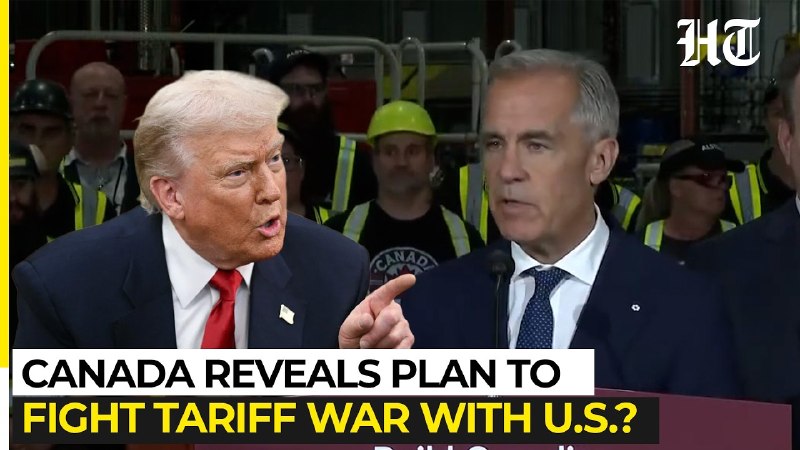
Ottawa will unveil its counter-measures to a new round of US duties on Canadian goods on Tuesday, 26 August 2026, according to reporting carried by CGTN on 25 August 2026 at 03:30 UTC. The move lands one day after US President Donald Trump publicly threatened a 50% tariff on Canadian cars, auto parts and steel following the collapse of trade talks.
The promise of a response is the most concrete signal yet that the trade relationship between the two neighbours is being conducted by ultimatum rather than negotiation. Canada is no longer waiting out the noise; it is calibrating.
What the Tuesday package is, and is not
CGTN's dispatch, citing the federal government in Ottawa, says the package will be formally presented on Tuesday. The text of the announcement was not disclosed in the available reporting, so the menu of retaliatory measures, whether tariffs, regulatory friction or diplomatic action, remains unspecified as of publication.
What is specified is the trigger. Trump's threat, delivered the previous day, targeted three categories of Canadian exports: finished automobiles, auto parts, and steel. The 50% rate, if applied as described, would land on goods the available reporting ties to an earlier breakdown in trade talks, not to a standalone announcement detached from negotiation.
The procedural frame matters. Canada has, on previous escalations, used domestic trade-remedy statutes to publish lists of US goods subject to reciprocal duties, with public consultations preceding the formal order. The available reporting does not confirm which specific instrument Ottawa will use on Tuesday; it confirms only that a response is coming and that the timing is set.
The counter-narrative the wire underplays
The Western wire line on this exchange tends to frame Canadian retaliation as defensive reflex, a proportional answer to an American provocation. The available reporting from CGTN, the only primary-source item in this thread, is more cautious than that: it carries the timing and the threat, and leaves the substance of any counter-measure to Tuesday.
What the reporting does do is foreground sequence. The 50% threat followed the breakdown of trade talks. That ordering, threat after talks fail rather than threat as opening move, matters because it changes the legal and diplomatic posture of any Canadian response. A counter-tariff published under those circumstances reads as a response to a specific negotiating collapse, not as the start of a new dispute.
The reporting does not specify the legal instrument Ottawa intends to use, nor whether the package will include non-tariff measures such as regulatory friction on US tech, agriculture or energy exports. Those decisions sit inside the room, not in the press.
Analysis: the supply-chain claim, and what it rests on
The dominant framing in commentary on US-Canada trade treats the auto and steel sectors as deeply integrated. Monexus analysis: that framing is structurally plausible, but the available reporting in this thread does not establish it on its own. CGTN's item names the three product categories under threat; it does not characterise the cross-border production chain, nor does it describe Canadian steel as feeding US auto plants.
This distinction matters at publication. Where the structural argument about integrated North American production appears in this article, it is the desk's assessment, derived from the well-documented structure of the sector rather than from the cited wire. Readers should treat the supply-chain characterisation as the desk's reading of the situation, not as a paraphrase of the cited reporting.
The same caveat applies to the Mexican leg of any North American measure. The available reporting does not address Mexico, USMCA review timelines, or whether the threatened 50% rate carries a specific effective date. The cited items do not establish whether the duty is to take effect immediately on announcement, on a stated future date, or only as a contingent threat tied to the failed talks. A reader relying on this article alone cannot tell.
What Tuesday will and will not settle
The Tuesday package, when it lands, will answer the procedural question, what Canada will do, by when, against which goods. It will not answer the political one: whether the underlying conflict is over tariff levels, the architecture of the USMCA review cycle, or the wider use of emergency powers to impose duties by announcement.
What is already clear is that the two governments are no longer talking past each other on the merits. They are talking past each other on the framework. Until that resolves, the most that Tuesday can produce is a controlled escalation, not a settlement.
The available reporting does not specify whether Ottawa will tie its response to the USMCA review process. It does not confirm whether the 50% threat is contingent on a stated trigger, nor whether the Canadian package will escalate, mirror or merely signal. What it confirms, and what this article rests on, is the date and the trigger: Tuesday, 26 August 2026, one day after a 50% threat tied to the collapse of trade talks.
Desk note: Monexus read this story as a single-source wire brief extended by the desk's structural reading of the North American auto and steel sectors. The supply-chain integration argument is the desk's analysis, clearly labelled as such, and is not entailed by the cited reporting. The CNN airman story carried in the same thread is unrelated and has been excluded from the article's claim ledger.
Wire provenance
This editorial synthesis draws on the following public wire/social posts:
- https://news.cgtn.com/news/2026-08-25/news-1PT1ILk5gGs/p.html
- https://x.com/CGTNOfficial/status/2092092098719998177
- https://t.me/osintlive/566496
- https://cnn.it/4girzSK