Beijing draws a line on Iran sanctions, warns of retaliation against US secondary measures
Hours after Washington designated more than 60 entities under 'Operation Economic Outcast,' Beijing says it will defend Chinese firms against secondary penalties and calls the US framework 'illegal and unilateral.'
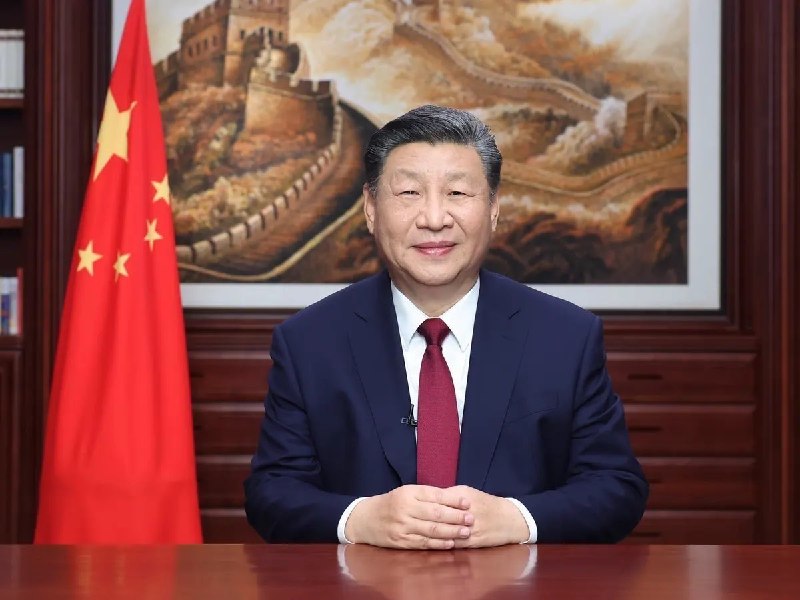
At 15:01 UTC on 25 August 2026, Iran's PressTV channel relayed a Chinese Foreign Ministry statement rejecting US threats of "illegal, unilateral sanctions" against countries trading with the Islamic Republic. By 15:58 UTC, the BRICS News wire on Telegram had posted Beijing's position in a single line: China is "firmly against" the latest US sanctions package targeting Iran. Between those two readouts, Middle East Eye reported at 15:29 UTC that Beijing has "warned" Washington of "retaliation" and will "defend Chinese companies against secondary sanctions."
The Chinese message is consistent across three separate readouts in the space of one afternoon. All three carry the same core claim: Washington's framework is illegitimate, and Beijing will protect Chinese commercial interests from its extraterritorial reach. The sharper question, sharpened by fresh reporting on 25 August, is whether Beijing now has a second front to manage at the same time. New satellite imagery circulated on X at 16:33 UTC and again at 16:37 UTC on 25 August shows China expanding construction in the disputed South China Sea, with analysts reading the build-out as the foundations of a major new military base.
What Washington just did
The trigger is a US Treasury action the Bloomberg newsroom has labelled "Operation Economic Outcast." Per a Bloomberg-sourced post by Unusual Whales at 15:18 UTC on 25 August, the US Treasury designated more than 60 entities tied to Iran's oil, nuclear and missile programmes. The package is the latest round in a long-running US effort to choke Iranian hydrocarbon revenue by squeezing the refineries, shippers, brokers and front companies that keep the trade moving.
The headline figure, more than 60 designations, signals an escalation rather than a routine maintenance round. Each new designation raises the legal cost of doing business with Iran for any counterparty, anywhere in the world, that touches the US financial system.
What Beijing says it will do
The Chinese counter-position is articulated in two distinct registers on 25 August. The harder-edged version appears in the Middle East Eye post at 15:29 UTC: Beijing has "warned" Washington of "retaliation" and says it will "defend Chinese companies against secondary sanctions." The diplomatic version, carried by PressTV at 15:01 UTC and posted separately by BRICS News at 15:58 UTC, frames the same posture in technical language drawn from longstanding Chinese UN-charter rhetoric: unilateral sanctions are illegal, and Beijing's cooperation with Iran proceeds in accordance with international law.
The two readouts are separate wire items rather than amplification of a shared text. PressTV relays a Foreign Ministry formulation; BRICS News distils Beijing's position into a single line. Both converge on the same operational promise: any new US designation that catches a Chinese firm in its net will produce a Chinese response. The exact instrument, whether a WTO complaint, an export-control countermeasure, a detained US executive, or a blacklisted American counterpart, is not spelled out in the available source items. The Chinese statements as of 25 August describe a posture, not a named action.
Why the gap matters
The Bloomberg post flagged by Unusual Whales at 15:18 UTC draws attention to a structural detail the US action leaves on the table. The post, as carried on X, states that the US "avoided major Chinese banks and companies despite China purchasing more than 80% of Iran's oil exports." On the face of that read, the package is calibrated to squeeze Iran's revenue while leaving the largest external buyer of Iranian crude untouched, a hedge that lets Washington avoid a direct collision with Beijing. PressTV's framing of Chinese-Iranian cooperation as proceeding in accordance with international law underscores how high any such collision would climb.
Monexus analysis: that calibration is the most natural reading of the package. US sanctions architecture has, on the visible record of recent years, used Chinese exposure as a political constraint rather than an enforcement target. Designating large Chinese state-owned oil traders would force a confrontation the Treasury is not, on this evidence, seeking. The 60-entity list, on this reading, is a pressure campaign against Iran's intermediaries, not a trade war with its largest customer.
The Chinese read is the opposite. From Beijing's vantage, any partial enforcement that touches a Chinese firm is extraterritorial and therefore illegitimate. The Middle East Eye post at 15:29 UTC carries that framing explicitly: secondary sanctions are the trigger, not Chinese trade volumes. PressTV's invocation of "illegal and unilateral sanctions" reaches for the same principle from a different angle.
Both reads can be true at once. Washington is squeezing Iran's shadow fleet while leaving Chinese state buyers formally in place. Beijing is treating the partial squeeze as a violation of a principle it holds dear and reserving the right to retaliate. The room for a misread, on either side, is real.
A second front in the same week
The principle Beijing is invoking on Iran, that trade flows should follow the flag of the contracting parties rather than the flag of the clearing bank, is the same principle it is enforcing, in a different register, in the South China Sea. Two Polymarket-flagged posts on X on 25 August at 16:33 UTC and 16:37 UTC carry new satellite imagery showing expanded Chinese construction in disputed waters. Analysts cited in the posts read the activity as the foundations of a major new military installation.
The two stories are not formally linked in any of the available wire items. They sit, however, inside the same strategic posture. Beijing is telling Washington it will defend the perimeter of Chinese commercial and territorial activity against US-led pressure, whether that perimeter runs through Hormuz, the South China Sea, or both. The Treasury designations of 25 August and the South China Sea imagery of the same day are, on this read, two pieces of one contest: who sets the rules of access in the spaces the Chinese economy and the Chinese state consider theirs.
Monexus assessment: the simultaneity is doing rhetorical work. A sanctions defence framed around "international law" lands harder when paired with imagery of construction on reefs and shoals Beijing also frames as sovereign territory. The two pillars reinforce each other in Beijing's diplomatic register, even if the immediate operational questions, retaliation on Iran versus the build-out in the South China Sea, are run by different ministries with different timelines.
What it sits inside
The dispute is the latest episode in a long-running contest over who sets the rules for cross-border commerce. US secondary sanctions project American regulatory power through the dollar-clearing system; the Chinese counter-position, as PressTV relays it on 25 August, is that any country has the right to trade with any other, and that jurisdiction follows the flag of the contracting parties, not the flag of the clearing bank.
Both positions are internally coherent. Neither side is signalling retreat. The BRICS wire's blunt phrasing on 25 August, "firmly against," sits closer to the harder end of the Chinese diplomatic register. The PressTV readout, with its invocation of "illegal and unilateral sanctions," echoes language Beijing has used against the US in earlier Iran-sanctions rounds. The Middle East Eye report goes further, putting the word "retaliation" on the record.
The stakes are concrete. Per the Unusual Whales readout of Bloomberg, China is the destination for more than 80% of Iran's oil exports. A Chinese decision to retaliate, whether through antitrust action against US firms, customs delays at Chinese ports, or a quiet tightening on rare-earth or battery-chemical exports, would land in specific sectors with specific price tags. The available source items do not specify which lever Beijing will pull, or whether any has been pulled yet on 25 August.
What remains uncertain
The single most consequential unknown is whether the Treasury package, as actually published, includes any Chinese-named entity. The Unusual Whales post says the US "avoided major Chinese" targets; the PressTV, Middle East Eye and BRICS News posts all imply that Beijing is responding to a measure it considers a violation regardless. The two statements are consistent if Beijing objects to the principle, not to any specific Chinese name on the list. The available source items do not specify whether any Chinese firm, large or small, appears among the 60-plus designations.
The second unknown is the response instrument. The Chinese Foreign Ministry's statement, as relayed by PressTV, commits to defending Chinese companies. It does not specify the means. Beijing's options range from a diplomatic démarche to a measurable economic counter. Until one of those options is named in a first-party Chinese readout, the retaliation claim remains a posture, not an action.
The third unknown is the South China Sea footprint. The two Polymarket-flagged posts on X on 25 August describe "expanding construction" and characterise it, on analyst read, as a "major military base." The available source items do not specify which feature is being built, the scale of the runway or berth infrastructure, or how the construction maps onto earlier reclamation phases. The satellite reading will harden over the next 30 to 60 days as more imagery accumulates.
Where this leaves both sides
For Washington, the calculus is whether a partial squeeze on Iran's intermediaries produces enough revenue loss to matter, without producing a Chinese counter-measure that costs more than the Iranian revenue at stake. For Beijing, the calculus is whether defending the principle of sovereign trade is worth the friction of an actual enforcement action against a US firm or shipment.
The 25 August readouts suggest both sides are still at the posture stage. The Chinese statements are sharper than the routine language of trade complaints. The US package is larger than a maintenance round, smaller than a full rupture. The South China Sea construction, on the analyst read carried in the Polymarket-flagged posts, is the kind of activity that does not announce itself; it is read in changes of pixel value and in the length of new runways. The equilibrium on both fronts is holding, but the language on the Iran file is hardening, and the imagery on the maritime file is accumulating.
The next 72 hours will tell us whether "firmly against" becomes a named counter-measure. The next 60 days will tell us whether the new South China Sea footprint is a base, a logistics hub, or something in between. Until then, both files remain in the posture stage.
Desk note: this update folds the 25 August South China Sea construction reporting into the existing Beijing-Iran sanctions file. The original read, a principle-versus-power dispute between two regulatory systems, stands. The new material sharpens it: Beijing is asserting the same perimeter across the Persian Gulf and the South China Sea, in the same week, in the same diplomatic register. Western wires led on the Treasury designations and on the satellite reads; Chinese and Iran-aligned outlets led on the sovereignty rebuttal. Monexus carries both, and lets the evidence do the sorting.
Wire provenance
This editorial synthesis draws on the following public wire/social posts:
- https://t.me/presstv/204147
- https://t.me/bricsnews/17861
- https://x.com/MiddleEastEye/status/2092273123722743980
- https://x.com/unusual_whales/status/2092270273076814040
- https://x.com/Polymarket/status/2092290325591015481
- https://x.com/Polymarket/status/2092289147365142809