Erdogan tells Ankara cabinet Turkey will not abandon Syria or let Israel draw red lines
Middle East Eye reports that on 25 August 2026 President Recep Tayyip Erdogan told a cabinet audience in Ankara that Turkey will not abandon Syria and will not let Israel draw red lines on Syrian territory.
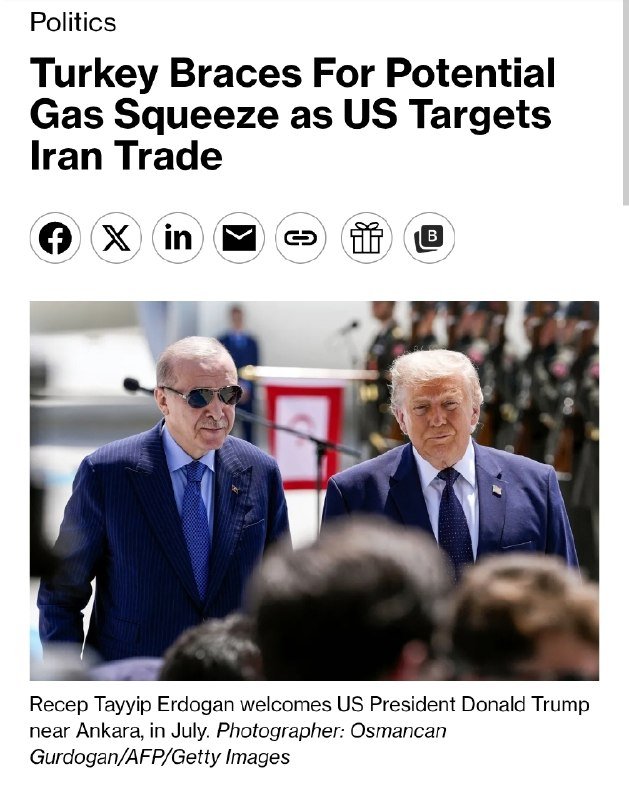
Middle East Eye reported on 25 August 2026 that President Recep Tayyip Erdogan used a cabinet appearance in Ankara to declare that Turkey "will not abandon Syria" and will not let Israel draw red lines on Syrian territory. The framing, as carried in the outlet's headline and X post, singles out Israel as the named counter-party in any future contest over the Syrian file.
The Middle East Eye dispatch is the only direct on-the-record source for the remarks available in this article. The outlet's headline reads: "Turkey won't abandon Syria or let Israel draw red lines, Erdogan says." The accompanying X post, timestamped 20:07 UTC on 25 August 2026, links to the full story. Beyond that headline, the available thread material does not contain the body text of the Middle East Eye article, and this article has therefore not independently established the venue, the format, the time of day, or the precise wording of the address beyond what the headline and X post supply.
What the headline actually says
The most defensible reading of the 25 August statement begins with the exact language the wire chose to put in its own headline: a Turkish refusal to let Israel draw red lines on Syrian soil. That phrasing matters. "Red lines" is a contested regional currency, used in the eastern Mediterranean over the past several years by multiple external powers. To spend it on Israel, in Ankara, at a cabinet-format event, is a deliberate choice of audience and of counter-party, and the Middle East Eye headline is the primary evidence this article has for that choice.
Where this piece goes beyond the headline, the move is flagged as analysis. The Middle East Eye coverage names Israel and Syria; it does not, on the evidence available here, name the United States, Russia, Iran, or the Gulf monarchies as comparable targets of the same address. Reading that omission as itself a signal, of where Turkey currently locates the principal friction in the Syrian file, is Monexus analysis grounded in what the headline foregrounds and what it leaves out, not in any private diplomatic channel.
The counter-narrative, and what it can and cannot rest on
The standard counter-argument, heard in some Israeli and Gulf-aligned commentary, is that Ankara overstates its leverage inside post-Assad Syria. On this reading, the new authorities in Damascus have a wider bench of patrons than they did under the previous order, and they are not inclined to outsource their security choices to Erdogan. Israel, the argument continues, has its own legitimate interest in preventing hostile military infrastructure from re-establishing itself along its northern frontier, and the framing of "red lines" is rhetorical rather than operational. Israeli security concerns about a hostile military presence along the Golan frontier are a legitimate security interest that this piece does not dismiss.
There is real weight to that counter-argument, and the available source material does not undercut it. The Middle East Eye item does not specify whether Damascus has publicly endorsed Erdogan's framing, and this article has not independently established any direct Turkish-Israeli exchange on the substance of the cabinet remarks. The single-source nature of the on-the-record coverage in the thread is itself a constraint: one outlet's headline is the entire verifiable substrate for the claim that the remarks were made in the form reported. Until a second outlet carries the same language, the picture is necessarily narrower than the headline alone suggests.
What the counter-argument understates is the cost side. A policy that treats Ankara as a marginal stakeholder in the Syrian file pays for that dismissal in friction it does not have to take on: friction along Turkey's southern frontier, friction inside the Syrian armed formations that operate with Turkish backing, and friction over the several million Syrian refugees whose status remains a live variable in the transitional government's arithmetic. Whether that cost is one Israel or its partners are willing to absorb is a question the public record, as represented by this thread, does not answer.
A structural read of the moment
The deeper pattern here is the unwinding of a regional order that, for years, treated the Syrian state as the buffer between rival external projects in the eastern Mediterranean: a Turkish effort to extend its sphere of influence along its southern frontier, an Israeli effort to keep hostile military assets away from the Golan, and an Iranian effort to keep a land corridor open to its allies further south. With that buffer gone, each of those projects is now legible inside a shared space, and the question of who sets the rules in Damascus has become, in effect, the question of who sets the rules of the eastern Mediterranean littoral. (Monexus analysis)
In that frame, the 25 August address is best read as a public insistence that the Syrian file will be conducted in Turkish, in the open, and on the assumption that Ankara is a permanent stakeholder. The Middle East Eye headline is the evidence; the structural framing is Monexus analysis. Two cautions follow. First, a televised remark does not, by itself, change operational posture on the ground. Second, the headline is a single-source lead: it is what one outlet chose to put above the fold, and the body of the Middle East Eye article, which this thread does not include, may qualify, contextualise or extend it in ways the available material does not show.
What to watch next
Three observable tests will determine whether the cabinet address was a marker or a posture. First, whether a second major outlet carries the same "red lines" framing in the coming days, which would convert a single-source headline into a corroborated regional story. Second, whether the Turkish foreign ministry formalises the address into a written diplomatic demarche in Ankara or in third capitals, which would convert rhetoric into a paper trail. Third, whether the Syrian transitional government itself signals, publicly, that it treats the Turkish framing as a shared position or as Ankara speaking for itself.
Each of those tests is observable. The single most under-reported variable is the new Syrian authorities' own stance: a government that endorses Erdogan's framing has changed the geometry of the problem, and a government that declines to do so has, in effect, told Ankara that its leverage inside Damascus is more conditional than the cabinet address implied. Until those signals arrive, the most defensible reading is the cautious one. The Middle East Eye headline is on the record. The second-order readings around it are Monexus analysis, attributable as such, and they remain provisional until the wider wire picks the story up and the new authorities in Damascus speak for themselves.
Desk note: this piece is built on a single Middle East Eye headline and X post carried in the thread, plus the four Dolly Parton obituary items in the same feed that are unrelated to the story and were not used. Where it reads intent into Erdogan's framing, identifies Israel as the named counter-party, or sets the remarks inside the structural contest for the eastern Mediterranean, the move is flagged as Monexus analysis grounded in what the headline foregrounds and what it leaves out, not in private channels.
Wire provenance
This editorial synthesis draws on the following public wire/social posts:
- https://www.middleeasteye.net/news/turkey-wont-abandon-syria-or-let-israel-draw-red-lines-erdogan-says
- https://x.com/MiddleEastEye/status/2092343163444772874
- https://t.me/epochtimes/138578
- https://t.me/epochtimes/138576
- https://t.me/france24_en/18356
- https://t.me/The_Jerusalem_Post/17109