Haiti gang attack on Kenscoff church kills around 40 displaced people
Armed gang members killed around 40 displaced people sheltering in a church in Kenscoff, in the hills above Port-au-Prince, with the local mayor describing 'a night of terror' on Sunday 24 August 2026.
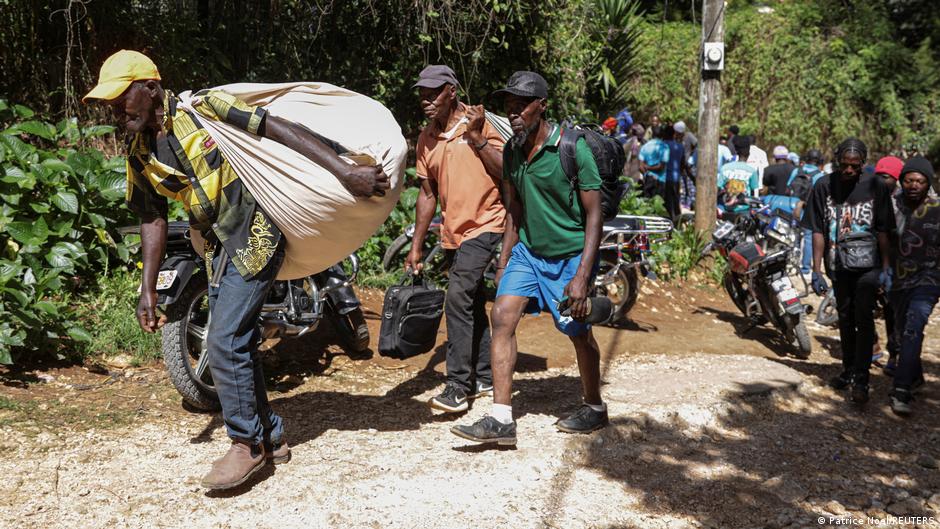
Gang members killed around 40 displaced people sheltering in a church in Kenscoff, in the hills above Port-au-Prince, late on Sunday 24 August 2026, according to a local mayor cited by France 24 on 25 August. Deutsche Welle reported that some victims were killed execution-style, and that Kenscoff's mayor described the episode as "a night of terror" in a commune that has been under sustained gang pressure for months. The attack marks one of the deadliest single incidents against internally displaced Haitians since the security vacuum around the capital deepened earlier this year.
What happened in Kenscoff is not a stray atrocity. It is the latest data point in a pattern of armed groups tightening control over the routes, food supply and shelter that the displaced depend on, and it lands weeks after the transitional authorities and a multinational security support mission tried to extend state authority into the metropolitan area. The displaced were sheltering in a church precisely because the formal camps were already saturated or overrun; attacking them there shows how thin the perimeter of safety has become.
A commune under siege for months
Kenscoff sits in the mountains south-east of Port-au-Prince and has functioned as one of the last overland exits from the capital still nominally under state control. According to France 24's reporting on 25 August 2026, citing the local mayor, gang members entered the commune on Sunday night and killed around 40 displaced people who had taken refuge in a church. Deutsche Welle, reporting the same episode the same day, said at least 40 people were killed, some execution-style, and quoted the mayor describing "a night of terror" in a town that has been plagued by gang violence for months.
France 24's initial dispatch, relayed through its English-language Telegram channel in the early hours of 25 August UTC, framed the assault as a strike against people who had already fled their homes. The framing matters. The victims were not residents caught in a crossfire; they were people who had been displaced once, sought sanctuary in a house of worship in a quieter commune, and were tracked down there.
What the wire lines agree on, and where they diverge
The two wire reports available to Monexus converge on the core fact: around 40 people killed in a single night in Kenscoff, in a church used as a shelter for displaced people, with the local mayor as the named source. They diverge in emphasis. France 24 foregrounds the displaced status of the victims and the location of the attack, near the capital. Deutsche Welle adds the execution-style detail and the longer arc of gang pressure on the commune.
Neither outlet in the available reporting names the specific gang coalition responsible, gives a precise breakdown of wounded survivors, or confirms whether any children were among the dead. The available source items do not specify those details, and Monexus has not independently verified them. That absence is itself a measure of how unstable information flows remain in and out of Kenscoff: the mayor is speaking, but the operational picture is still being pieced together by humanitarian staff on the ground.
Monexus analysis: what the church attack tells us about the geography of displacement
Read together, the two dispatches sketch a city under multiple sieges at once. Port-au-Prince is the contested core, where armed groups control large tracts of territory and the transitional authorities govern from a shrinking perimeter. Kenscoff and communes like it are supposed to function as receiving zones, places where the displaced can breathe while longer-term solutions are negotiated. Sunday's attack punctures that logic. If gangs can reach a church in a hillside commune on a Sunday night and execute dozens of people sheltering there, then the receiving zones are no longer receiving zones in any meaningful sense; they are extensions of the same battlefield.
There is also a structural read available. Attacks on sites of refuge (churches, schools, displacement camps) are not random expressions of criminality; they send a price signal to anyone still considering flight. The implicit message is that there is no safe line on the map, which in turn accelerates the outflow toward the Dominican Republic and, by sea, toward the Bahamas, Turks and Caicos, and beyond. That regional diffusion is what makes the Haiti crisis a Caribbean problem, not a Haitian one.
Stakes: a humanitarian floor that keeps falling
If the trajectory of the past months continues, the working assumption for Caribbean governments and humanitarian agencies has to be that more displacement sites will be hit, that the formal camp network around Port-au-Prince will keep shedding population, and that the burden will keep migrating across borders. The win-loss ledger is grim. Haitian civilians lose first, in blood and in the destruction of any remaining expectation of sanctuary. The transitional authorities lose legitimacy they do not have to spare. The multinational security support mission loses time. Neighbouring states absorb flows they did not choose.
Two things to watch in the coming 72 hours. First, whether the Haitian National Police and the mission's leadership issue a verified casualty figure and identify the armed group responsible; the available reporting leaves both open. Second, whether the Dominican Republic announces any change to border posture, since a successful strike this far into the hills above the capital will be read in Santo Domingo as a credibility test for the entire western third of the island.
Desk note: Monexus framed this as a displacement-site attack rather than as a generic gang assault, because the victims' status as already-displaced people sheltering in a church is the distinguishing fact in the wire reports, and it is the fact that makes the episode a regional rather than purely domestic story.
Wire provenance
This editorial synthesis draws on the following public wire/social posts:
- https://www.france24.com/en/americas/20260825-haiti-gang-members-kill-40-displaced-people-church-attack
- https://www.dw.com/en/haiti-gang-members-kill-dozens-near-port-au-prince/a-78491117?maca=en-rss-en-all-1573-rdf
- https://t.me/france24_en/18346
- https://f24.my/C7YO.g