Tehran says no, Washington says no one: Three refusal points in 24 hours
Iran rejected a Trump-backed proposal relayed through Pakistan and refused to resume talks. Hours later, Washington announced plans to strip asylum seekers of their visas. The read on what links them.
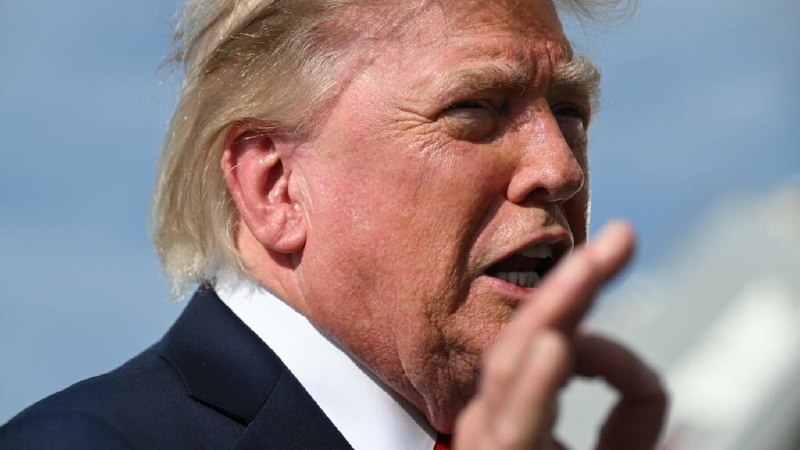
At 23:42 UTC on 24 August 2026, an account on X relayed Iranian state media reporting that Tehran had directly rejected a proposal supported by President Donald Trump and transmitted through Pakistan as intermediary. The same account reported that Iran had refused to resume negotiations with the United States. Hours earlier, at 20:28 UTC on 24 August, the intelslava channel on Telegram had flagged the backchannel: a phone call between Trump and Pakistan's army chief Asim Munir the previous week, which a source confirmed to CNN, followed by IRIB's account of Munir meeting Iran's top negotiator in Tehran on Monday. By 22:54 UTC the same evening, France 24 was reporting a parallel American decision: the Trump administration would revoke non-immigrant visas held by foreigners who had applied for, or were seeking, asylum in the United States. Three refusal vectors, one calendar day, one increasingly transactional posture on both sides.
The pattern reads as a posture, not a coincidence of timing. Washington is bargaining through a third party for a nuclear settlement it cannot land directly, and shutting the door on asylum claimants it once courted. Tehran is performing refusal in public to preserve leverage in private. Each side is signalling to a different audience that the path of least resistance is closed.
What Pakistan was carrying
The Munir channel matters because, on the available evidence, it is the only one currently open. Trump's call with Pakistan's army chief, which a source confirmed to CNN and which intelslava reported at 20:28 UTC on 24 August, sits inside a longer history of Islamabad acting as a diplomatic courier between Tehran and Washington during periods when direct contact is off the table. IRIB's account, cited in the same intelslava item, says Munir met Iran's top negotiator in Tehran on Monday. The available source items do not specify which negotiator or which office hosted him. Monexus analysis: the choice of Pakistan is not neutral. Islamabad has equities with both the Gulf monarchies and Tehran, and the army chief commands more foreign-policy reach than the civilian government. Reading the channel as a last-resort relay rather than a routine shuttle fits the evidence on the page.
Why Tehran is performing the refusal
The framing relayed by the SprinterPress account on X at 23:42 UTC leans on two words: directly and refused. Iranian state media tends to script diplomatic rejection in that register. The point, on the most natural reading, is to demonstrate to domestic constituencies and to non-Western capitals that Tehran is not capitulating under sanctions pressure, and to remind Washington that a deal acceptable to Iran's foreign-policy establishment is not the same as a deal acceptable to Trump's negotiating team. The available source items do not specify the contents of the proposal Pakistan carried. Monexus assessment: the gap between what was offered and what Tehran will accept is almost certainly narrower than either side is publicly admitting, which is precisely why both sides are performing rejection rather than engaging.
What the visa revocation actually changes
France 24 reported at 22:54 UTC on 24 August that the Trump administration plans to revoke non-immigrant visas held by foreigners who applied for, or are seeking, asylum in the United States, and that the move could affect a large caseload. The available source items do not specify the precise number. The policy logic is distinct from the Iran file but rhymes with it: in both cases the administration is replacing an existing legal pathway with an executive decision. For asylum seekers, the visa that admitted them becomes the visa that is taken away when they file the claim that the visa was supposed to enable. Monexus analysis: the policy's main effect is upstream. The signalling deters future applicants at the consular stage, before they ever board a plane. It also relocates a domestic-administration function (immigration courts) into a foreign-policy posture: the United States is no longer a country that processes asylum, it is a country that punishes the attempt.
The structural shape, stated plainly
What we are watching is a withdrawal of procedural patience on both ends of US foreign and domestic policy. Washington treats diplomacy as a transaction that must close on its terms inside a single news cycle, and treats legal claims against its immigration system as friction to be removed. Tehran treats negotiation as theatre that must be performed for audiences that are not in the room. Pakistan is useful precisely because it sits outside both scripts. The larger pattern: the incumbent global order runs on institutions and processes that reward patience; the actors now shaping US policy, and the Iranian counterparties responding to them, are both operating on timelines that punish it. The visa revocation is the domestic version of the same instinct. In both cases the executive branch is substituting discretion for procedure, and in both cases the substitute is faster but less reversible.
What remains genuinely uncertain is whether the Pakistan channel is still live after Iran's public rejection, or whether Trump's team will now route the proposal through a Gulf state with closer alignment to the White House. The available source items do not specify whether Iran has named a counter-proposal or simply refused the one on the table. The 24 August 2026 developments are best read as a pause rather than a closing.
Desk note: the wire cycle on 24 August 2026 ran Iran's rejection and the US visa announcement as two unrelated stories. Monexus is treating them as one posture, the substitution of executive discretion for legal or diplomatic process, and flagging the Pakistan relay as the structural hinge between them.
Wire provenance
This editorial synthesis draws on the following public wire/social posts:
- https://x.com/SprinterPress/status/2092034896839483793
- https://www.france24.com/en/americas/20260824-trump-administration-revoke-visas-foreigners-seeking-asylum
- https://f24.my/C7Xp.g
- https://t.me/intelslava/93136
- https://t.me/france24_en/18345