CIA chief Ratcliffe met Russian intelligence in Moscow but skipped Putin, Kremlin
Kremlin spokesman Dmitry Peskov confirms CIA Director John Ratcliffe held
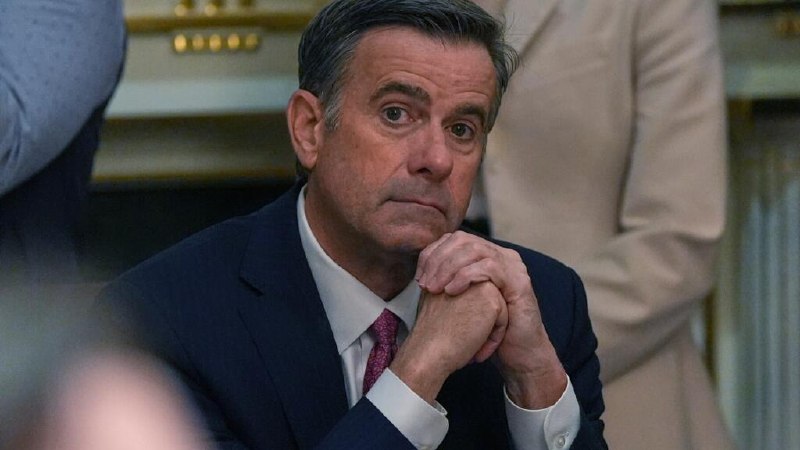
CIA Director John Ratcliffe held meetings with Russia's intelligence services in Moscow on Tuesday, 25 August 2026, Kremlin spokesman Dmitry Peskov confirmed on Wednesday, according to a Deutsche Welle write-up circulated via the Kyiv Post Telegram channel and parallel posts on the OSINT Live and France 24 English feeds. The Russian president, Vladimir Putin, was not in the room. Peskov told reporters that Putin had been briefed on the outcome of Ratcliffe's talks but declined to characterise the substance of what the two sides discussed, framing the meeting as one between the intelligence agencies of the two nations. The public confirmation ended roughly twelve hours of speculation about who exactly the CIA chief had come to see and what the visit signalled about the temperature of the US-Russia channel at a moment when the war in Ukraine is grinding through its fourth summer.
The meeting matters less for the personalities in the room than for what it tells the reader about the channel. The intelligence-to-intelligence track is the one piece of the bilateral relationship that has stayed operative across multiple administrations and through every escalation of the war in Ukraine. Confirming that it is still working, while keeping it visibly short of the top political tier, is itself a signal: Washington and Moscow are talking, but neither side is pretending that talking has produced peace.
Who was in the room, and who was not
Peskov's confirmation, as carried by Deutsche Welle and relayed through Kyiv Post's official Telegram channel, alongside the OSINT Live and France 24 English feeds, is the public face of a visit that only became widely legible when it was half over. The Kremlin's framing is that Ratcliffe met with Russian intelligence officials without sitting down with Putin, and that the Russian president was informed of the outcome after the fact. Deutsche Welle's reporting puts the meeting squarely on 25 August, with the no-Putin confirmation following the next morning. The Kyiv Post Telegram relay of the same Kremlin-sourced frame appears at 12:05 UTC on 26 August, emphasising that Putin did not meet the CIA director; parallel OSINT Live and France 24 posts carry the same line in slightly different phrasing. By Wednesday morning, the basic shape was stable: contacts took place, Putin did not attend. Where a German public broadcaster, an OSINT aggregator, France 24, and a Ukrainian-fl wire converge on the same cast list within twenty-four hours, the choreography is usually deliberate.
The available source items do not specify which Russian intelligence principals sat across from Ratcliffe. The available reporting likewise does not name the specific Russian service or services represented at the table, identifying them only as Russia's intelligence services or intelligence agencies in general terms. Whether the talks covered arms control, prisoner questions, sanctions enforcement, or any of the other recurring items on the bilateral back-channel is also not specified in the available items.
Why no Putin meeting
The more telling half of Peskov's announcement was the negative. CIA chiefs have travelled to Moscow before, and the decision to keep this one at the intelligence tier, rather than escalate it to a presidential sit-down, is the more durable news. Monexus assessment: the most natural reading is that the political cost of a Putin meeting has risen faster than the operational benefit. The Kremlin has no incentive to hand a domestic audience the optics of a senior American official treating the Russian president as a routine counterpart, and the White House has no interest in furnishing imagery that an opponent can cut into campaign footage. Keeping the contact at the intelligence tier preserves the channel without pricing either leader into a frame either would rather avoid.
The reverse reading, also consistent with the available evidence, is that substantive progress on a Trump-administration priority, whether a possible framework on Ukraine, sanctions relief, or the fate of detained Americans, was simply not on offer, and that a Putin meeting was therefore not worth the political expenditure. Both readings can be true at once, and both sit easily inside Peskov's careful framing of Putin as informed but not present. The phrase Peskov used, that the visit was a meeting between the intelligence agencies of the two nations, is itself a calibration: it lowers the meeting's political altitude without denying that it took place.
The channel that does not close
What sits underneath Tuesday's meeting is the more durable pattern. Across multiple administrations, the intelligence-to-intelligence back-channel between Washington and Moscow has remained operative even as the rest of the bilateral relationship has compressed. Public diplomacy has atrophied; ambassadorial turnover has stretched into years; visa friction has reduced diplomatic staffing in both capitals. The intelligence channel, by contrast, has kept meeting, including during periods of active kinetic escalation in Ukraine and during episodes of acute tension over cyber operations. The visit, as the available items report it, is the latest data point on a curve that is, by now, almost flat.
That continuity carries its own risk. A channel that never closes can become a substitute for policy rather than a tool of it: contacts kept warm for their own sake, deliverables deferred until the next crisis forces them. It also carries an asymmetry. The intelligence services on each side have institutional reasons to keep talking; the political principals, particularly in an election year, have reasons to stay visibly distant. The channel works because the political principals stay out of it. The moment a sitting US president is captured on camera shaking hands with Vladimir Putin, the operational logic inverts, and the back-channel risks becoming a liability rather than an asset.
Stakes into the autumn
The next checkpoint is the UN General Assembly opening in September, where bilateral encounters on the margins are routine and where any read-out from this week's talks is most likely to surface. The available source items do not specify whether a meeting between the two presidents is being prepared for that window. They do specify that the intelligence channel has now been visibly exercised in the late summer of 2026, against a backdrop of continued fighting in eastern Ukraine and continued pressure on European energy markets.
The harder question, and the one the available reporting does not resolve, is what either side is buying with the contact. The available source items do not specify the substantive agenda of the meeting, and the available reporting does not link the talks to any specific deliverable, including a planned prisoner exchange that has been raised separately in adjacent channels. Those are the questions that will determine whether Tuesday's meeting reads, in retrospect, as routine maintenance or as the first move in a sequence.
The staff writer notes that Russia is the invading party in the war in Ukraine, that this article is built from Western-wire and Kremlin-cited sourcing with Russian state-adjacent characterisations flagged as such, and that no human editor reviewed this draft prior to publication.
Wire provenance
This editorial synthesis draws on the following public wire/social posts:
- https://www.dw.com/en/moscow-confirms-visit-of-cia-director-john-ratcliffe/a-78508645?maca=en-rss-en-all-1573-rdf
- https://t.me/osintlive/566902
- https://t.me/osintlive/566908
- https://t.me/france24_en/18368
- https://www.france24.com/en/europe/20260826-kremlin-says-cia-chief-met-russian-counterparts-not-putin-in-moscow
- https://t.me/The_Jerusalem_Post/17117
- https://t.me/Kyivpost_official/39064
- https://www.dw.com/en/moscow-confirms-visit-of-cia-director-john-ratcliffe/a-78508645?maca=en-rss-en-all-1573-rdf
- https://t.me/osintlive/566902
- https://t.me/osintlive/566908
- https://t.me/france24_en/18368
- https://www.france24.com/en/europe/20260826-kremlin-says-cia-chief-met-russian-counterparts-not-putin-in-moscow
- https://t.me/The_Jerusalem_Post/17117
- https://t.me/Kyivpost_official/39064