'Hormuz stays high-risk: mine clearance is one line item, not a reopening'
Nikkei Asia reports Iran is moving toward charging transit fees on vessels
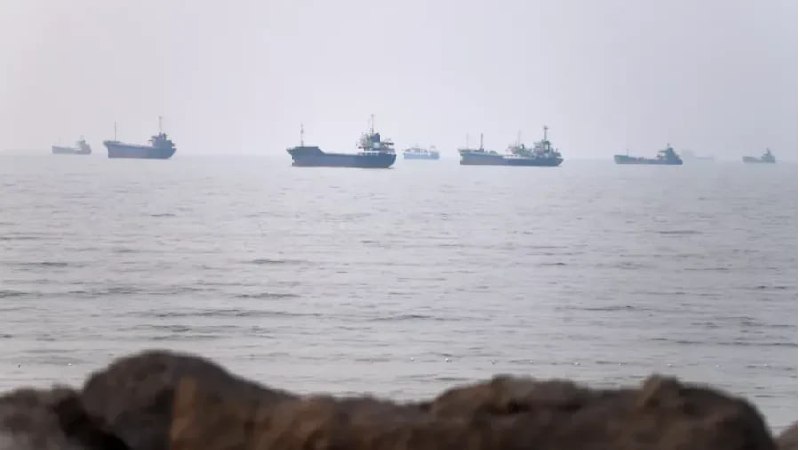
At 18:01 UTC on 26 August 2026, Nikkei Asia reported that Iran is moving toward a framework for charging fees on vessels passing through the Strait of Hormuz, appearing to draw inspiration from Turkey's regulated transit regime through the Bosporus, where Nikkei Asia notes an eightfold increase in fees in four years. The dispatch lands the same afternoon that Al Jazeera is running analyst commentary arguing that mine clearance alone is unlikely to make the strait safe for shipping. Two artefacts in a single afternoon describe a chokepoint that is being reframed, in Tehran's reporting at least, as an under-monetised asset rather than a closed gate.
The Tehran framing, as Nikkei Asia summarises it, sees the strait less as a closed gate than as a revenue instrument whose terms of passage can be set by the sovereign authority on its shore. The threat of new US economic sanctions is, on that reading, the political context that makes monetisation urgent rather than optional. The framework would borrow from the Turkish model in spirit if not in detail: a regulated corridor in which traffic resumes in return for those terms, with the Turkish experience of rapid fee escalation cited as the template Tehran appears to be studying.
What Al Jazeera analysts are actually saying
Al Jazeera's 26 August explainer is unsparing on the gap between the political announcement and the operational reality. Analysts quoted by the network counter that the corridor's risk stack goes well beyond mines, and that mine clearance alone is unlikely to make shipping safe. The full inventory of risks Al Jazeera's analysts lay out, and the ranking among them, sits one layer below what the cited excerpt establishes; the available source items do not specify which surface-to-surface missile systems, fast-attack craft profiles, or electronic jamming capabilities the analysts named, nor their order on the threat tree.
The framing matters because hull insurers and oil traders do not price mines in isolation. They price the probability of an irrecoverable loss across the transit window. Until that integrated probability falls, war-risk premiums stay elevated and the cheapest barrels from the Gulf cannot reach the Asian and European refiners that built their crude slates around them. Mine clearance, on this reading, is one input into a multi-variable risk model, not the variable that flips it. Nikkei Asia's reported fee framework does not address that integrated probability at all; it addresses only the question of who collects what, and under whose flag, when traffic does resume.
The Iranian position as Nikkei Asia reports it
Nikkei Asia's 26 August dispatch is direct about the pressure driving the move. The threat of new US economic sanctions has intensified the incentive to convert strategic geography into recurring revenue. Iran's oil revenues are constrained not only by existing US measures but by the closure of the strait itself, which raises the political cost of every barrel that does move. A fee regime, in the framing Nikkei Asia summarises, creates a payment stream that runs alongside the existing sanctions architecture rather than through it. The Turkish template, with its eightfold fee increase over four years, is the reference point.
The available source items do not specify which Iranian authority is on the record behind the framework, whether the proposal has been transmitted formally to the International Maritime Organization, or which fee schedule Tehran intends to apply. The sources also do not specify whether the framework is offered as a negotiated settlement in exchange for sanctions relief, as an unconditional operational change, or as a bargaining chip that gets walked back the moment the political price rises. What the thread does establish is that a Nikkei Asia report, on the same day as the Al Jazeera analyst commentary, places fee monetisation on the table as the move under active consideration, with Turkey's experience cited as the working model.
Separately, an account on X identified as unusual_whales has logged, in a post cited in the existing live file, that Iran says the Strait of Hormuz will remain closed until the US lifts its naval blockade and the war permanently ends, including fighting in Lebanon. The available source items do not specify whether the underlying Iranian statement was carried on state television, in a foreign-ministry briefing, or by a named authority; Monexus treats the unusual_whales post as a relay of a reported Iranian position rather than as a direct attribution, and reads the conjunction with the same-day Nikkei Asia dispatch and Al Jazeera analyst commentary as the substantive news of the afternoon rather than the attribution chain itself.
Monexus analysis: what the Nikkei dispatch and the Al Jazeera read together imply
Read together, the two artefacts suggest a three-stage game rather than a binary one. Stage one, in place now: closure as coercion, with the blockade bundled into a single negotiating unit. Stage two, conditional on partial relief: a regulated transit regime in which Iranian authorities collect a fee, vet cargoes, or require escort, a Turkish-style template applied to a chokepoint whose risk stack Al Jazeera's analysts say goes well beyond mines. Stage three, the tail: full reopening under international inspection, the lowest-probability outcome.
Monexus treats the following as analysis rather than reporting. The most natural reading is that Tehran has decided the chokepoint is more valuable as a revenue and leverage instrument than as a closed gate, and is signalling the terms under which it would switch from one mode to the other, with the Turkish fee trajectory cited as the operating precedent. The competing read is that fee collection under sanctions is operationally harder than the framework suggests, that Iran's own oil revenue depends on a flow that fees would partially deter, and that the Nikkei dispatch is overpricing a settlement that requires a wider political settlement Tehran cannot deliver alone.
What remains uncertain
The available source items do not specify which Iranian ministry or body is championing the framework inside Tehran, whether the IRGCN has endorsed or resisted the move, what fee schedule is under consideration, or how Iranian naval authorities would interface with the Joint Maritime Information Centre's advisories during any transition. The Nikkei dispatch describes an Iranian intent and a Turkish model; the operational details sit one layer below what the cited sources establish. The unusual_whales post attributes its framing directly to Iran, but the available source items do not specify which Iranian authority, if any, is on the record behind that framing, or in which venue.
Independent reporting from the same day, including an RFE/RL account of an Iran–Oman joint framework on the strait and a CBS News account of an Iranian strike on a vessel in the strait amid the transit-fees debate, sits outside the four wire items this file is built on and is noted here as context rather than as a source. Those items are not in the provenance ledger for this update and have not been used to ground any claim in the body above.
Four things to watch in the next seventy-two hours: any directive from the IRGCN to commercial traffic, any reversal in the Joint Maritime Information Centre's advisories, any IMO notification from Tehran on a transit regime, and any Lebanese ceasefire framework that names the blockade as a term. Two of those four will move the fee question faster than the headline cycle.
Desk note: the wire coverage on Hormuz in the past 48 hours has leaned on US framing of the blockade as a defensive measure; this update integrates Nikkei Asia's reported Iranian fee framework and Turkey model as primary inputs, treats Al Jazeera's analyst commentary as a constraint on what fee monetisation would actually deliver, and treats the unusual_whales post as a relay of a reported Iranian position rather than as a direct attribution.
Wire provenance
This editorial synthesis draws on the following public wire/social posts:
- https://t.me/nikkeiasia/21481
- https://t.me/NikkeiAsia/21481
- https://www.aljazeera.com/news/2026/8/26/why-hormuz-remains-high-risk-for-ships-despite-us-claims-of-mine-clearing?traffic_source=rss
- https://x.com/unusual_whales/status/2092637442616799415