Oman pulls back on Hormuz escorts as IRGC reportedly confronts Indian tanker
Two Gulf monitoring channels say Oman has stopped facilitating US-coordinated tanker escorts through the southern Strait of Hormuz at Iran's request, hours after Iran-focused channels reported IRGC warning shots at the Indian-flagged HAANA.
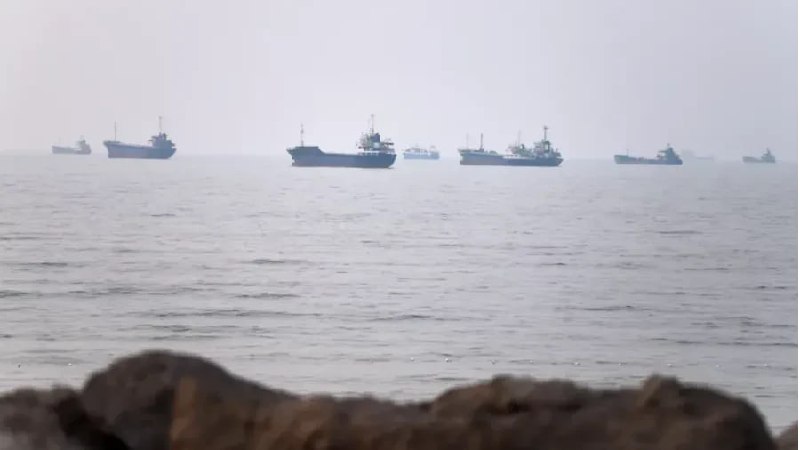
Two Persian Gulf monitoring channels reported on 26 August 2026 that the Sultanate of Oman has, at Iran's request, stopped cooperating with the United States on escorted tanker movements through the southern stretch of the Strait of Hormuz. Hours earlier, separate posts linked to The Cradle said Iran's Revolutionary Guard Navy had fired warning shots at the Indian-flagged tanker HAANA as it tried to use the Omani route through the choke point, forcing the vessel to turn back.
The pair of reports, both carried by Telegram channels that closely track Iranian and Gulf-state security moves, would describe an unusual coupling if confirmed: a Gulf monarchy quietly withdrawing logistical cooperation with Washington under Iranian pressure, and a direct use of force by Iranian naval units against a commercial vessel from India, a country that has spent years calibrating its oil purchases from Tehran against its strategic ties with the United States. The combination points to a Gulf transit regime that is no longer operating on autopilot.
What the channels are reporting
DDGeopolitics and Middle East Spectator published the Oman item within minutes of each other at roughly 17:16-17:17 UTC on 26 August 2026. Both characterise the move as a request-driven decision: Iran asked, and Muscat complied, ending its role in facilitating escorted tanker passages along the southern side of the strait, the corridor closest to Omani waters and the approaches from the Gulf of Oman and the Arabian Sea.
The earlier tanker incident was reported by The Cradle at around 15:40 UTC on 26 August 2026 and relayed by GeoPolitical Watch at approximately 15:43 UTC. According to those posts, IRGC Navy units fired warning shots across the bow of the HAANA as the Indian tanker attempted to transit on the Omani route through the strait, and the vessel was forced to turn around. GeoPolitical Watch attributes its line on the encounter to The Cradle.
The available items do not specify whether the HAANA was part of an escorted convoy, whether Indian authorities have commented, or whether the US Navy's Bahrain-based Fifth Fleet has acknowledged either incident. The sources do not specify the tonnage of the vessel, its cargo manifest, its last port of call, or its intended discharge point.
Why the southern lane matters
For years, the practical operating model in the Strait of Hormuz has been that commercial tankers transit in convoy groups coordinated with the US Fifth Fleet and Royal Navy, with Omani authorities providing notice and anchorage support out of ports along the Musandam coast. Iran's IRGC Navy has historically operated fast-attack craft and patrol boats from bases on the Larak and Qeshm islands on the northern shore. An Omani pullback on escorted movements is significant because it is one of the few low-friction diplomatic mechanisms that keeps commercial traffic moving.
Removing the Omani facilitation layer does not close the strait. It complicates scheduling, insurance, and the deconfliction work that makes a commercial vessel legible to all the navies in the area as a ship on a recognised route. For shipping, that is the operational question, not the geopolitics: who still vouches for a hull passing through, and on whose word.
An Indian ship in an Iranian firing line
The HAANA encounter is the more kinetic of the two reports. Indian-flagged vessels have been a frequent test case for Iran's enforcement preferences in Hormuz. The reported use of warning shots, followed by a forced turn-around, is consistent with a pattern of demonstration rather than an escalation designed to cause casualties.
For New Delhi, the optics are pointed. India has invested diplomatic capital in a relationship with Tehran that survives US secondary sanctions pressure. A vessel forced to reverse course in the southern lane, while the Omani route is simultaneously being de-coordinated, reads to India as the rules of passage being rewritten mid-transit.
A less settled picture than the channels suggest
Monexus finds it worth saying plainly: the Telegram dispatches are not the only public record on Hormuz in the days running into 26 August. Established outlets have carried material that runs the other way. Al Arabiya English reported on 24 August 2026 that Oman's top diplomat was in Iran to discuss the Strait of Hormuz, a framing of active consultation rather than quiet withdrawal. The New York Post reported on 4 August 2026 that Iran and Oman were nearing a deal to reopen the strait with both sides collecting a service fee, an arrangement that presupposes the very cooperation the 26 August channels say Muscat has now suspended.
These earlier reports do not disprove the channel items, and a posture can change fast. But they do mean the most plausible reading of 26 August is not that Oman has, with finality, walked away from the escort regime: it is that the diplomatic posture around the southern lane is contested, moving, and being narrated in opposite directions by different parts of the press.
What this looks like in structural terms
If the Telegram accounts hold, the escort-coordination layer that the US Navy built over a decade of Gulf operations would be losing one of the small set of Gulf-state partners willing to provide ports, pilots, and notice. The architecture does not stop functioning in that case, but it thins out, and scheduling windows lengthen. Shipping rates, insurance premiums, and the willingness of commercial masters to take the southern lane in marginal weather all move in the same direction.
For Iran, the gain is leverage without escalation. For Oman, the cost is a quiet loss of relevance inside a security architecture it helped build, or, on the alternative reading, a managed re-negotiation rather than a withdrawal. For India, the exposure is concrete either way: a fleet of tankers operating in a transit regime where the diplomatic cover is being renegotiated lane by lane.
Stakes and what to watch
Three near-term signals will determine whether the 26 August reports harden into a new operating reality or remain a contested, single-source claim. First, whether the US Fifth Fleet or US Central Command publishes an operational advisory acknowledging a change in Omani facilitation, the kind of notice that typically follows a confirmed diplomatic withdrawal. Second, whether the Indian Ministry of External Affairs or the Directorate General of Shipping issues a statement on the HAANA, even a routine one confirming the vessel's status and ETA at its next port. Third, whether Oman's Foreign Ministry, which rarely comments on transit arrangements in real time, confirms, denies, or extends the substance of the channel reports within the customary 24-to-48 hour window.
The available items do not specify whether Omani authorities have issued a public statement, whether the HAANA has issued a distress or deviation report, or whether any third-party commercial tracking service has logged the vessel's actual course change against the broadcast track. Until those data points arrive, the most defensible reading is the cautious one: the diplomatic cover over the southern Hormuz lane is being reported as thinned, and the kinetic signalling around commercial traffic is being reported as raised, but the precise mechanism linking the two, and whether both reports will hold against official records, is still in the hands of foreign ministries in Muscat, New Delhi, and Washington.
Desk note: the wire on this story is currently Telegram-first, with two monitoring channels carrying the Oman item and an Iran-focused outlet carrying the tanker incident. Monexus has held to the channel-sourced facts, flagged where Western wire confirmation, Indian ministry statements, or Omani official comment are not yet in the public record, and noted the prior week of established reporting on Oman–Iran Hormuz diplomacy that frames the 26 August items as a contested, moving picture rather than a clean break.
Wire provenance
This editorial synthesis draws on the following public wire/social posts:
- https://t.me/DDGeopolitics/191925
- https://t.me/Middle_East_Spectator/36052
- https://t.me/GeoPWatch/38869
- https://t.me/TheCradleMedia/66852
- https://t.me/thecradlemedia/66852