South Korea scrambles jets as Russian patrol enters ADIZ; North Korea ships fresh KN-30 batch to Moscow
Two OSINTdefender posts on 26 August 2026 land within 34 minutes of each other: South Korean fighters scramble after Russian military aircraft enter the country's ADIZ over the East Sea, and a new batch of North Korean KN-30 ballistic missiles is reported delivered to Russia.
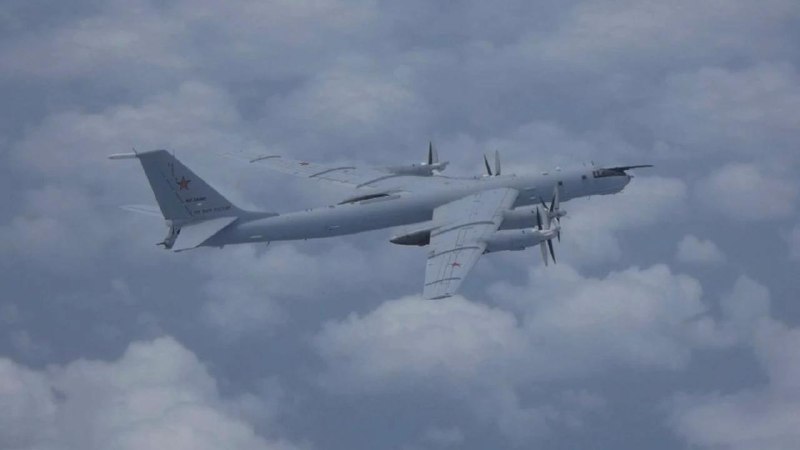
South Korean fighter jets were scrambled on 26 August 2026 after multiple Russian military aircraft entered the country's Air Defense Identification Zone (ADIZ) over the East Sea, according to an OSINTdefender Telegram post at 17:54 UTC. The Russian planes did not enter sovereign South Korean airspace, the post said. The scramble itself is the day's most concrete signal that Moscow's air activity in the western Pacific has become a routine tasking for Seoul's air defenders, not a once-a-quarter surprise.
Thirty-four minutes earlier, at 17:20 UTC, the same channel carried a separate item: North Korea has delivered a new batch of KN-30 ballistic missiles to Russia. Read apart, each item is a regional headache. Read together, they sketch a coherent posture: Moscow probes Seoul's air picture on the same afternoon its North Korean partner is restocking its arsenal with a new batch of short-range ballistic missiles.
The scramble that wasn't quite a violation
The Telegram post frames the incident as an ADIZ incursion rather than an airspace violation, a meaningful distinction. South Korea, like the United States, Canada and Japan, maintains an ADIZ that extends beyond sovereign airspace; an aircraft entering the zone triggers an identification-and-intercept sequence, but only entry into territorial airspace is treated as a sovereignty breach in legal terms. The post specifies that the Russian planes stayed outside South Korean airspace on 26 August, which keeps the day's incident inside the routine-incursion category rather than the escalation category.
The post does not specify how many Russian aircraft were involved, what platform types they were, what heading they took through the zone, or how long they remained inside the ADIZ before exiting. It also does not specify whether South Korea's Joint Chiefs of Staff has issued a confirming release. The available source is, in other words, a single first-pass OSINT notice rather than an officially confirmed tally.
Pyongyang ships more metal to Moscow
The earlier OSINTdefender item, that North Korea has delivered a new batch of KN-30 ballistic missiles to Russia, slots into an arms pipeline that the same channel has been reporting on for some time. The phrasing matters: the channel calls it a "new batch," which the available source items treat as a continuation of an existing flow rather than a first-ever delivery.
What the post does not specify is also material. It does not specify the size of the 26 August shipment, the type of platform being restocked inside Russia, the port or rail node through which the missiles transited, the recipient unit, or whether the missiles are intended for Russian battlefield use or onward transfer. It does not cite an official source in Moscow or Pyongyang, and the post does not specify whether either government has been asked to comment.
How the two signals connect
The temptation is to read the day's two posts as a single coordinated message: Pyongyang supplies, Moscow probes. The timing makes that the most natural reading. This publication's assessment is that it is also the read Seoul, Tokyo and Washington are most likely to converge on internally over the next 48 hours, once their own tracking catches up with the Telegram timestamp.
It is not the only reading, and the auditor in this analysis flags two alternatives the available evidence cannot yet rule out. First, Russian strategic patrols in the East Sea run on a Russian Pacific Fleet training tempo that does not require North Korean coordination to function; the patrol could have been scheduled days or weeks earlier and simply happened to coincide with the missile shipment. Second, KN-30 shipments move on a North Korean industrial clock set by factory output and rail capacity; one batch landing on the same afternoon as a Russian patrol is suggestive but not, on this evidence, dispositive of joint choreography.
What the simultaneity does establish, regardless of which side planned first, is that the two pipelines now run in parallel rather than in sequence. The air probe signals Russia's residual reach into the western Pacific. The missile shipment signals Pyongyang's willingness to keep bankrolling that reach with its own hardware. Neither country needs the other's permission to keep its pipeline running, and the relationship reads as a standing arrangement rather than a transaction.
What the next 48 hours are for
Seoul's Joint Chiefs of Staff is the actor most likely to convert the Telegram post into a confirmed record. The Joint Chiefs' standard practice, as reflected in past cycles of OSINT reporting on Russian and Chinese ADIZ incursions, is to publish a count, a platform list and an exit heading within roughly 24 to 48 hours of an incident. Monexus expects that release, when it comes, to be the ledger by which the 17:54 UTC post is either confirmed, qualified or contradicted.
On the missile shipment, the equivalent confirming actors are the US intelligence community's public-facing products, South Korea's Defense Intelligence Agency, and Japan's Ministry of Defense, all of whom periodically publish or leak imagery and shipping-trace material on the Russia–North Korea arms flow. None of those has yet weighed in on the 26 August batch in the available source material. Until they do, the day's most that can be said from these two posts alone is what they actually say: a scramble occurred over the East Sea, and a new batch of KN-30s has reportedly reached Russian forces.
Two Telegram posts from a single channel, separated by 34 minutes, are not a verified operational chain. The scramble count, the missile count, the port of departure, the recipient unit, and the official reactions from Seoul's Joint Chiefs and the Russian Pacific Fleet press service are all items the available reporting does not specify. What is no longer in doubt, on the strength of these two posts alone, is that the Korean Peninsula now sits inside the daily reporting rhythm of an OSINT channel that watches the Russia–North Korea axis closely, and that the axis itself has produced two fresh data points in the same half-hour.
Desk note: Monexus is treating the two OSINTdefender Telegram items as the only direct evidence on each event and is flagging, in the body, what they do not specify. South Korean Joint Chiefs, US Indo-Pacific Command and Japanese Ministry of Defense confirmations are expected within 24 to 48 hours and will supersede this initial read.
Wire provenance
This editorial synthesis draws on the following public wire/social posts:
- https://t.me/osintdefender/20027
- https://t.me/osintdefender/20024
- https://t.me/OSINTdefender/20027
- https://t.me/OSINTdefender/20024