Trump sends 30-year Saudi nuclear pact to Congress, with Israel recognition as the open price tag
A classified 30-year civil nuclear cooperation agreement with Riyadh reached Capitol Hill on 26 August 2026, with President Trump publicly conditioning Saudi progress on recognition of Israel.
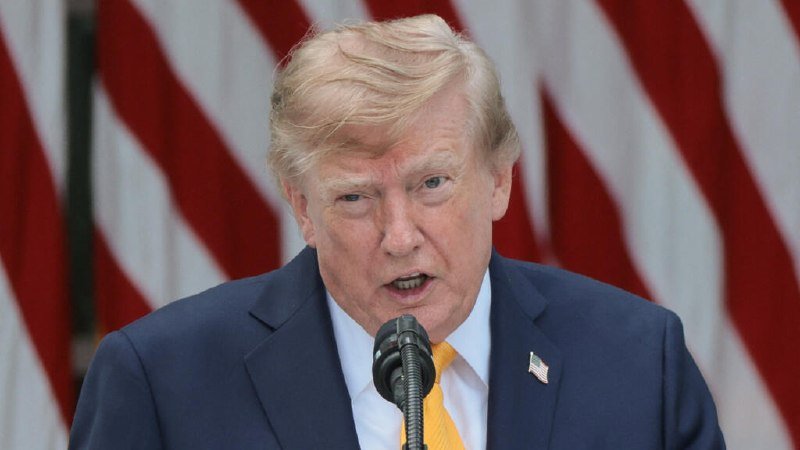
The classified 30-year civilian nuclear cooperation agreement between the United States and Saudi Arabia landed on Capitol Hill on the morning of 26 August 2026, transmitted by the Trump administration for the congressionally mandated review period before any deal can take effect. Reuters, citing an administration official, reported that the pact was sent to Congress for review and that President Donald Trump publicly conditioned Saudi Arabia's progress toward a civilian nuclear programme on Riyadh moving toward recognition of Israel.
What is now in front of US lawmakers is not a vague framework but a structured 30-year cooperation agreement, with US companies named as participants in building the kingdom's nuclear infrastructure, according to the open-source monitoring channel OSINT Defender, summarising details first reported by Reuters and France 24. The transmission triggers a statutorily defined review clock. The politics around it, however, are running on a different timeline, and the Israeli recognition condition is the variable that will determine whether the deal moves in weeks or stalls for months.
What landed on Capitol Hill
France 24's reporting identifies the submission as a civilian nuclear cooperation agreement, the legal instrument that under US law (the Atomic Energy Act, as amended) must be presented to Congress before the executive can authorise significant nuclear cooperation with a third country. The classified nature of the document, per France 24, is the procedural norm rather than an exception; the substantive details typically become public through committee hearings, oversight letters, and the obligatory 90 days of continuous session that elapse before the executive can proceed absent a joint resolution of disapproval.
The OSINT Defender summary adds a structural detail that frames the commercial logic: the agreement runs for 30 years and explicitly includes US companies in building Saudi nuclear infrastructure. That is the part of the package with a domestic US constituency. Westinghouse, Bechtel, and a handful of other nuclear vendors have spent the better part of two decades trying to wedge their way into Gulf state energy planning; a 30-year cooperation window is the kind of horizon under which financing, fuel-cycle commitments, and training pipelines actually pencil out. For the companies involved, the review period is a window in which to lobby hard, not a moment of uncertainty.
For Congress, the deal is also a vote about whether to bind the next administration. A 30-year cooperation agreement outlives any single presidency, and the review mechanism is the moment when the legislature can either let it ride or attach conditions. That procedural fact is what makes the Saudi file unusually charged on Capitol Hill even before the foreign-policy overlay gets added.
The Israel condition
Reuters' lead framing, as carried on X by @Reuters, ties the deal directly to Trump's stated precondition: Saudi Arabia must recognise Israel. The headline, distributed at 06:35 UTC on 26 August, framed it as the political price of moving forward. That is not a new Trump-era talking point, but this is the first time it has been made on the record in the same news cycle as a congressionally transmitted agreement.
The Israeli recognition question has been the third rail of Saudi-US relations since the early Abraham Accords period. Saudi officials have, at various points, gestured at normalisation without crossing the threshold; Israeli officials have insisted that any US deal with Riyadh carry commitments on enrichment, on ballistic missile programmes, and on diplomatic recognition. The Trump administration's public framing now puts the third of those demands into the same news cycle as the formal transmission of a nuclear cooperation package.
The structural reading here is straightforward: the White House is converting a long-running commercial and energy deal into a vehicle for a regional realignment that has repeatedly stalled. Monexus analysis: the question is whether Congress, during its review period, treats the Israel condition as a non-binding political comment by the president or as a working assumption embedded in the agreement's diplomatic architecture. Those two readings produce very different committee hearings.
Why a 30-year horizon matters
The choice of 30 years is not arbitrary. The standard US civil nuclear cooperation agreement under Section 123 of the Atomic Energy Act runs for an initial term that, once extended, can stretch across decades; 30 years is the upper-end horizon that vendors ask for when they are being asked to build infrastructure with a 40-to-60-year operating life. A shorter horizon would still let Westinghouse or Bechtel sell a reactor; it would not let them finance one. The duration, in other words, is the commercial tell that this agreement is meant to be operational, not symbolic.
The other tell is the explicit inclusion of US companies in the construction phase. Cooperation agreements can be limited to research, fuel supply, or safeguards cooperation. A cooperation agreement that names constructors is a cooperation agreement whose authors expect ground to be broken. That makes the review clock more than a procedural inconvenience; it makes it a period in which competing bids, from South Korean, French, Chinese, and Russian state-linked vendors, can be kept at the door while the agreement is being scrutinised.
For Saudi Arabia, the deal also locks in a US-aligned fuel cycle and safeguards architecture, which has been Washington's standing ask since the early 2010s. Whether the kingdom's leadership views that as a price worth paying for civilian nuclear capacity, or as a constraint it would rather avoid by going elsewhere, is one of the live questions the next 90 days of continuous session will surface.
The review clock and what it forces
The Atomic Energy Act's review mechanism is unusually muscular by US treaty-execution standards. Once the agreement is submitted, Congress has 90 days of continuous session to enact a joint resolution of disapproval; absent that, the executive may proceed. In practice, the clock does not produce a vote so much as it produces a series of committee demands: for the text, for safeguards appendices, for an interagency review, and increasingly for binding conditions on enrichment and reprocessing.
In this case, the review clock runs alongside three other clocks. There is the Israeli normalisation track, on which Saudi Arabia has not yet moved publicly. There is the broader US-Iran file, where any Saudi civilian nuclear architecture is read in Riyadh, in Jerusalem, and in Washington as part of the regional balance. And there is the commercial clock, on which US vendors are already pencilling in financing structures that depend on the deal landing.
Monexus assessment: the most natural reading is that the White House is using the review clock to force a Saudi decision on Israel before Congress forces one of its own. The transmission puts the agreement on a 90-day runway during which the administration can argue that any congressional disapproval is also a vote against an Israel-recognition carrot. That framing is contestable, but it is now the framing the White House has chosen to put on the record.
What remains uncertain
The classified status of the text means the public is working from summaries. Reuters and France 24 describe a civilian nuclear cooperation agreement; OSINT Defender adds the 30-year duration and the explicit inclusion of US companies in construction. The available source items do not specify the safeguards architecture, the fuel-cycle commitments, or whether the agreement bars Saudi Arabia from enrichment and reprocessing, which have been the three Republican congressional asks in past cooperation agreements. None of the cited reports identify which US companies are named in the construction provisions. The Saudi government has not, on the basis of the source items in front of this article, issued a public statement responding to the transmission or to the Israel-recognition condition.
What the next 30 days will turn on is whether the agreement's text, once declassified in summary form, closes the loopholes that previous administrations were accused of leaving open. If it does, the political fight moves to the Israeli recognition condition and to whether Congress treats that as the president's prerogative or as a matter for joint resolution. If it does not, the review clock becomes the venue for a substantially longer fight, and the 30-year horizon starts to look aspirational.
Desk note: Monexus framed the transmission as a procedural event with a political payload rather than as a foreign-policy breakthrough; the wire ledes have varied between the two, with Reuters foregrounding the Israel condition and France 24 foregrounding the review procedure.
Wire provenance
This editorial synthesis draws on the following public wire/social posts:
- https://reut.rs/45OHPos
- https://x.com/Reuters/status/2092501080303145068
- https://www.france24.com/en/americas/20260826-trump-saudi-civil-nuclear-agreement-congress
- https://f24.my/C7eU.g
- https://t.me/france24_en/18362
- https://t.me/osintdefender/20018
- https://t.me/OSINTdefender/20018