Nepal's flood toll is climbing. The early-warning gap the Himalayas keep paying for
India is dispatching Bailey bridges and aid as Nepal's flood death toll reaches 359. The editorial question is no longer whether disasters will hit the Himalayas, but why a regional early-warning system keeps failing to arrive.
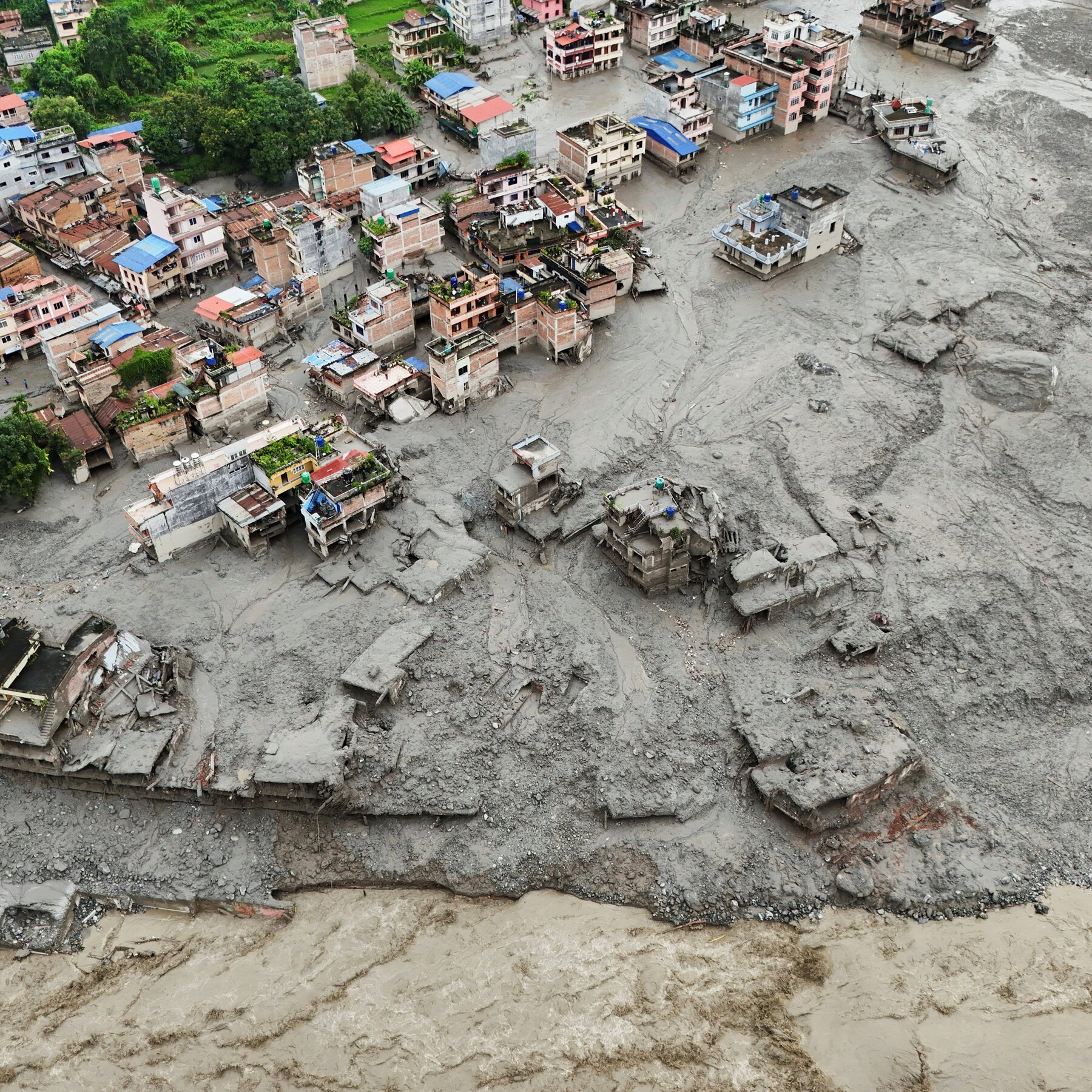
At 16:52 UTC on 27 August 2026, the Indian Express filed a string of dispatches that, read together, sketch the next humanitarian crisis on the subcontinent before it fully arrives on the global wire. Nepal's flash-flood death toll has reached 359. India is moving additional aid and assessing the deployment of Bailey bridges to restore access. An editorial in the same paper is asking, plainly, what the Himalayas have been waiting for: a shared early-warning system.
The Indian response is real and it is moving. But the gap between the speed of relief and the slowness of warning is the story. Year after year, monsoon-driven floods tear through the same river systems, and year after year, the same institutional answer is improvised.
What is actually being sent
The Indian Express reports that India is dispatching further aid shipments to Nepal and assessing the deployment of Bailey bridges. A separate Indian Express update logged nine train cancellations and twenty trains skipping stops at Faridabad for 45 days to clear works at the railway station. The relevant material signal is the Bailey bridge track: when India sends Bailey bridges, it is committing engineering capacity, not just relief consignments. That commitment is the line between "aid" and "reconstruction."
Alongside the bridge logistics, an 18-year-old organ donor in India gave four recipients a new lease of life on the same day the Nepal dispatches ran, a small data point against the backdrop: the medical and logistical machinery of the subcontinent keeps running even as the political machinery around disaster prevention stalls.
The relief is fast. The warning is missing
The Indian Express editorial argues that the Himalaya needs a shared early-warning system. The contention is structural: transboundary rivers do not wait for inter-ministry clearances. Cloudbursts over catchments in the Gandaki, Karnali, and Koshi basins do not stop at the border, and neither should the radar coverage and river-gauge telemetry that feed forecasting models. The absence of an integrated system is not a single government's failure; it is a coordination deficit that the region's hydrology has long since made indefensible.
Read the editorial line against the imagery surfacing from the affected areas: video from the flood zone has gone viral because it resembles the 2012 monk-rescue scene from a Roland Emmerich disaster film, as one Indian Express dispatch noted. The cultural detail matters because it tells the reader something specific: the public mind is now reaching for cinematic reference points to metabolise a flood that arrived without a forecast lead-time sufficient to evacuate villages.
Where the politics sits
Himachal Pradesh is a useful local analogue. The Indian Express reported Himachal Chief Minister Sukhvinder Singh Sukhu responding to allegations that land valued at Rs 2,700 was sold to the government for Rs 18 lakh, an exchange-rate discrepancy that reads, in context, as a question about how compensation flows reach disaster-affected hill districts. The Himachal story is not the Nepal story. But both stories sit on the same fault line: Himalayan states are where the consequences of unplanned riverine development, weak enforcement of land-use rules, and thin meteorological infrastructure compound. The political class is answering questions about money after the water has moved, not before.
New Delhi's immediate posture is to send help. That posture is welcome and, by Indian Express account, material. The deeper question is whether the regional architecture is capable of producing the thing that would have mattered most this week: a siren that went off before the third cloudburst.
What the next 72 hours actually hold
Monexus analysis: the operational tempo over the next 72 hours will be relief-led, not prevention-led. The stand-off to watch is whether India offers the hardware as a one-off bilateral gesture or as the anchor of a binding regional telemetry-sharing protocol. The first option is faster. The second is what an early-warning system actually requires.
The sources do not specify which Indian agencies are co-ordinating with which Nepali counterparts at the operational level. The available reporting confirms material at the announcement layer and the editorial layer, and stops there. That thinness is itself part of the story: a crisis of this scale produces more on-camera commitments than it does background details on radar hand-overs.
Nepali and Indian sources both treat the next weather system as the binding variable. The Indian Express editorial board has now said out loud what the regional hydrology has been saying for years. Whether that voice translates into instrumented catchments before next year's monsoon is the metric worth watching.
Wire provenance
This editorial synthesis draws on the following public wire/social posts:
- https://ift.tt/tCfSOiV
- https://ift.tt/lHsq3QG
- https://ift.tt/zHSP7Dk
- https://ift.tt/rclxdmP
- https://ift.tt/xXiUlOD
- https://ift.tt/0t3bxuP