Glacier collapse kills hundreds on Nepal-Tibet border, with more than 1,300 still missing
A collapsed glacier sent a debris-laden surge through a Himalayan valley on the night of 26 August 2026, with the death toll reported between 180 and 273 by the morning of 27 August and the missing-persons count running between roughly 1,300 and 1,500 as rescue operations expanded.
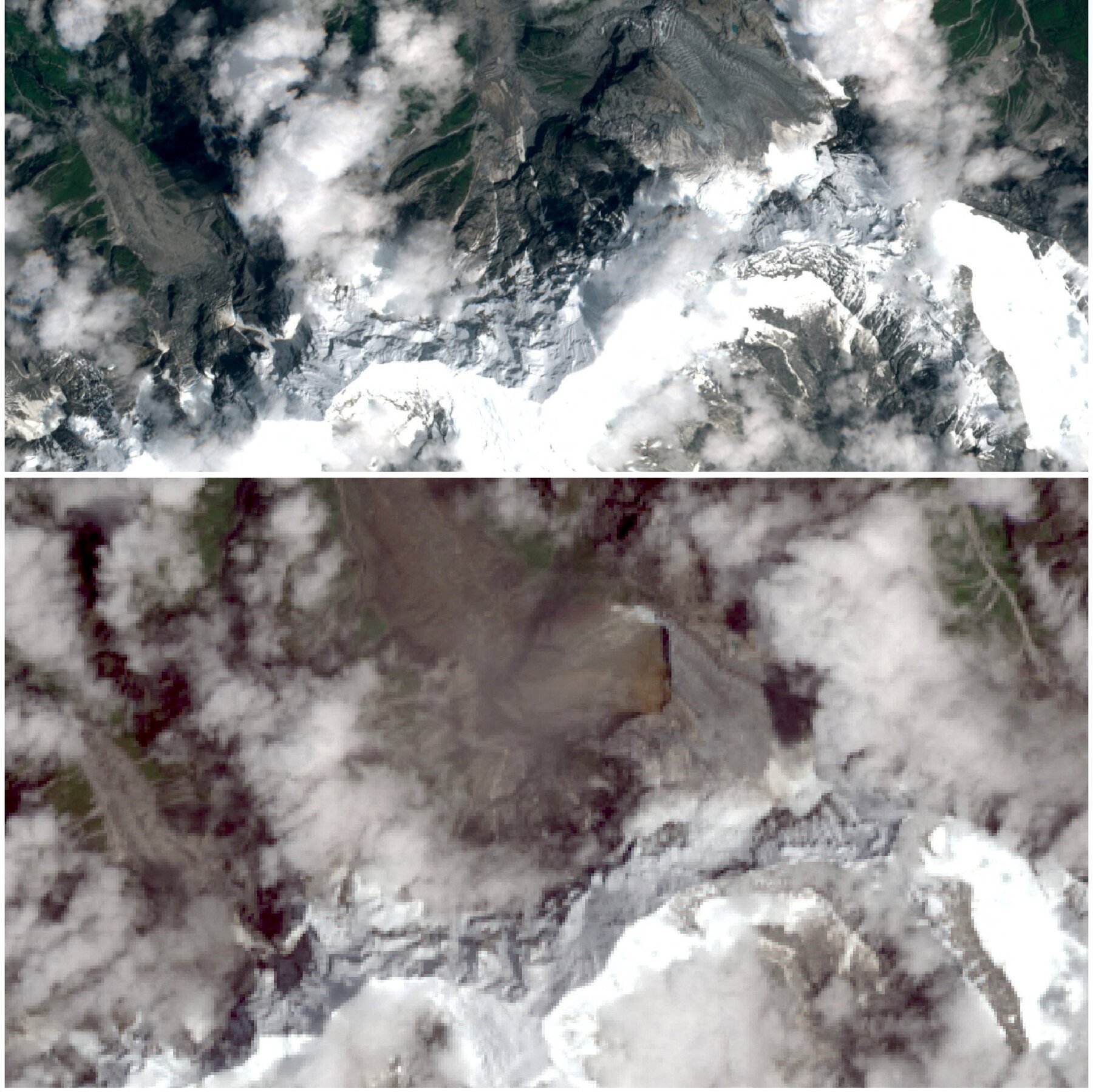
A debris-laden surge tore through a Himalayan valley on the night of 26 August 2026, destroying villages on the Nepal-Tibet border and leaving at least 180 people dead, according to France 24 and the BBC on the morning of 27 August. A later France 24 dispatch on the same day, relayed via the Standard Kenya Telegram channel, cited Nepali police at 273 dead. By late morning on 27 August, France 24 placed the search for the missing at more than 1,300 people and NPR at "at least 1,500" missing, "many of them foreign tourists."
The disaster sits inside a pattern that scientists have warned about for years. What makes the Nepal-Tibet event consequential beyond the immediate casualty count is what it reveals about the pace at which high-altitude ice is destabilising across the Hindu Kush-Himalaya, and how thin the early-warning capacity remains in the valleys downstream.
A valley washed clean
Initial accounts describe a surge of water and sediment that arrived in the small hours, with residents and trekkers given minutes rather than hours of notice. France 24 reported on 27 August that "entire villages" had been destroyed in the Himalayan valley, with rescue teams working through the debris field to locate survivors. The BBC, citing preliminary scientific assessments, said a collapsed glacier was the most probable trigger: a large mass of ice falling thousands of metres into a river channel below, dislodging water and moraine and sending a debris-laden flood downstream. France 24's separate explainer ran the same framing.
The geography is unforgiving. The Nepal-Tibet border runs through some of the most heavily glaciated terrain on earth, and the valleys on either side channel runoff into populated agricultural belts. A single glacier-lake outburst can travel tens of kilometres before losing destructive force.
Nepali police, per Standard Kenya's Telegram dispatch on 27 August, spoke of hundreds still unaccounted for on the morning of 27 August. By the early afternoon, the search tally had widened across reporting outlets, with France 24's later dispatch placing it above 1,300 and NPR putting it at "at least 1,500" missing. The available source items do not contain a fully consolidated list of the missing.
The foreign-trekker dimension
The presence of foreign tourists and pilgrims in the affected zone is reshaping the early reporting. Reuters' 27 August dispatch led with families "seeking news of pilgrims" caught in the flood. NPR's coverage stressed the scale of the missing as "many of them foreign tourists." August is the peak trekking season in the high valleys of central Nepal.
Monexus analysis: the diplomatic cascade the wire coverage suggests is consistent with how missing-persons events in Nepal's trekking belt typically unfold, but the available source items do not name foreign missions in Kathmandu, do not describe consular activity, and do not detail coordination between rescue teams and trekking outfitters. The wire line that Western outlets moved unusually fast is, on the available evidence, an inference from the speed of the Reuters, NPR, France 24 and BBC filings on 27 August rather than a stated observation in any of those filings.
The available source items do not specify the nationalities of the missing. The available source items also do not name the specific trekking routes affected.
A region with prior warning
The Himalayan glacier outburst is not a black-swan event class. The BBC's 27 August report frames the disaster inside that pattern, quoting scientists who pointed to the collapse as the most probable cause and explicitly tying it to "the issue of rapidly melting Himalayan ice." France 24's explainer ran the same framing, describing a single ice mass falling "thousands of metres" into a river channel below.
Monexus analysis: the structural frame here is that the disaster is the kind of event the BBC's reporting describes, arriving in a valley system where downstream warning coverage is patchy. A single night of weather was the trigger; the broader pattern of Himalayan ice loss is the background the BBC's scientists invoke. The available source items do not specify which warning systems, if any, fired before the surge reached populated valleys, and the available source items do not describe Nepal's investment in district-level warning infrastructure or the role of international donors in that infrastructure.
What the sources disagree about
Three things are unsettled on the available record.
The first is the death toll. France 24's earlier 27 August explainer used "at least 180." A later France 24 dispatch on the same day, relayed via Standard Kenya's Telegram channel, cited Nepali police at "at least 273." The BBC's same-day reporting also used the 180 figure. All three numbers are in circulation; the difference is timing and whether figures recovered downstream of the immediate flood zone have been attributed to the event.
The second is the missing-persons count. France 24 said "over 1,300"; NPR put it at "at least 1,500." Reuters' 27 August item focuses on families seeking news of pilgrims and does not, on the available evidence, state a specific missing-persons total. The available source items do not specify whether one figure counts only Nepali nationals and the other includes foreign trekkers, or whether the difference reflects simple churn as families come forward.
The third is the exact sequence of events inside the flood itself. Glaciologists working from satellite imagery typically need days to confirm whether the trigger was a glacier-lake outburst flood, a simple ice avalanche into a river channel, or a rain-on-snow event. The BBC's reporting uses the language of "preliminary investigations" and "scientists say." Readers should treat the cause as the leading hypothesis, not a confirmed verdict.
Stakes, near and far
In the immediate term, the operational question is whether the search effort can locate survivors in the high-altitude debris before nightfall and, downstream, whether secondary flooding can be controlled as sediment-choked rivers continue to rise and fall.
In the medium term, the event will test Nepal's early-warning infrastructure along its most heavily trekked valleys. The open question, which the available source items do not specify, is whether any of those systems fired before the surge reached populated valleys.
In the larger frame, the disaster is a data point in a regional pattern. The available source items tie the event to "the issue of rapidly melting Himalayan ice," in the BBC's words, but the available source items do not characterise the scale of Himalayan ice storage relative to the polar regions. A single catastrophic night does not move the policy needle on its own, but it does change the political temperature around adaptation finance, glacier monitoring and the slow-building question of how South Asian governments plan for a Himalayan meltwater regime that is no longer the regime their infrastructure was built for.
The available source items do not specify the volume of international aid pledged so far, the number of helicopter sorties underway, or the status of road access to the most affected valleys. Those figures will firm up over the next 48 to 72 hours; the desk will track them as the picture settles.
Desk note: Monexus is treating the death toll as a range, with the BBC and France 24's earlier item at 180 and a later France 24 dispatch relayed via Standard Kenya at 273, and the missing-persons count as a range, with France 24 above 1,300 and NPR at 1,500, because the source items themselves differ and the operational situation is still consolidating.
Wire provenance
This editorial synthesis draws on the following public wire/social posts:
- https://www.france24.com/en/video/20260827-nepal-floods-rescue-teams-search-for-over-1-300-missing
- https://www.npr.org/2026/08/27/nx-s1-5946309/at-least-1-500-missing-after-deadly-nepal-tibet-floods
- https://t.me/StandardKenya/45262
- https://reut.rs/4gUnzYD
- https://x.com/Reuters/status/2092915319098540427
- https://www.bbc.co.uk/news/articles/cly464k252yo?at_medium=RSS&at_campaign=rss
- https://t.me/BBCWorldoffl/78779
- https://t.me/BBCWorldoffl/78778
- https://t.me/BBCWorldoffl/78773
- https://t.me/BBCWorldoffl/78772
- https://www.france24.com/en/video/20260827-how-a-glacier-collapse-is-believed-to-have-caused-nepal-tibet-disaster
- https://www.france24.com/en/video/20260827-nepal-floods-rescue-teams-search-for-over-1-300-missing
- https://www.npr.org/2026/08/27/nx-s1-5946309/at-least-1-500-missing-after-deadly-nepal-tibet-floods
- https://t.me/StandardKenya/45262
- https://reut.rs/4gUnzYD
- https://x.com/Reuters/status/2092915319098540427
- https://www.bbc.co.uk/news/articles/cly464k252yo?at_medium=RSS&at_campaign=rss
- https://t.me/BBCWorldoffl/78779
- https://t.me/BBCWorldoffl/78778
- https://t.me/BBCWorldoffl/78773
- https://t.me/BBCWorldoffl/78772
- https://www.france24.com/en/video/20260827-how-a-glacier-collapse-is-believed-to-have-caused-nepal-tibet-disaster