Qatar and Iran put a Strait of Hormuz deal at the centre of Al-Thani's Tehran visit
Qatar's prime minister and foreign minister met Iran's president, foreign minister and parliament speaker in Tehran on 27 August 2026, with the talks publicly centred on a proposed joint shipping corridor and mine-clearing project in the Strait of Hormuz.
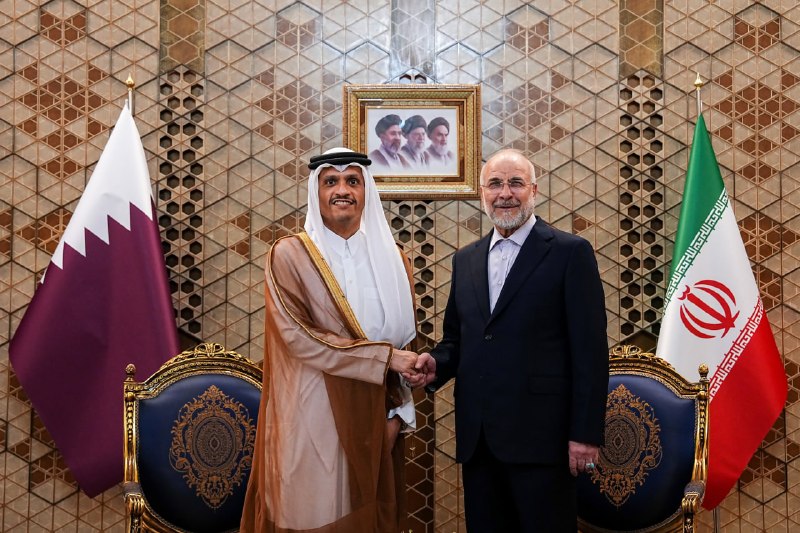
Qatar's Prime Minister and Foreign Minister, Sheikh Mohammed bin Abdulrahman bin Jassim Al-Thani, held talks in Tehran on 27 August 2026 with Iranian President Masoud Pezeshkian, Foreign Minister Abbas Araghchi and Parliament Speaker Mohammad Bagher Ghalibaf. The Qatari foreign ministry's account gave the visit a specific purpose: discussing a proposed interim framework for the Strait of Hormuz, including a joint shipping corridor and a joint mine-clearing project, alongside the need to respect neighbouring countries' sovereignty and uphold freedom of navigation.
That agenda makes the visit more than another expression of Gulf diplomatic concern. Iranian and Qatari accounts consistently placed the Strait of Hormuz at the centre of the discussions. The available material also says the talks covered efforts to de-escalate tensions and create conditions for dialogue, but it does not establish that the two governments reached a final agreement during the meetings.
A visit with a concrete maritime agenda
The Qatari foreign ministry said Al-Thani discussed the Strait of Hormuz framework with Araghchi. According to the statement relayed by The Cradle, the proposal comprised a joint shipping corridor, a joint project to clear mines, respect for the sovereignty of neighbouring countries, and freedom of navigation. Tasnim's account of the Araghchi meeting used similar language, describing discussions on efforts to ease tensions and create conditions for stability.
The focus is important because a de-escalation appeal can mean very different things in a room with Iran. On 27 August, Doha attached operational language to the appeal. It did not merely call for calm; it identified the mechanism being discussed: an interim arrangement intended to make passage through the Strait safer and politically more manageable.
The available source items do not specify which governments would formally participate in the proposed corridor or mine-clearing project, where either operation would be based, or when it might begin. That limits what can be said about the framework's readiness. The proposal's public shape is nevertheless clearer than a vague offer of mediation.
The message reached Iran's senior leadership
Al-Thani did not conduct the visit only at the foreign-ministry level. Tasnim published photographs of his meeting with Pezeshkian at 15:00 UTC, while Press TV published photographs of his meeting with Ghalibaf at 14:15 UTC. Tasnim had posted its account of the Ghalibaf meeting at 14:10 UTC. The sequence placed the Qatari prime minister before Iran's president, foreign minister and parliamentary leadership in the same day.
The Ghalibaf meeting carried its own explicit message. Tasnim reported that Al-Thani emphasised the need to reduce regional tensions. That phrasing belongs to the parliamentary meeting, not to the Qatari account of his talks with Araghchi. Treating the two read-outs as interchangeable would blur the evidence. They support a broader diplomatic picture, but each belongs to a separate encounter.
The distinction matters. The Araghchi discussion, as Doha described it, concerned a concrete Hormuz framework and de-escalation. The Ghalibaf encounter, as Tasnim described it, stressed reducing tensions. Pezeshkian's meeting widened the audience for the visit without adding a separate public proposal in the available account.
Monexus assessment: a framework, not yet a settlement
The visit's central significance is its attempt to turn regional de-escalation into a discussable operating arrangement. Monexus analysis: the joint shipping corridor and mine-clearing project are the strongest evidence that Al-Thani was carrying a defined proposal rather than offering general reassurance. That is also why the trip should not be described as a concluded deal. The source material records proposals, meetings and diplomatic language, but no final accord.
There is a plausible alternative reading. Qatar may have been testing whether Tehran would accept a limited maritime package before political questions were broached more broadly. If so, the emphasis on navigation, mine clearance and neighbouring states' sovereignty would function as confidence-building measures, with harder disagreements left outside the public read-outs. The available items do not specify whether that sequencing was intended, so the explanation remains an assessment rather than an established account.
A more sceptical reading would reduce the trip to signalling. Meetings, photographs and shared vocabulary can demonstrate that Doha and Tehran remain in contact without showing that the proposed framework is executable. On the evidence available, that is the principal weakness in the public case. The operational details identify what was discussed, not who has accepted it or how implementation would be verified.
What the public record does not settle
The Qatari statement and Tasnim's accounts are broadly consistent on the Hormuz framework and the need to reduce tensions. They are not independent evidence of implementation. The cited posts contain no signed text, commencement date, list of participating states, operational command, mine-clearing method, or enforcement mechanism. This article therefore does not establish that a corridor or mine-clearing project has been approved, launched or agreed in full.
The immediate question is whether Doha's proposal survives contact with the states expected to carry or observe it. A joint maritime mechanism would require more than diplomatic language to matter. It would need defined participants, agreed safety procedures, clear authority and confidence that the arrangement protects navigation without undermining the sovereignty clause that Doha says it respects.
For now, the visit shows that Qatar is pursuing a specific diplomatic proposition in Tehran. Iran has received it at the highest levels publicly identified in the available accounts. The next verifiable step would be a joint text or an official implementation notice; neither appears in the supplied source items.
Desk note: Monexus centred the specific Strait of Hormuz framework documented in the Qatari and Tasnim accounts, while distinguishing the wording of Al-Thani's separate meetings with Araghchi and Ghalibaf and treating the proposal as incomplete until supported by a published implementing text.
Wire provenance
This editorial synthesis draws on the following public wire/social posts:
- https://t.me/thecradlemedia/66889
- https://t.me/TheCradleMedia/66889
- https://t.me/tasnimnews_en/32817
- https://t.me/tasnimnews_en/32828
- https://t.me/presstv/204396
- https://t.me/tasnimnews_en/32841
- https://t.me/tasnimnews_en/32851