Trump says Putin has no plans to attack NATO. The CIA's Moscow trip says otherwise.
The president dismissed the very intelligence mission his own CIA director reportedly carried to Moscow this week, exposing the gap between Washington's private warnings to the Kremlin and its public messaging.
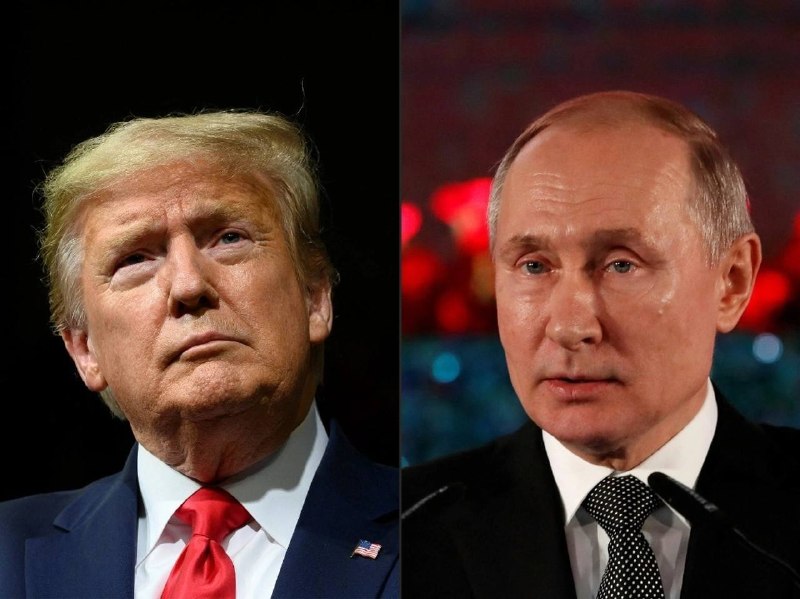
On 27 August 2026, in remarks to reporters, Donald Trump said he is not worried that Russia will attack a NATO country and asserted that Vladimir Putin is not planning to do so. He also dismissed as routine the unannounced visit CIA Director John Ratcliffe paid to Moscow on 25 August. The comments landed roughly 48 hours after the visit became public, and they cut directly against the reporting that has described why Ratcliffe flew to the Russian capital in the first place.
The contradiction is the story. The same White House that publicly waved off the mission as a routine channel is privately, by multiple accounts, delivering one of the most pointed warnings to the Kremlin since the start of the full-scale invasion of Ukraine. Either the public posture is the message and the trip is being over-read, or the public posture is the cover and the trip is the message. The president's own framing on 27 August makes the second reading harder to dismiss.
What was actually said
Trump told reporters on 27 August that he has no concerns about a possible Russian attack on NATO members and that Putin is not planning one, according to posts aggregated from the Kyiv Post official channel and the Washington correspondent Noel Reports on Telegram. He also characterised Ratcliffe's Moscow meeting with his Russian counterpart as a routine engagement. The president's framing explicitly rejected the version of events that has dominated US reporting since the trip surfaced: that Ratcliffe travelled to Moscow to warn the Kremlin against striking a NATO ally.
The Kyiv Post official Telegram channel on 27 August reported that Trump "said he has no concerns regarding a possible Russian attack on NATO countries, dismissing reports that CIA Director John Ratcliffe warned Moscow against such a move during his Tuesday visit." Noel Reports, on the same day, relayed that Trump "said he is not worried Russia will attack NATO and said Putin is not planning to do so," and that he "rejected reports" about the trip's purpose.
What the CIA trip reportedly carried
The picture from the back-channels is considerably more pointed. The Telegram channel Clash Report, citing The New York Times, reported on 27 August that Ratcliffe visited Moscow amid US intelligence concerns that Putin may not be receiving an accurate assessment of the war from his advisers. The independent OSINT channel Visioner posted twice on 27 August that Washington had delivered an unusually direct intelligence message to Moscow: that Russia's military and economic position will continue to deteriorate if Putin refuses to wind down the war, and that Ratcliffe's mission on 25 August carried a direct, high-stakes warning to the Kremlin against initiating an attack on NATO.
That sequence, if the OSINT framing holds, is a different kind of diplomacy. A CIA director does not fly to Moscow to deliver a message that the White House then publicly waves off as routine. The standard reading is that the private message is meant to land precisely because it is not said on the record. The president's public line, in that reading, is a release valve rather than a correction.
Why the gap matters
There is a long American tradition of deniable signalling to Moscow. Cold-War-era back-channels delivered messages that presidents of both parties then publicly denied or minimised. The pattern in 2026 is unusual only in that the gap between private and public posture is showing in real time, on a single news cycle, and on a question as consequential as whether the United States believes Russia might attack a NATO ally.
European NATO members are reading both messages. The signal they cannot afford to ignore is the one the CIA director is reported to have carried. The signal they cannot fully credit is the one their own ally's president delivered from the podium on 27 August. That asymmetry, not the underlying intelligence, is the political fact.
What it sets up
Three near-term tests will determine which framing holds. First, the public read-out of Ratcliffe's meeting, if one is ever offered, will set the precedent for what counts as routine. Second, any movement of Russian forces, exercises, or rhetoric toward a NATO border state will convert the OSINT framing from speculation to record. Third, the next round of NATO summit language, and any change in US force posture, will show whether Washington's private warning has teeth or only volume.
The available source items do not specify whether the White House has issued a written statement reconciling the president's remarks with the intelligence community's reported concerns. This article has not independently established whether the Russian Foreign Ministry or the Kremlin press service has publicly responded to Trump's comments or to the substance of the CIA mission.
The Monexus read: the public dismissal and the private warning are not, on this evidence, contradictory, they are layered. The risk for NATO is not that the president is wrong about Putin's intent, but that the public line becomes the basis on which allied capitals calibrate their own response. The CIA's trip, not the podium, is the policy.
Wire provenance
This editorial synthesis draws on the following public wire/social posts:
- https://t.me/Kyivpost_official/39138
- https://t.me/noel_reports/51803
- https://t.me/ClashReport/93934
- https://t.me/osintlive/567484
- https://t.me/osintlive/567451
- https://x.com/SprinterPress/status/2093081975191965835