Yayoi Kusama, who turned a lifetime of visions into a half-century of dots, dies at 97
Yayoi Kusama, the Japanese artist whose polka-dotted canvases, mirrored infinity rooms and pumpkin sculptures carried her name into global popular culture, has died at 97 in Tokyo. Her death closes a career that began in the avant-garde margins of postwar Japan and ended, decades later, as one of the most licensed art brands on earth.
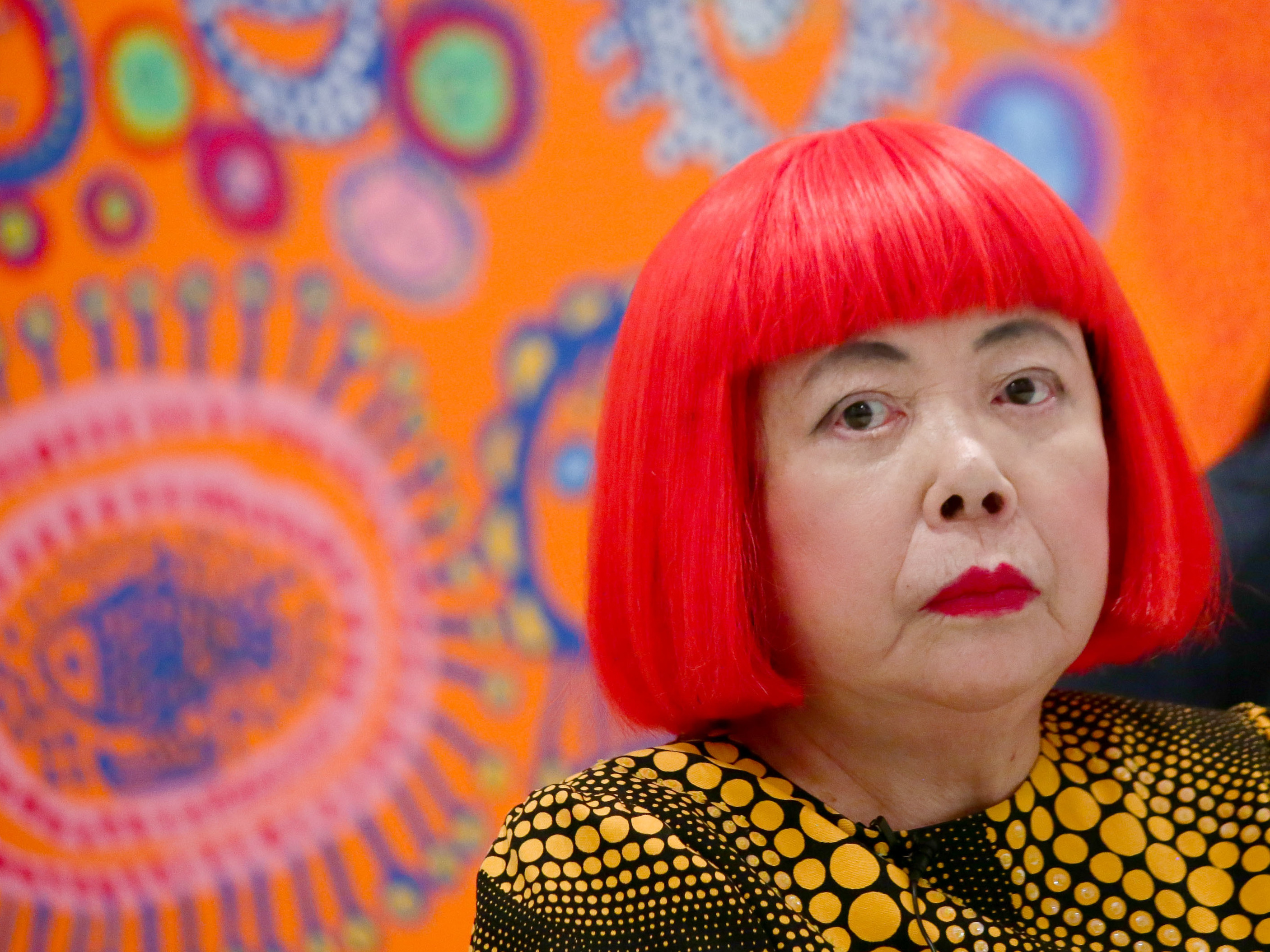
Yayoi Kusama, the Japanese artist who spent decades turning her own hallucinations into an industrial-scale practice of polka dots, mirrored infinity rooms and bulbous pumpkins, died on 27 August 2026 at a hospital in Tokyo. She was 97. Wires from Tokyo and the major Western cultural desks reported the death within hours, framing her as a figure whose popular reach grew even as her own physical participation in the work became nominal.
What makes the obituary press cycle worth reading closely is not the repetition of biographical headline but the puzzle underneath it. Kusama is one of very few twentieth-century artists whose market value and global name recognition both kept rising into her nineties, at a moment when the act of painting itself had long since passed to others. Her motifs were licensed onto mass-market goods. Museums queued for retrospectives. None of that was foreordained for a Japanese woman working, by her own account, against the steady pressure of what her collaborators and biographers have called her ongoing mental health struggles.
The New York decade, and the work that followed
Kusama's time in New York City in the 1960s placed her in direct contact with the inner circle of postwar American art, according to the New York Times obituary, which names Donald Judd, Andy Warhol and Joseph Cornell as figures she worked alongside. Her polka-dot-covered paintings, phallic sculptures and public performances caused a stir in New York and in Europe during that decade. The combination is unusual in the standard contemporary-art biography: a Japanese artist at the centre of the New York scene rather than at its margins, and a body of work built around a single obsessive mark that would still be recognisable, sixty years later, on a handbag in a department store.
What followed her American years, the Times piece notes, was an unusually durable body of work produced from Japan over the subsequent decades, including the pumpkin motif and the mirrored infinity rooms that became, for a younger generation of viewers, their first encounter with her name. Hyperallergic's obituary foregrounds the mental-health frame: Kusama channelled her ongoing struggles into kaleidoscopic artworks, reading them, in the framing of her studio and her biographers, as material to process rather than pathology to hide. Deutsche Welle frames the same trajectory in art-historical terms, characterising her output as a unique body of work likely to remain relevant for years to come and explicitly invoking the term "self-obliteration" as a recurring register in her practice.
The counter-narrative: market, myth and the question of authorship
The mainstream account treats the late career as consecration: museum touring, brand licensing, fashion collaborations, global queueing for the mirror rooms. The counter-narrative is not a smear and deserves more than a sentence. Kusama alleged in interviews revisited by every major obituary that works she had left behind during her American years were taken or appropriated by figures around her; the four cited obituaries note the allegation without resolving it. The wider critique cuts differently. How much of the late work is hers, given that her physical ability to paint had clearly declined in her eighties and that her studio has long operated as a workshop in which assistants prepare surfaces before she adds her marks? The available sources do not adjudicate this. They describe a working arrangement, not a fraud, and they leave the question of what we mean when we say an artist "paints" a work in her nineties precisely where the law and the studios always leave it: with the signature.
The fashion-and-brand dimension sharpens the question further. Reuters's short wire on the death and Deutsche Welle's obituary both note the global reach the licensed collaborations gave the imagery, particularly in cities with little exposure to the gallery circuit. The reasonable critique is that brand licensing compromises aura. The equally reasonable defence is that, for an artist who insisted throughout her life that her work belong to everyone, mass distribution is closer to fulfilment than violation. Both readings sit on the same evidence.
Reading the work after the worker is gone
Monexus analysis: the long arc of Kusama's career looks less like the standard contemporary-art biography (boom, bust, rediscovery) and more like the controlled construction of a brand that happens to be a person. The brand outlives the person in the sense that the studios, estates and museums will now set the rhythm of exhibitions and editions. The brand dies with the person in the sense that the legal personality whose signature authorised the next painting is gone. The dot, separately, predates Kusama; the cited sources do not name precursors, but they all stress that what she fused to the mark was a personal cosmology, and then, more unusually, fused the cosmology to an industrial pipeline of reproduction, merchandising and global museum touring.
There is a quieter point underneath the market mechanics. Hyperallergic's framing of her as a figure closer to a spiritual leader than a contemporary artist is the editorial register in which many of her longtime supporters have placed her. The cited sources do not record a specific late-life quotation, but they do consistently describe a daily working practice sustained across decades. In the canonical Western story of twentieth-century art, that description would read as romantic. In the context of an artist who produced work nearly every day across the second half of her life, the description is closer to a working manual. Her discipline outlasted her market, then caught up with it.
What to watch over the coming year
Three concrete things will follow from the death, and the obituary press will return to each. First, estate administration: the cited sources do not specify heirs or the structure of her studio's succession, and the international desks will report probate as it surfaces. Second, the price of late-period works on the secondary market, which has been the bellwether of public sentiment about her work in life and tends to move sharply, in either direction, on the death of a blue-chip contemporary. Third, the Infinity Mirror rooms, which are fragile, tightly scheduled and already operate under waitlists at major museums; access to the rooms has long been the most direct interface between her work and a general public that never bought a catalogue. Each of these is mechanical. Each is also where the question of what an artistic legacy means in practice is now going to be answered, in real time.
The reasonable instinct, the morning after, is to reach for superlatives: the most important, the most copied, the most loved. The sources do not bear those comparisons. What they do bear is the smaller, sharper observation that a Japanese woman who spent decades turning the inside of her own perception into a public visual language spent her final years watching that language travel further than she ever could. The rest is museums.
Desk note: Monexus treated the four wire obituaries as the wire package they are, then read them against each other rather than against each other across language. The New York Times piece gave the most detail on the New York decade and named the artistic circle. Hyperallergic foregrounded the mental-health frame and the "spiritual leader" register. Deutsche Welle framed her as a pioneer of an unusually durable body of work and named self-obliteration as a recurring register. Reuters delivered the canonical short obit in the form global desks would lift. Where the sources do not specify a biographical or commercial detail, the article above says so rather than guessing.
Wire provenance
This editorial synthesis draws on the following public wire/social posts:
- https://hyperallergic.com/yayoi-kusama-artist-of-infinities-dies-at-97/
- https://x.com/Reuters/status/2092815544718102557
- https://www.dw.com/en/japanese-artist-yayoi-kusama-dies-at-97/a-78518473?maca=en-rss-en-all-1573-rdf
- https://www.nytimes.com/2026/08/26/arts/yayoi-kusama-dead.html