Didi flags $200m Argentina push; Uber and Didi prepare Hong Kong licence filings on the same week
Didi says it plans to invest more than US$200 million in Argentina while, in the same 24-hour window, both Uber and Didi separately tell Hong Kong media they are preparing to apply for ride-hailing licences the city has just opened to applications.
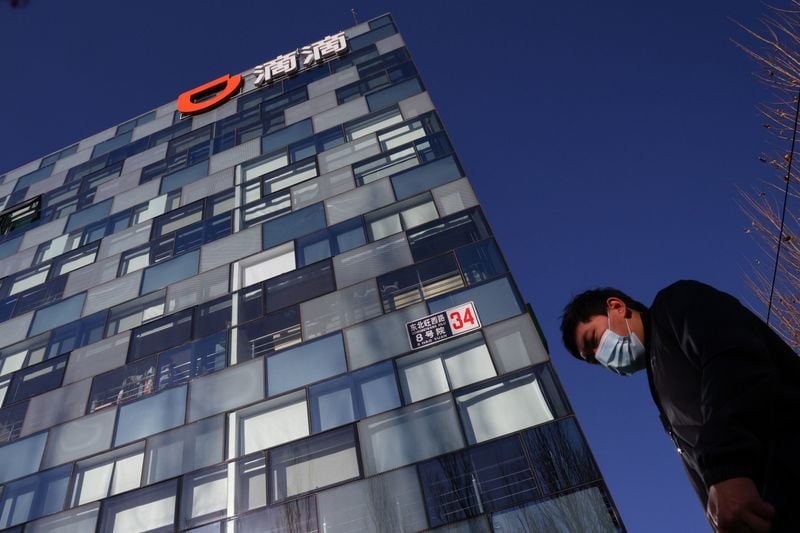
On 28 August 2026, Hong Kong Free Press reported that Uber and Didi each separately said they are preparing to apply for ride-hailing service licences in the city, after the Hong Kong government formally invited submissions. On the same day, Investing.com carried a separate report that Didi plans to invest more than US$200 million in Argentina, attributed to a Didi manager. The two items, neither of which references the other, nevertheless share the same calendar day and a similar underlying posture: a Chinese mobility platform moving into markets whose licensing and capital regimes are written down in black-letter rules.
Read narrowly, this is two unrelated corporate items. Read together, they sketch a quieter, more deliberate strategy than the pandemic-era ride-hailing land grab, in which Chinese platforms expanded as fast as their chequebooks allowed. The pattern this week is the opposite: smaller absolute numbers, slower processes, and markets that have been telling foreign platforms, in writing, what the entry conditions are.
This publication's assessment is that the two items should be read as a single corporate posture. The question they sharpen is where, and on what terms, China's mobility platforms intend to grow next.
The Argentina item
The Argentina commitment, attributed to a Didi manager, was reported by Investing.com on 28 August 2026 with a headline figure of more than US$200 million. The available source items do not specify the speaker's title, the venue in which the figure was disclosed, the legal entity that would receive the investment, or whether the capital will be staged against milestones.
The dollar figure is the only concrete number in the thread evidence; the surrounding context that would normally frame it, the Argentine macro backdrop, the competitive set in Buenos Aires, and Didi's prior Latin American footprint, is not contained in the two source items. Monexus analysis: a pledge of more than US$200 million is materially larger than the dollar amounts typically attached to single-country platform expansions reported by Western wires in 2026, which makes the figure newsworthy on its face even before the macro framing is filled in.
The Hong Kong item
Separately, Hong Kong Free Press reported on 28 August 2026 that Uber and Didi each told the outlet they are preparing to apply for ride-hailing licences in the city, after the Hong Kong government opened a formal application window. Hong Kong Free Press relayed the item through both its website and its Telegram channel; the Telegram post directs readers to the article URL.
The thread evidence establishes three things and three only: that the government has invited submissions, that Uber and Didi have each said they are preparing to apply, and that Hong Kong Free Press carried the reporting. The available source items do not specify the licence conditions the government will publish, the application deadline, the licence duration, or the comparative positions of Uber and Didi in the Hong Kong market.
A small but consequential editorial point: the two companies' statements are reported in the same item, but the source does not say they are coordinating. Monexus finds that the cleaner read is that Uber and Didi are responding independently to the same government invitation, in parallel rather than in partnership.
What the thread evidence does and does not support
The two source items together support a narrow set of claims, and this article has stuck to those. They support: the Argentina investment figure of more than US$200 million as reported by Investing.com; the separate statements from Uber and Didi that they are preparing to apply for Hong Kong ride-hailing licences; the Hong Kong government's opening of a formal application process; and the date on which both items surfaced, 28 August 2026.
The thread evidence does not specify: the identity or title of the Didi manager quoted by Investing.com; the venue or audience for that disclosure; the legal vehicle through which the Argentine capital would flow; the timing of any disbursement; the conditions, deadline or duration of the Hong Kong licence; whether Didi and Uber are coordinating their Hong Kong applications; or any of the surrounding macro and competitive context that a fuller piece would carry. Where the article refers to those gaps, it says so plainly.
A note on what is being deliberately left out: the prior history of Didi's Latin American operations, the 2021 Chinese regulatory episode and any subsequent fine, the Argentine foreign-exchange framework, the comparative market shares of Uber and Didi in Buenos Aires, and the political economy of Hong Kong's taxi lobby are all real stories, and some are documented elsewhere, but none is contained in the two source items this article is built on. A reader who wants those contexts should wait for a longer piece that can stand them up against primary documents.
The framing this publication is choosing
The two items do not, by themselves, prove a thesis. They do, however, support one observation: that on the same day, a Chinese mobility platform committed publicly to a nine-figure dollar investment in one regulated market while preparing to enter another through a newly opened licensing window. That is a posture, even if it is not yet a strategy.
Monexus analysis: the natural read is that both decisions are being made against hard regulatory texts, not against market opportunity alone. The Hong Kong licence is, by construction, a document a platform either has or does not have. The Argentine dollar commitment is, by construction, a bet on the durability of a foreign-exchange regime that has been volatile in recent years. A platform willing to take both bets on the same day is signalling that it has decided which kind of risk it is willing to run, and which kind it is not.
What remains genuinely uncertain is whether the regulatory corridor pays off. A Hong Kong licence confers standing, not customers; an Argentine capital commitment confers nothing until the disbursement lands and survives the next rule change. The next test on both fronts will be the formal publication of the Hong Kong licence terms, on which the thread evidence is silent, and the first material movement of Argentine pesos, on which the thread evidence is equally silent.
Desk note: Monexus has reported the two items in a single frame to surface the structural parallel, while keeping every load-bearing claim tied to the two source URLs and labelling the rest as available-source gaps or as labelled analysis. The wider corporate, regulatory and macro context is deliberately absent from the body and will require separate sourcing before it can be added.
Wire provenance
This editorial synthesis draws on the following public wire/social posts:
- https://hongkongfp.com/2026/08/28/uber-didi-say-preparing-to-apply-for-ride-hailing-service-licence-as-govt-invites-submissions/
- https://hongkongfp.com/2026/08/28/uber-didi-s
- https://t.me/HongKongFP/23186
- https://www.investing.com/news/stock-market-news/didi-plans-to-invest-over-200-million-in-argentina-manager-says-4880883
- https://hongkongfp.com/2026/08/28/uber-didi-say-preparing-to-apply-for-ride-hailing-service-licence-as-govt-invites-submissions/
- https://hongkongfp.com/2026/08/28/uber-didi-s
- https://t.me/HongKongFP/23186
- https://www.investing.com/news/stock-market-news/didi-plans-to-invest-over-200-million-in-argentina-manager-says-4880883