Dolly Parton's gift was making grandeur feel neighbourly
Dolly Parton's death closes a career built from songs that endured and an unusually ordinary public manner. Her great achievement was not avoiding grandeur, but making it feel like an invitation.
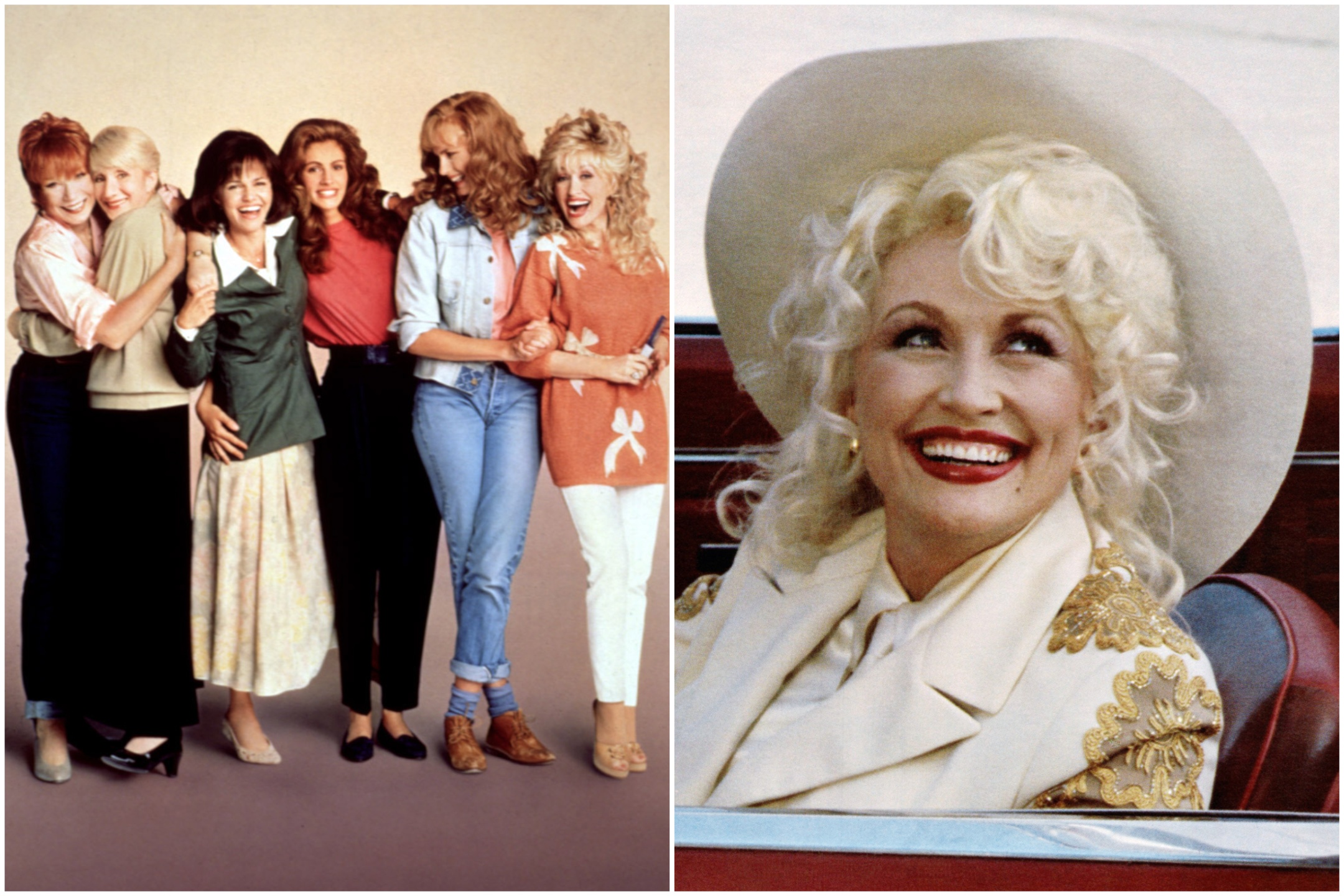
Dolly Parton died on Tuesday after a brief battle with cancer, aged 80, according to Variety. By then, the singer had already turned three songs, “Jolene,” “9 to 5” and “I Will Always Love You,” into durable accounts of desire, workplace frustration and departure. Her death is being mourned across popular music, film and public life not simply because the catalogue was enormous, but because Parton made achievement look companionable.
The conventional tribute concentrates on the impossible résumé: the unmistakable voice, the melodies, the business instincts and the instinct for a vivid line. Yet that account misses the harder thing to explain. Parton operated at the highest level of celebrity while preserving the social temperature of someone who might offer directions, remember a birthday or ask whether you had eaten. The distance between the two was not a performance of modesty. It was the source of her authority.
The voice next door
Variety's account of Parton's life places her work beyond country music's established boundaries. Her songs could sound like confessions without surrendering their craft, and like commercial constructions without losing emotional precision. “Jolene” does not plead for fairness. It recognises that a rival may be prettier, richer or more socially assured, then asks, with exquisite vulnerability, whether that advantage leaves any room for the speaker at all. “9 to 5” turns clerical resentment into a chorus with the force of a grievance filed in public. “I Will Always Love You” turns farewell into something more useful than regret: a clean statement of what can survive without possession.
That range is why Parton's appeal could travel. A Daily Nation assessment published after her death describes the songs as the centre of her genius, but the catalogue alone does not explain her wider cultural position. Parton's manner was part of the work. She did not ask audiences to admire the distance between her and them. She offered them language polished enough to last and direct enough to feel locally made.
Monexus analysis: the dominant frame of “universally beloved celebrity” is plausible, but incomplete. A more revealing explanation is that Parton converted status into familiarity. She accepted the apparatus of fame while declining its usual demand that intimacy flow only one way. That made her public image feel less like a brand barrier than a shared resource.
Work behind the rhinestones
Parton's story is often packaged as natural charm, a category that can conceal the labour beneath it. The Variety report frames Parton as a figure whose reach ran well beyond the recording studio, with a working life that included production credits in film and philanthropic commitments outside entertainment. The full list of those commitments, as described in the supplied source items, cannot be specified further than what Variety's headline and lede already name; the excerpts in the wire feed do not enumerate each programme in detail. What can be said, on the basis of the supplied reporting, is that Parton's career was structured to push capital outward: into projects, into people, into causes.
Her public positions on social questions are likewise referenced in the Variety coverage. The supplied excerpts indicate that the issue of LGBT rights appeared in Variety's survey of Parton's life and positions, including her stated support for same-sex marriage. The exact phrasing of that support, and the date on which she first articulated it, is not contained in the wire feed and therefore cannot be quoted here with confidence.
The counterpoint is that the “girl next door” reading can domesticate someone who was also a formidable commercial operator. Parton knew the value of an image, the force of a hook and the importance of controlling the route from an idea to the public. The neighbourliness worked because it sat beside discipline, not instead of it. Remove the calculation, and the warmth becomes vague. Retain only the calculation, and the catalogue loses its pulse.
A country star without permission
Country music supplied Parton's first institutional audience, but the form did not contain her career. Her visual language was deliberate: the bright clothes, the styled hair and the Nashville associations turned a performer into an instantly legible world. That world could accommodate gospel influence, pop melodies, humour, sentiment, business and philanthropy without becoming incoherent. Parton's eclecticism was not a retreat from country music. It was a demonstration of how much country music could contain once it stopped treating its borders as moral rules.
This is the more durable reading of her cultural importance. She did not need to make country less distinctive in order to make it larger. She made its specificity portable. A song about jealousy, a shift worker or a departing lover could cross genre and national boundaries without being stripped of its point of view. The voice remained particular, which is why millions could recognise themselves in it.
There is, however, a limit to what the available reporting can establish. The supplied Variety and Daily Nation accounts confirm Parton's death from cancer at 80, and the centrality of three songs to her reputation. They do not provide a complete production history, financial record, account of her private deliberations, her birthplace, or the institutional partners attached to every philanthropic commitment. They support an argument about her public method and cultural reach, not every claim about her internal motives or biographical detail. A clean separation between persona and private self would therefore overstate the evidence. Where a specific credit, donation, or institutional tie is not present in the supplied excerpts, this article does not name it.
What remains when the singer leaves
The immediate stakes are cultural. Artists, songwriters and performers inherit a market in which visible confidence is often mistaken for self-importance, and accessibility is mistaken for lack of control. Parton's career shows that the two qualities can coexist. The ornament can be lavish, the song surgically direct, and the person still answerable to the audience.
The longer stakes concern institutions. The Variety and Daily Nation coverage together portrays a figure who used cultural capital as working capital, directing resources outward rather than preserving them as status. The two outlets do not enumerate the same list of recipients, and the supplied excerpts do not establish the dollar value, dates or recipients of any single donation. What they do establish is the pattern: a career with enough surplus to spend, and a habit of spending it.
Parton's death will invite the usual language of timelessness. The better question is what remains usable. “Jolene” still teaches the difficulty of comparison. “9 to 5” still gives collective frustration a tune. “I Will Always Love You” still understands that love can be sincere without pretending ownership is noble. And Parton's public manner leaves a more difficult standard: fame need not erase the basic obligations of attention, generosity and reply.
The contradiction to carry forward is that her success depended on scale while her gift was making scale feel personal. The songs belonged to a global audience. The welcome still sounded like it had been delivered from the other side of a fence.
Desk note: Monexus framed Parton's legacy through the connection between commercial reach and public intimacy, while keeping the supplied reports' biographical limits explicit rather than turning a few documented acts into a complete private portrait.
Note on the date of death: Variety's published account refers to Parton as having "passed away on Tuesday" and was filed on 26 August 2026; the wire-feed excerpt confirms cancer as the cause and age 80 at the time of death, but does not specify a calendar date. Where the body of this article refers to "Tuesday," it follows Variety's wording; readers comparing multiple outlets may find different datestamps attached to the announcement.
Wire provenance
This editorial synthesis draws on the following public wire/social posts:
- https://variety.com/lists/dolly-parton-5-facts-buffy-the-vampire-slayer-imagination-library-covid-vaccine-lgbt-rights/
- https://variety.com/lists/dolly-parton-facts-buffy-vampire-slayer-covid-vaccine/
- https://nation.africa/kenya/life-and-style/showbiz/jolene-9-to-5-and-i-will-always-love-you-the-genius-of-dolly-parton-5573964
- https://t.me/DailyNation/143951
- https://variety.com/lists/dolly-parton-5-facts-buffy-the-vampire-slayer-imagination-library-covid-vaccine-lgbt-rights/
- https://variety.com/lists/dolly-parton-facts-buffy-vampire-slayer-covid-vaccine/
- https://nation.africa/kenya/life-and-style/showbiz/jolene-9-to-5-and-i-will-always-love-you-the-genius-of-dolly-parton-5573964
- https://t.me/DailyNation/143951