Kstovo and the components question: Ukraine is reframing the energy war
A shutdown at one of Russia's largest refineries and a Kyiv-led push to choke missile-component supply together suggest a quieter, more deliberate theory of victory.
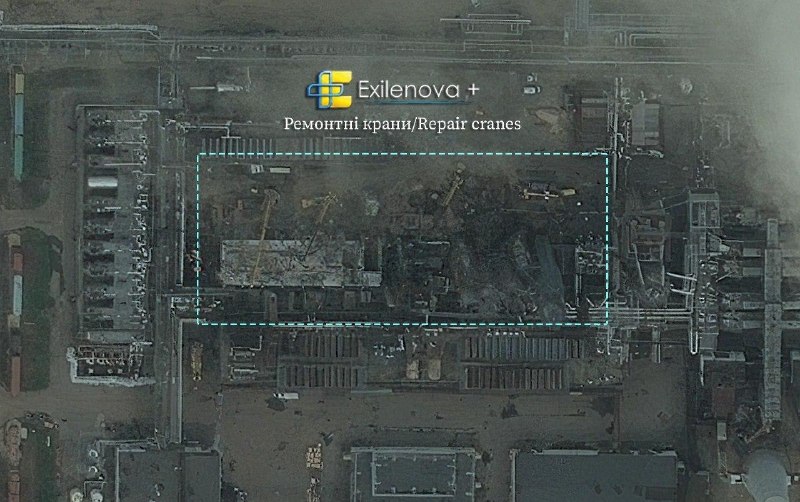
Two messages landed inside forty minutes of each other on 28 August 2026, and together they sketch a quieter theory of victory than the one usually described in Western briefings. At 12:10 UTC, the WarTranslated channel carried President Volodymyr Zelensky, citing Ukrainian military intelligence (HUR) chief Oleh Ivashchenko, warning that Russia intends to scale up ballistic-missile production and calling on partners to fully choke off the components, equipment and machinery that feed those lines. At 12:16 UTC, a parallel post on osintlive, citing WarTranslated/HUR, reported the shutdown of one of Russia's largest refineries at Kstovo in Nizhny Novgorod Oblast, a facility the post says processed 17 million tonnes of oil a year. Read separately these are two familiar storylines: Ukrainian strikes on Russian energy and Western sanctions enforcement. Read together they describe a deliberate attempt to attack both ends of Moscow's war economy at once, fuel in one direction and missile-making inputs in the other.
The point worth taking seriously is not that Ukraine struck a refinery, which it has done repeatedly, but that Kyiv is now publicly tying that strike to a wider argument about supply chains. Zelensky's appeal is not for more missiles or more air-defence interceptors; it is for component-level interdiction, the dull, technical work of denying Russia the machine tools, electronics and precursor materials without which a missile factory is just a building. That is a different ask, and it implies a different theory of how this war ends.
What Kstovo actually does
Kstovo sits in the Volga heartland, downstream from Nizhny Novgorod, and has for years been one of the workhorses of Russian domestic refining. The 17-million-tonne annual throughput figure reported on 28 August is a coarse indicator of strategic weight: it is the kind of facility that, when offline, forces crude-oil flows to reroute and pulls product into tighter domestic balances. Even short shutdowns at this scale tend to show up in Russian Urals differentials within weeks. The available source items do not specify the cause of the stoppage, the duration, or which particular unit is down, and that matters. Ukrainian long-range drones have hit Kstovo before, and periodic maintenance outages are also routine at facilities of this size. Monexus assessment: until the cause is independently confirmed, the most that can be said is that a major node has gone quiet, and that Kyiv is clearly happy to have that fact on the front page on the same morning it is making a separate pitch on components.
The components question, plainly stated
The second story is more interesting than the first. Zelensky is essentially asking Western capitals to treat the missile supply chain the way they have learned to treat refined-product supply chains: not by blocking the finished article at a port, but by choking the long tail of inputs upstream. Ballistic missiles are not assembled from parts that only Russia makes. They are assembled from ball bearings, fibre-optic gyroscopes, machine tools, semiconductor-grade wafers, specialised alloys and carbon-fibre components, a long list of inputs that travels through third-country jurisdictions, often via intermediaries that are technically compliant with sanctions enforcement until they are not. The Ukrainian ask is for something close to a closure regime on the whole stack, not just a stop-sale on the most obvious dual-use items. That is a heavy lift. It also explains why Zelensky raised it publicly rather than through existing diplomatic channels: he needs the political cost of non-compliance to be visible inside those third countries before the next shipment leaves the warehouse.
Why tying the two together matters
The structural pattern here is escalation by subtraction. For most of 2024 and into 2025, the dominant Western frame has been about adding capability to Ukraine: more air-defence interceptors, more F-16s, more artillery shells. That frame has a logic, but it presumes Russia can keep producing missiles, drones and artillery at roughly current rates, and that the West's job is to out-shoot Moscow month after month. The 28 August messaging reframes the contest. If fuel output at Kstovo-class facilities is degraded at the same time that missile-component flows are restricted upstream, Russia's production curve bends downward, and the arithmetic on what Ukraine has to intercept changes with it. The two campaigns are complements, not alternatives. Monexus analysis: that is the implicit theory of victory in Kyiv's 12:10 UTC message, and it deserves to be read as policy, not as rhetoric.
What this ask actually requires of partners
A closure regime on missile components is harder than a closure regime on crude or refined product, because the inputs are dual-use, the volumes are smaller, and the routing is more dispersed. It also requires enforcement jurisdictions, mostly in the EU and East Asia, to act against their own commercial intermediaries, which is politically expensive and procedurally slow. The available source items do not specify which particular components Zelensky's office had in mind on 28 August, nor which jurisdictions the appeal was directed at. That absence is not unusual for this kind of public pitch; the names tend to surface in follow-up technical briefings rather than in headline statements. What can be said is that the appeal is now on the record, and that any subsequent Russian ballistic-missile strike on Ukrainian cities will arrive in a domestic-political context in Kyiv that asks, explicitly, whether the components on board could have been denied earlier.
Stakes, narrowly read
If the components pitch works even partially, the trajectory of Russian missile production flattens by late 2027, and Ukraine's interception problem eases by degrees. If it does not, the energy-strike campaign carries more of the load, with higher per-strike political risk inside Russia and slower cumulative effect on the front. Neither path is cheap. The honest reading of 28 August is that Kyiv is trying to widen the burden rather than absorb it alone, and is using two simultaneous headlines to make the case that the burden can be widened further.
Monexus desk note: wire coverage on 28 August has tended to treat the Kstovo stoppage as a single-event story and Zelensky's components appeal as a separate diplomatic item; the editorial choice here is to read them as a single argument, because Kyiv released them inside the same news window.
Wire provenance
This editorial synthesis draws on the following public wire/social posts:
- https://t.me/wartranslated/18394
- https://t.me/wartranslated/18393
- https://t.me/osintlive/567655
- https://t.me/osintlive/567657