Kyiv's Drone Pivot Meets Moscow's Missile Math
Zelensky says Ukraine is on track for 1,000 long-range drones a day; Russian planners, per Militarnyi, are racing to build 10,000 cheap cruise missiles. The market is pricing peace at 20%.
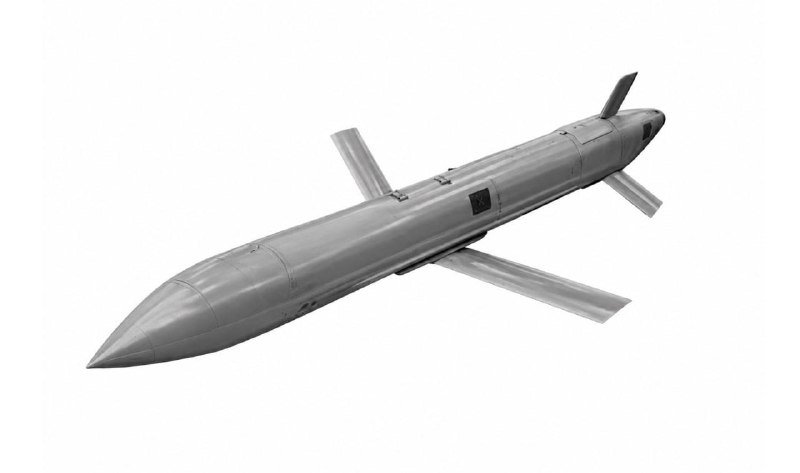
On 28 August 2026, two parallel industrial announcements landed within hours of each other, and neither side blinked. President Volodymyr Zelensky said Ukraine is scaling towards 1,000 long-range drones a day against Russia, with daily rates "already averaging over 300", according to a post aggregated by the War Translated channel at 16:30 UTC and relayed through osintlive at 16:49 UTC. Within the same news window, Militarnyi reported, via the Kyiv Post official channel at 16:01 UTC, that Russia plans to produce 10,000 Dan-T cruise missiles in 2027, a 135 kg warhead, range of up to 500 km, scaled across ground, naval and air launchers.
This is not a story about who fires first next week. It is a story about two economies retooling in public, on a clock the peace market has effectively written off.
The drone factory has left the laboratory
Zelensky's framing, as relayed by War Translated, is unambiguous. Long-range strike drones are now a mass output line, not a boutique program. The War Translated channel notes the daily average of "over 300" and the 1,000-per-day scaling target; osintlive carries the same Zelensky statement at 16:49 UTC. The number that matters is the gap between those two figures. Tripling daily production within a defined window implies a regime where drone sorties are no longer rationed by scarce airframes but by launch crews and routes. That changes targeting logic in Ukraine's favour and compresses the cost-per-strike curve sharply downward.
Clash Report, posting at 16:13 UTC, captured Zelensky's taunting corollary. "Russia, for the first time in history, imports gasoline and spends budget funds actually supporting oil companies", the president said, per the channel. The substance of the line is that sanctions, Ukrainian refinery strikes, and the drone tempo together have flipped a net energy exporter into a net energy importer, with the Russian state now subsidising its own downstream. Read together with the drone cadence, the claim is structural: the war economy is being ground down faster than it is being rebuilt.
The missile counterpunch
Read in isolation, the Dan-T plan looks like the rebuttal. Per Militarnyi reporting relayed by Kyiv Post official at 16:01 UTC and amplified by War Translated at 16:02 UTC, Russia intends to mass-produce a "cheap", 135 kg-warhead cruise missile at a 10,000-unit annual cadence for 2027, fired from ground, naval and air platforms. The unit economics are the headline. A 10,000-missile stockpile at a deliberately low unit price is not a precision-strike force; it is a saturation force designed to overwhelm Ukrainian air defence magazines, the kind of which Ukraine cannot replace on Western shelves at any reasonable tempo.
The asymmetry is uncomfortable. Ukrainian drones are cheap, plentiful, and increasingly domestic. Russian Dan-T missiles, by design, are also cheap and destined for plenty. Both sides have concluded that industrial throughput, not platform sophistication, will decide the next twelve months.
Where the market disagrees with both of them
Polymarket, via its listing page accessed on 28 August 2026, put a 20% probability on Russia and Ukraine holding peace talks by the end of the following month. That is a sobering number against announcements of 1,000 drones a day and 10,000 missiles a year. Either the industrial tempo is bluff, negotiation theatre, or both. Or the political market believes that escalation kinetics, not industrial math, will force a pause. Monexus analysis: when drone production ramps and missile production ramps in the same fortnight, the binding constraint on the war tends to shift from ammunition to political will, because both sides are visibly preparing to fight past the next budget cycle.
What the available reporting does not specify
The cited Telegram posts and the Polymarket listing carry the production claims and Zelensky's framing of the energy-import reversal, but none of the available source items specify the launch cadence of the Dan-T once produced, the unit cost claimed by Russian planners, or the air-defence interceptor budget Ukraine will need to absorb a saturation campaign of that scale. The sources also do not specify any reciprocal Ukrainian response to a 10,000-missile programme. The available reporting does not name which facilities will host the new missile line. Reading these figures as hard operational reality rather than as political signalling would require confirmation Militarnyi itself has not yet published in the cited items.
The drone claim and the missile claim are both consistent with a war that is being deliberately priced to continue. Whether the 20% peace-talk number drifts up before the end of September will be the first honest read on whether either industrial blueprint is intended to be used, or merely brandished.
This piece draws on Telegram-channel relays of Zelensky's own statements and on Militarnyi reporting carried by Kyiv Post's official channel; wire confirmation from Reuters, AFP or AP of the specific 1,000-drone and 10,000-missile figures was not present in the source window, and this publication has not independently established those figures beyond the cited channels.
Wire provenance
This editorial synthesis draws on the following public wire/social posts:
- https://t.me/wartranslated/18403
- https://t.me/osintlive/567734
- https://t.me/ClashReport/94039
- https://t.me/Kyivpost_official/39173
- https://t.me/wartranslated/18402
- https://poly.market/7aL79Ns