Nepal orders rescuers to stand down as border floods kill at least 472
Nepal's home ministry pulled rescue teams back from the Himalayan frontier on 28 August as overflow from a trans-boundary cascade pushed the death toll past 472, with entire valleys scoured clean.
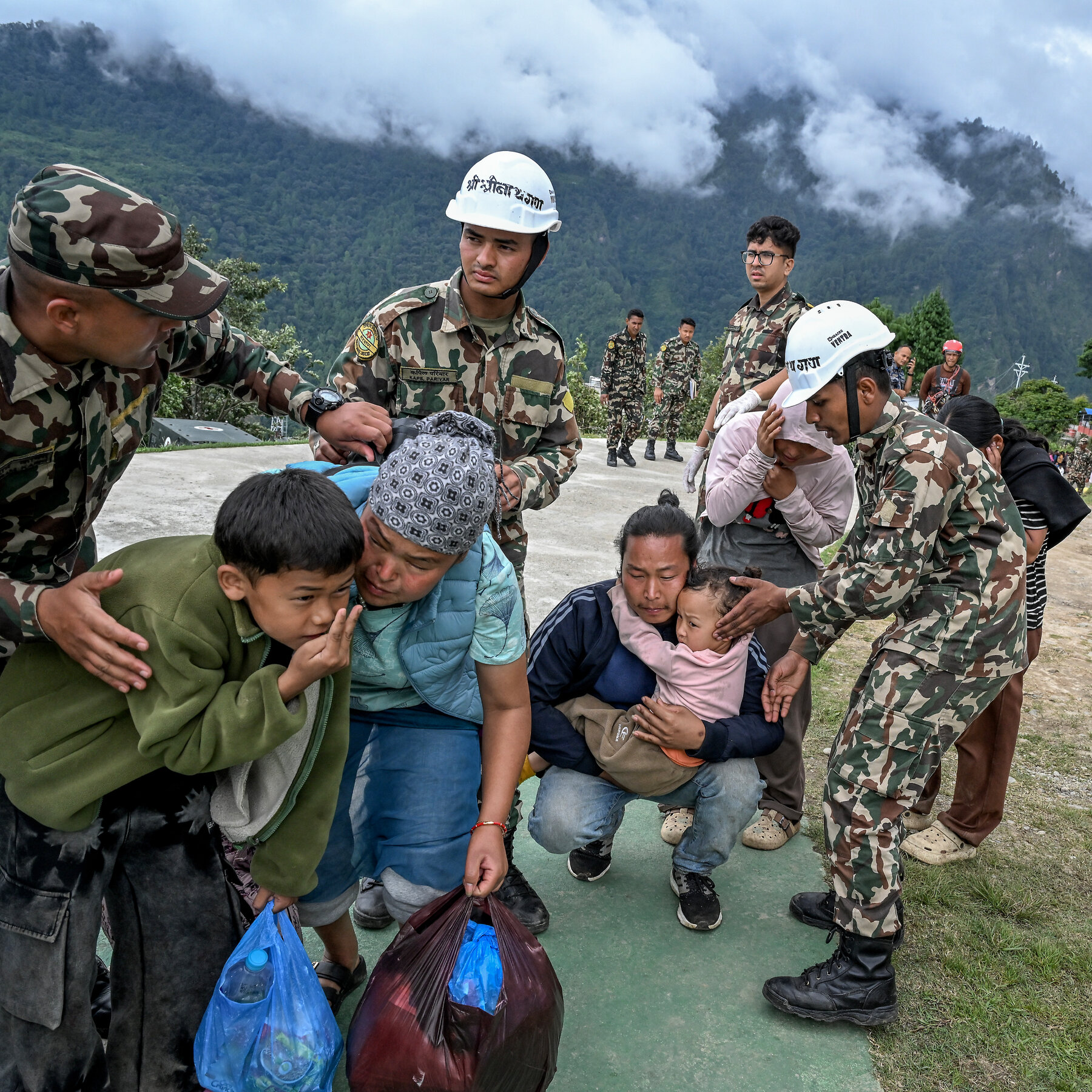
At 09:36 UTC on 28 August 2026, the Hong Kong Free Press reported that Nepal's home ministry had ordered rescue teams out of the worst-hit reaches of the country's northern border, citing fresh overflow risks along rivers fed from the Tibetan side of the Himalayas. The directive came as the official death toll from days of flash flooding and landslides climbed to 472, with the ministry warning that the figure was provisional and likely to rise.
The order to stand down is not a ceasefire so much as a recognition that the river system has not finished moving. Read together with reporting from Frontline and relay accounts on Telegram, the picture is of a disaster that began on the Chinese side of the Himalayas and crested into Nepal within hours, taking villages, suspension bridges and stretches of arterial highway with it. Nepal's window for search-and-recovery is closing as rapidly as it opened.
The river that started in Tibet
Floodwaters along the frontier traced a familiar pattern in a country that lives downstream of the world's highest catchment. Initial accounts aggregated by the Hong Kong Free Press on 28 August describe a cascade fed by sustained rainfall and glacial overflow in the Tibet Autonomous Region, with the Sun Koshi and its tributaries breaking their banks well before reaching the border. Villages in Sindhupalchowk and Rasuwa districts reported the loss of road links to the capital within hours of the first surge. The home ministry's mid-morning directive to withdraw rescue teams was, in effect, a triage call: keep personnel out of valleys where the next surge had not yet been charted.
Frontline's reporting on 28 August frames the event as part of a longer Himalayan hydrograph under strain. The floods, the outlet notes, sit inside a pattern of increasingly volatile monsoon behaviour and glacier loss across the watershed, conditions that have repeatedly converted marginal rainfall into catastrophic runoff. The death toll cited by Frontline tracks the same 472 figure carried by Hong Kong Free Press, a near-uniform read across the relay network at 09:00-10:30 UTC that lends the count some weight even as authorities in Kathmandu acknowledge the number is provisional.
A separate channel relay dated 10:28 UTC the same day reported an earlier toll of 469, a figure that has already been overtaken by the official count. That arithmetic drift is itself the story: in fast-moving trans-boundary floods, the casualty figure is rarely final until the water has been off the valley floor for a week.
What the order to withdraw actually says
Nepal's home ministry did not describe the pullback as an end to operations. The directive, as carried by Hong Kong Free Press, instructed rescue teams to relocate to higher ground and to consolidate around identified safe corridors, pending a fresh survey of river levels from the north. In practical terms, it pauses the most labour-intensive phase of search-and-recovery in the hardest-hit border districts and reorients resources toward evacuation of communities still in the flood path downstream.
Two readings of the move are plausible. The more generous one, and the one the ministry's language implies, is that commanders believe the worst of the overflow is still moving through the system and that ground teams in narrow valleys would be unable to retreat fast enough if a fresh surge arrived. The more sceptical one is that Nepal's disaster-response capacity, chronically underfunded and reliant on the army and police for manpower, has been overtaken by the scale of the event and that the pullback is a cover for an exhaustion the government is unwilling to name publicly. The available reporting does not adjudicate between the two. What it does establish is that the directive was issued centrally and broadcast in the same window that the toll was being revised upward, suggesting coordination between the operational and the informational sides of the response rather than improvisation.
A watershed under new pressure
What is happening on the Nepal-China border is also, structurally, a story about water. The Himalayas feed the ten largest river systems in Asia; the discharge that has just scoured the Nepalese frontier began as monsoon rain and meltwater that crossed multiple administrative boundaries before it reached the communities now buried under silt. Coordination between the Chinese authorities in Tibet and the Nepali districts downstream has historically been episodic, often confined to information exchange after the worst has already happened. The current event, by every indication in the sources, is no exception.
Frontline's framing matters here. The outlet is explicit that the floods sit inside a climate trajectory: warming atmospheres hold more moisture, glaciers lose mass faster, and the buffer between a heavy rainfall and a catastrophic flood narrows. That trajectory does not distribute its costs evenly. The communities along the Nepali side of the frontier are, in infrastructure terms, the least equipped to absorb a shock that originates upstream. The result is a recurring asymmetry in which the disaster is local but the causation is regional, and the response is national but the funding is donor-dependent.
What the next 72 hours look like
Three things are worth watching. First, the death toll: the home ministry's count of 472 was issued mid-morning on 28 August and is, by the ministry's own caveat, provisional. Second, river levels along the Sun Koshi and the tributaries that join it south of the border; a second surge from the Chinese side would force a longer pause to field operations. Third, the diplomatic channel between Kathmandu and Beijing, which has so far produced no publicly visible joint statement in the reporting this desk has reviewed. The available sources do not specify whether a Chinese readout from Tibet has been issued in the same window.
Monexus will treat the casualty figure as live until either the home ministry closes the count or a week passes without further revision. The story's next inflection is meteorological as much as humanitarian.
Desk note: Monexus framed this as a trans-boundary disaster with a regional climate frame rather than a national tragedy story. The wire aggregators concentrated on the casualty count; the more durable question, where the sources support it, is the asymmetry between upstream causation and downstream capacity. The Chinese-side framing of the event is not present in the cited material and has been left as a gap rather than smoothed over.
Wire provenance
This editorial synthesis draws on the following public wire/social posts:
- https://hongkongfp.com/2026/08/28/nepal-orders-rescuers-to-safety-as-overflow-brings-new-flood-risks-and-death-toll-climbs-to-472/
- https://frontline.thehindu.com/world-affairs/nepal-floods-climate-himalayas/article71399291.ece
- https://t.me/HongKongFP/23183
- https://t.me/englishabuali/78399
- https://t.me/FrontlineIndia/4111
- https://hongkongfp.com/2026/08/28/nepal-orders-rescuers-to-safety-as-overflow-brings-new-flood-risks-and-death-toll-climbs-to-472/
- https://frontline.thehindu.com/world-affairs/nepal-floods-climate-himalayas/article71399291.ece
- https://t.me/HongKongFP/23183
- https://t.me/englishabuali/78399
- https://t.me/FrontlineIndia/4111