Southern Lebanon's al-Mansuri takes the hits while the camera moves on
Between 19:43 and 22:38 UTC on 28 August 2026, seven alerts on a single Telegram channel reported Israeli airstrikes and artillery fire on al-Mansuri and Kafr Rumman in southern Lebanon. The cadence is the story.
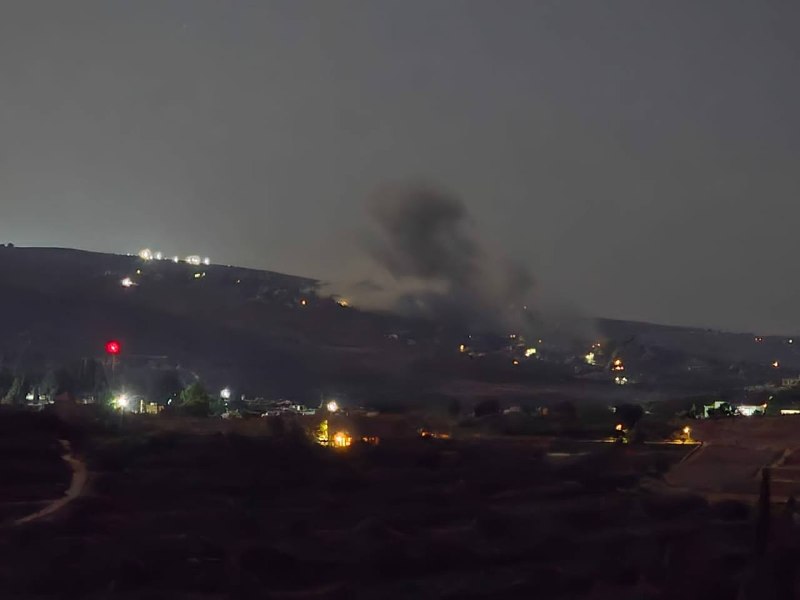
Seven alerts on a single Telegram channel reported Israeli airstrikes and artillery fire on al-Mansuri and Kafr Rumman in southern Lebanon between 19:43 and 22:38 UTC on 28 August 2026. The first al-Mansuri strike was logged at 20:22 UTC. A second landed at 22:12 UTC. A third followed at 22:38 UTC. In between, Israeli artillery fired on the Dawha neighbourhood of Kafr Rumman at 21:36 UTC and again at 21:47 UTC. An earlier strike on Kafr Rumman itself was reported at 19:43 UTC. Six of the seven alerts use the word "airstrike"; two describe artillery. The cadence is the headline.
The pattern, more than any single detonation, is what deserves attention. Seven discrete strike reports in roughly three hours, two of them on al-Mansuri alone within the final twenty-six minutes, all arriving through one channel, all in near-real-time, each post carrying a recurring Rainbet.com promo line about a "#1 Non-KYC Crypto Casino & Sportsbook." That second feature is part of the package: the alerts and the sponsorship text travel together in the same posts. It is the form in which the diaspora is receiving these strikes, and it deserves naming without further inference about the commercial arrangement behind it.
When the wire goes quiet, the channel lights up
What the cited items contain is narrow. They contain seven alerts from wfwitness, time-stamped to the minute, describing strikes in two adjacent villages in the southern Lebanese frontier zone. The available source items do not include an IDF Spokesperson per-strike bulletin on al-Mansuri or Kafr Rumman for the evening of 28 August 2026. The available source items do not include a Lebanese state news agency update naming either village in this window. The available source items do not include a Reuters, AFP, AP, or BBC standalone bulletin on the al-Mansuri sequence within the hours in question. Each of those propositions describes the input set, not the world; this publication has not independently established whether such statements or filings were issued elsewhere and simply did not surface in these feeds.
That leaves the channel doing work that institutional wires, in the input set at least, did not. The corridor was not invented by the channel. The villages named in the alerts are villages with prior reporting history. What those outlets carried about the 28 August evening specifically, within the three-hour window the channel logged, is something this article cannot confirm from the items at hand.
What the cited reports actually say
Stripped of the promo inserts, the seven alerts describe a contained tactical sequence on two adjacent villages. Six use the word "airstrike"; two specify artillery fire on the Dawha neighbourhood of Kafr Rumman. The 22:12 UTC al-Mansuri report appears in two near-simultaneous posts from the same channel, 22:12:03 and 22:12:25 UTC, which the cited items present as overlapping notices of the same strike rather than two distinct events. None of the visible text in the cited posts names a specific target, lists a casualty count, or identifies a militant infrastructure claim. Three of the seven post excerpts supplied to this desk are truncated; additional content beyond the visible text is possible, and this article does not assert that the full posts contain nothing beyond what is shown. Monexus analysis: read together as supplied, the alerts describe a sustained pressure campaign against a single corridor, not an isolated kinetic event.
What is absent from the visible sequence is also worth naming. The cited text does not specify Hezbollah or other armed-group activity in al-Mansuri or Kafr Rumman on the evening of 28 August. The cited text does not specify whether Israeli ground forces accompanied the fire, does not specify civilian movement, evacuation orders, or casualty figures, and does not specify the military objective of either village. These are the kinds of details that usually arrive in the second wave of reporting, the wave that institutional wire desks carry and that local field channels do not, at least not in the visible text at hand.
A structural frame, in plain language
What we are watching in southern Lebanon, on this evidence, is the slow disaggregation of the reporting chain. A contested border, an active military front, and a steady cadence of fire used to produce a steady cadence of news, filtered, sanitised, often late, but arriving with attributions, casualty figures, and named institutions attached. Into the gap has moved a faster, less mediated layer: field channels with Telegram reach, promo-line sponsorship text attached to strike alerts, no bylines, no editorial structure, no institutional liability. The information is often earlier. The verification is often thinner, and the verification work falls to readers who rarely have the time, the Arabic, or the geospatial tools to do it.
This is not unique to Lebanon. The same shift has reshaped coverage of Khartoum, of Tigray, of the eastern DRC. It produces a paradox that regular readers should recognise. The map of events that can be observed in near-real-time has expanded. The proportion of those observations that arrive with a verifiable institutional provenance has contracted. Readers now see more and verify less. That is a worse arrangement than either extreme: more opacity dressed as more transparency. The first task for any desk covering this evening is to rebuild the verification layer around what the channels are publishing, village by village, strike by strike, against civil-defense notices, satellite imagery, and the originating military briefs.
The alerts from al-Mansuri and Kafr Rumman will, in the days that follow, draw a casualty count, a ground-force disposition, and a diplomatic readout from outlets with named bylines and institutional liability. Until then the responsible read is narrow and honest. Seven reported strikes on two villages in the southern Lebanese frontier zone in three hours, sourced to a single channel, unverified as to casualties, targets, or accompanying ground activity. The cadence suggests pressure, not punctuation. The verification work is not yet done, and the absence of named-institution confirmation in the cited items should be read as an input gap, not as evidence of silence from those institutions.
Monexus framed this event by anchoring on the seven cited alerts as the evidentiary core, declining to escalate beyond what those items support, and treating the absence of IDF, NNA, and Western-wire confirmation as a property of the input set rather than an affirmative claim about the conduct of those institutions.
Wire provenance
This editorial synthesis draws on the following public wire/social posts:
- https://t.me/wfwitness/108636
- https://t.me/wfwitness/108643
- https://t.me/wfwitness/108647
- https://t.me/wfwitness/108648
- https://t.me/wfwitness/108650
- https://t.me/wfwitness/108651
- https://t.me/wfwitness/108654