The tempo the wires will have to catch up to
On 28 August 2026, one open-source channel logged ten strike-related alerts across southern Lebanon villages in roughly fifty-seven minutes. The cluster is the data; the cadence is the analysis.
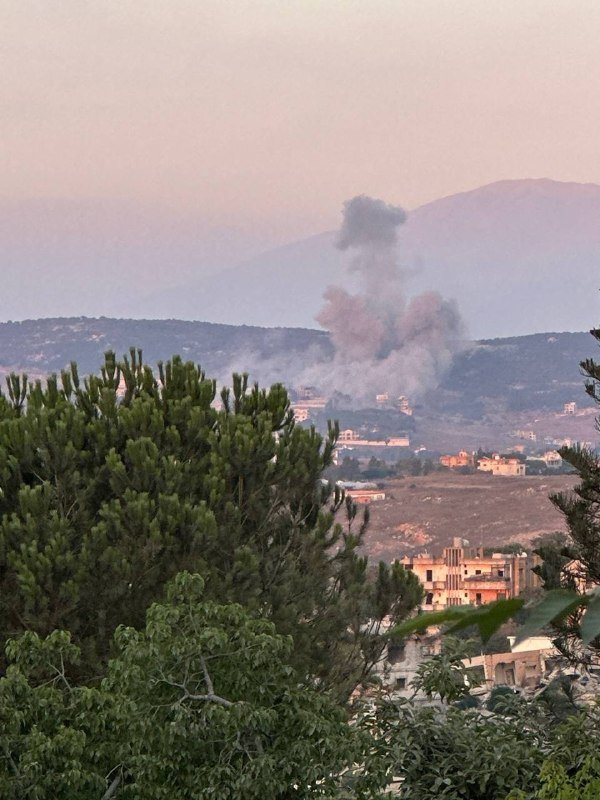
Ten alerts in roughly fifty-seven minutes. That is the open-source record of the afternoon of 28 August 2026 once the casino affiliate banners running underneath every post on the Telegram channel wfwitness are stripped out. Between 15:31 UTC and 16:28 UTC, the channel logged Israeli airstrikes, detonations or low-altitude jet activity at Kfar Ruman, Nabatieh El Fawqa, Houla and Deir Siryan. The cluster is small in bytes and large in cadence.
The tempo, not the per-event detail, is the news. Israel and Hezbollah are no longer trading across a frontier; they are trading across a cascade of named villages, in public, in daylight, with each strike timestamped by a single aggregator channel. The structural question is what an aerial campaign of this frequency against populated towns in a sovereign neighbour does to the rhythm of the press cycle that follows.
The minutes that did the talking
The first alert in the cluster, timestamped 15:31 UTC, identified Kfar Ruman in southern Lebanon as the target. Five minutes later, at 15:36 UTC, the same channel logged a further post on Kfar Ruman whose caption combines a strike notice with imagery of that strike, so the 15:31 UTC and 15:36 UTC items cannot be cleanly separated as two distinct munitions on one location on the evidence available. From 15:57 UTC onward the channel logged strikes on Nabatieh El Fawqa in two rapid posts separated by a minute, then additional imagery of the same town at 16:00 UTC, more imagery at 16:07 UTC, and a fresh strike on Nabatieh El Fawqa reported at 16:23 UTC. Houla was struck at 16:05 UTC, Deir Siryan at 16:28 UTC. The 16:06 UTC item flagged Israeli jets flying at a very low altitude over southern Lebanon, which the channel did not link to a specific strike.
The available source items do not specify weapon types, targets struck, casualty figures, or whether the IDF Spokesperson's unit has confirmed, denied or characterised any of the strikes in question. Monexus is working from the aggregator channel's captions and timestamps only.
Why a fifty-seven-minute window matters
Monexus assessment: the structural point is not southern Lebanon in isolation. It is the routine, daytime, low-altitude visibility of an aerial campaign against a populated border region, in which each individual strike is small enough to slip below most front pages but the aggregate tempo is too high to be waved away. The same towns, Nabatieh El Fawqa and Kfar Ruman, feature repeatedly across the cluster. The channel's imagery posts, at 15:59, 16:00 and 16:07 UTC, are explicitly framed as follow-on visual confirmation of strikes it had already logged, which suggests a deliberate publish rhythm: alert, then imagery, then re-alert, then fresh imagery. That is not raw reporting. It is a cadence.
The most natural read of the available evidence is that the southern Lebanon campaign is being run at a tempo legible to handheld cameras in the next village, with the downstream press cycle expected to anchor itself to captions it did not write. Whether that read is correct is something the IDF Spokesperson's daily briefings, the Lebanese Army communiqués, and UNIFIL sitreps will adjudicate in the days that follow. The cited posts do not contain those adjudications.
Counter-read: the cluster could also be one event, retold
The alternative reading is the more charitable one. A single strike on a single town, witnessed from multiple angles and relayed as separate back-to-back posts by a fast-moving channel, can manufacture the appearance of a tempo spike that is not in fact present on the ground. Telegram aggregators are not neutral instruments; they compete for engagement, and an alert followed by imagery followed by a re-alert is also a publishing pattern designed to maximise screen-time on a phone. On the available evidence, Monexus cannot tell whether the 15:31 UTC and 15:36 UTC Kfar Ruman posts refer to two distinct strikes or one strike being re-captioned as more imagery came in. The channel's captions do not disambiguate, and no wire confirmation in this thread helps it do so.
That ambiguity is itself the story. When a single open-source channel is the only public timestamp for an aerial campaign against named villages, the difference between a bombardment and a sequence of follow-on posts is decided by whichever first-party readout lands first, from the IDF Spokesperson, the Lebanese Ministry of Public Health, UNIFIL, or the wire services when they catch up. The honest framing for today is that the data does not yet choose between those reads.
What the next forty-eight hours will tell
Monexus forecast: the next twenty-four to forty-eight hours will produce a first-party readout, either from the IDF Spokesperson confirming the day's activity, or from the Lebanese Ministry of Public Health with a casualty aggregate for the named towns. The journalistic stakes are concrete. If the wires match the channel's per-minute tempo, today's events will be reported as a bombardment. If they do not, today's events will be reported as a series of incidents, each individually too small to anchor a lede. The political stakes are larger still: a populated border region absorbing a string of named strikes in an afternoon is either a counter-terror campaign or a creeping escalation, and the difference is decided in the language the wires choose.
A final point of plain uncertainty. The cited posts do not specify the relationship between the Israeli jets flying at very low altitude at 16:06 UTC and any specific strike, do not name the targets struck in Kfar Ruman, Nabatieh El Fawqa, Houla or Deir Siryan, and do not record any statement from the IDF, the Lebanese Army, Hezbollah or UNIFIL. Monexus is not asserting what the strikes hit, only that they were logged.
Desk note: Monexus treated the wfwitness timestamp cluster as a primary public record of named strikes and held back on target-language and casualty figures the cited posts do not contain. Where wire confirmation lands, this piece will be updated with attribution; until then, the tempo is the story.
Wire provenance
This editorial synthesis draws on the following public wire/social posts:
- https://t.me/wfwitness/108607
- https://t.me/wfwitness/108608
- https://t.me/wfwitness/108614
- https://t.me/wfwitness/108615
- https://t.me/wfwitness/108617
- https://t.me/wfwitness/108619
- https://t.me/wfwitness/108620
- https://t.me/wfwitness/108621
- https://t.me/wfwitness/108622
- https://t.me/wfwitness/108623