Four sorties, one ridgeline: what the wire cycle keeps calling 'limited'
Three strikes logged at 13:45 UTC and a fourth at 13:55 UTC over a single southern Lebanese ridgeline. The reading depends on which side of the press release you sit on.
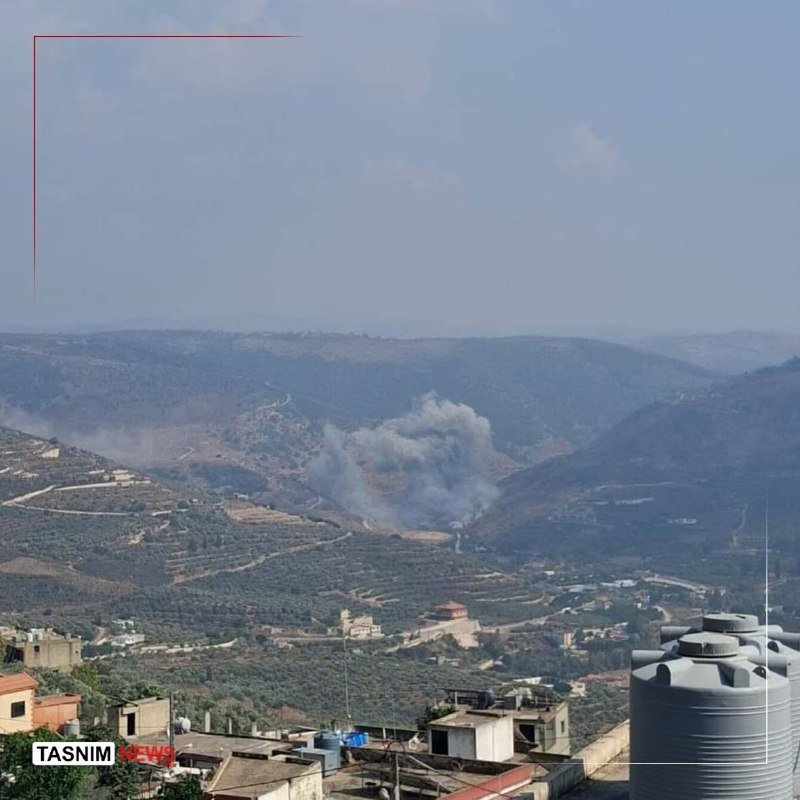
At 13:45 UTC on 29 August 2026, the Telegram channel of The Cradle Media posted that Israeli warplanes had attacked Nabatieh al-Fawqa, specifically the area near the Ali al-Tahir highlands, with three airstrikes. By 13:54 UTC it logged a further targeting of Ali al-Tahir. By 13:55 UTC, Iran's Tasnim News Agency English channel reported four Israeli airstrikes on the same heights, and described the area as "the main theater of conflict" between Israeli forces and Hezbollah. Ten minutes, one ridgeline, seven or more sorties depending on how the duelling counts are reconciled. The arithmetic is the easy part. The vocabulary is where this gets interesting.
Monexus assessment: a concentrated burst of air activity over a single named geographic feature in southern Lebanon, in mid-afternoon UTC, on a Friday in late August, is the kind of day the wire cycle has been taught to render as a tactical footnote. The Lebanon- and Iran-aligned outlets covering these strikes are rendering it as something else: a pattern, accumulating by coordinates. The reading depends on which side of the press release you sit on, and which side of the press release the wires choose to relay.
What the per-strike ledger actually shows
Strip the framing out and the source record is narrow but specific. The Cradle's first post identifies the target as the highlands above Nabatieh al-Fawqa, characterising the initial three strikes as "intense." Its second post, roughly nine minutes later, reports additional Israeli sorties on Ali al-Tahir. Tasnim's English channel, posting one minute after The Cradle's second item, puts the count at four and names the area as the centre of gravity of the current fight. None of the available items specify ordnance type, casualty figures, or damage assessment. None of them specify Hezbollah activity in the same coordinates on the same afternoon. The available source material does not specify whether Lebanese civilian structures in the ridgeline area were struck.
That last point matters, because the standard journalistic reflex in this kind of coverage is to ask what was hit and who was there. The Cradle and Tasnim are doing something different. They are logging sortie count and geography at a cadence designed to make the volume of activity legible to a reader who is not on the ground. Whether that ledger is more or less truthful than a Western-wire summary is a separate question; what is plainly true is that it is more granular, and that the granularity is doing political work either way.
What the wire vocabulary buys and sells
Western coverage of Israeli air operations in southern Lebanon has, in the post-2024 period, tended to carry a particular package of official language: that strikes are targeted, calibrated, and responsive; that civilian harm is a regret rather than a feature; that the diplomatic track is still the operative track and the air tasking order is subordinate to it. That package is, on the evidence of the 29 August posts, not what is being supplied by the strike-counting outlets. They are not contesting that the strikes happened. They are contesting the vocabulary used to make the strikes sound like a smaller event than the per-strike record suggests they are.
The structural move, when a wire reporter inherits official language without independent confirmation, is to treat the official line as the default and any counter-framing as the deviation. Monexus assessment: this is the part of the media ecosystem that warrants scrutiny, not because the official line is necessarily false, but because the wire cycle has no in-built mechanism for verifying it against on-the-ground sortie counts in real time. When the only English-language sources producing that count are outlets routinely dismissed as partisan, the verification gap widens in a predictable direction. The strikes get the official framing. The counter-claim gets the partisan label. The reader gets the framing minus the label and absorbs the framing.
The structural pattern, in plain language
A single afternoon's posts are not, on their own, evidence of a structural shift. They are evidence of one afternoon. But the afternoon is not arbitrary: it is one more data point on a geographic feature that the Iran- and Lebanon-aligned outlets have been naming as a recurring target, and the wire cycle's reluctance to name it back is itself a pattern. The pattern is not that the strikes happen; the pattern is that the English-language record of the strikes is being curated, in real time, into a shape that makes them sound more constrained than the per-strike ledger suggests.
This is not a moral claim about any individual sortie. It is a claim about the information environment in which the sorties are reported. When the burden of explanation is, in practice, placed on the side producing the communiqués rather than the side producing the activity, the reader ends the day with a less complete picture than the day's events warrant. That is true regardless of which side of the conflict one sympathises with, and it is the part that a serious editorial page should be willing to push on without being accused of partisanship. The activity is verifiable. The framing is contestable. Most of the contestation, right now, is happening on channels the wire cycle does not relay.
What to watch on 30 August
Two concrete tells on 30 August will determine whether 29 August was an outlier or a normalised pattern. First, whether the IDF spokesperson's daily readout names Ali al-Tahir specifically, or continues to subsume it under generic southern-Lebanon language. Second, whether any major Western wire sends a journalist to Nabatieh al-Fawqa rather than paraphrasing Tel Aviv. If neither happens, the strikes themselves will continue, the per-strike ledger will continue to be held by a narrow set of English-language outlets, and the diplomatic vocabulary will continue to do the work of making the activity sound smaller than the coordinates suggest. If either happens, the wire cycle begins, slowly, to catch up with the geography.
Monexus will update when an Israeli first-party readout or an independent on-the-ground account of the 29 August activity is published. The available source items do not specify such a readout as of 13:55 UTC on 29 August 2026.
Desk note: the thread context for this piece consists exclusively of Telegram posts from The Cradle Media and Tasnim News Agency. Where Western wires have run the day in summary language, Monexus has foregrounded the per-strike, per-coordinate ledger the partisan-adjacent outlets are maintaining, and flagged the absence of an independent first-party account. We will widen the source list as IDF, Lebanese official, or wire-stringer reporting becomes available.
Wire provenance
This editorial synthesis draws on the following public wire/social posts:
- https://t.me/tasnimnews_en/33224
- https://t.me/thecradlemedia/67014
- https://t.me/TheCradleMedia/67010