'Gunfire Around Niamey Airport: Reading Two Hours of Telegram Dispatches'
Two Telegram channels tracking Sahelian conflict posted a sequence of dispatches
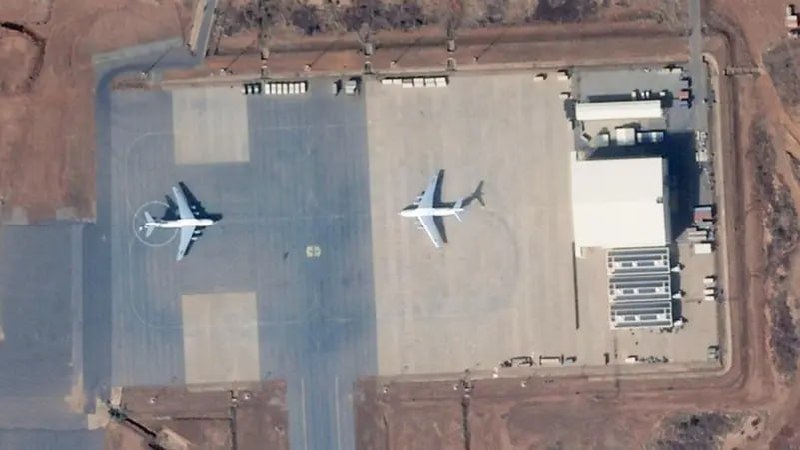
At 01:08 UTC on 29 August 2026, the WFWitness Telegram channel posted an initial dispatch reporting gunfire and explosions in Niamey. Two minutes later, at 01:10 UTC, BellumActaNews carried its own flash post describing gunshots and explosions heard in the direction of Niamey airport, with traffic reportedly interrupted from the Moov roundabout toward the Hippodrome. Over the next hour and a half, the same two channels, both of which track Sahelian conflict in near-real time, narrowed the event to the airport perimeter, attached the acronym ISSP to the armed side, and began showing aftermath material. The most recent item in the thread, posted at 02:33 UTC, frames its footage as Nigerien government forces mobilising during the clashes, with explosions and gunfire audible in the distance.
What is on the record at this hour is narrow: a sequence of near-real-time posts from two channels inside a single reporting ecosystem, converging on one event window, naming one adversary by an unexplained label, and pointing at one stretch of the capital. The framing itself deserves scrutiny before it is carried forward uncritically. The piece below works strictly inside the evidentiary envelope of the thread, labels every interpretive move as analysis, and flags where it is being exceeded.
What the dispatches actually say
The available reporting, all from two Telegram channels tracking Sahelian conflict, converges on a tight sequence. At 01:08 UTC on 29 August 2026, WFWitness posted reports of gunfire and explosions in Niamey. At 01:10 UTC, BellumActaNews reported gunshots and explosions in the direction of Niamey airport, with traffic reportedly interrupted from the Moov roundabout toward the Hippodrome. The available source items do not specify any further WFWitness post before 01:19:48 UTC on 29 August 2026, when the channel circulated footage framed as ISSP and Nigerien security forces clashing around the capital. At 01:39 UTC, the framing narrowed to the airport perimeter specifically, with WFWitness posting footage described as intense exchanges of fire between ISSP militants and Nigerien security forces around Niamey airport. At 01:53 UTC, BellumActaNews was reposting the same footage under the same identification. At 02:01 UTC, WFWitness posted footage described as a person receiving medical care in the aftermath of the clashes between security forces and ISSP militants. At 02:17:10 UTC, WFWitness posted additional footage described as a firefight between ISSP and Security Forces in Niamey. At 02:33 UTC, the same channel circulated footage framed as Nigerien government forces mobilising during the clashes in Niamey, with explosions and gunfire audible in the distance.
The pattern, stated plainly, is a familiar one in this corner of Telegram conflict monitoring. The first posts used vague, ambient language about gunfire and explosions. The middle posts attached an adversary label and a specific location. The later posts added aftermath material and began visualising the security-force response. Monexus analysis: that progression is consistent with how Telegram channels typically metabolise a fast-moving event when they are working from circulating social-media clips rather than from direct contacts on the ground, but it is also the kind of pattern that can solidify a framing long before independent reporting confirms it. The 02:33 UTC item is worth flagging on its own terms: it is the first post in the sequence that foregrounds the response side of the confrontation rather than the assailant side, and the latest item in the available thread. It does not, on its own, confirm the ISSP attribution, and it does not bridge the gap between the channels' framing and any first-party statement from Nigerien authorities.
The acronym that the dispatches do not explain
A reader deserves one fact held up to the light: the acronym ISSP, used by both WFWitness and BellumActaNews as the named adversary throughout the sequence, is not expanded or sourced in any of the available posts. The channels use it as a given. Monexus analysis: the label travels inside a specific reporting ecosystem, and the same ecosystem has, in prior reporting on incidents in the wider Sahel, attached the ISSP identification to events whose attribution later shifted as wire services and government statements caught up. Treat the identification as a hypothesis being circulated, not as a confirmed assailant.
Worth saying openly: prior reporting on attacks involving Niger's airport infrastructure has, in coverage from Reuters, AFP, AP and statements attributed to the Nigerien government, typically identified Islamic State (IS) affiliated groups, often ISGS or IS-Sahel, as the assailant. The dispatches in the available thread use ISSP, not ISGS or IS-Sahel, and the thread itself contains no reconciliation between the two labels. This article has not independently established whether ISSP is shorthand for an IS affiliate, a distinct armed organisation, or a different armed actor altogether. Monexus analysis: the divergence between the ISSP label circulating on these channels and the IS-affiliate label that has appeared in prior wire and government reporting on Niamey airport is itself the most consequential framing fact in the sequence, and the channels' framing cannot be carried forward as confirmation of an ISGS or IS-Sahel attack without that bridge being built by a first-party source.
Three readings of the night
Monexus analysis: three readings of the dispatch trail are plausible, and the available source items do not yet allow a confident adjudication between them. The first is the straight operational read: a high-visibility armed assault on the airport perimeter by ISSP, with Nigerien security forces now engaged in clearing operations, which would be consistent with the 02:33 UTC framing of government forces mobilising. The second is that the channels have miscoded a different event, a counter-terror raid, an internal security operation, or a firefight with a different armed group, as an ISSP attack, because ISSP is the standing threat frame in this reporting ecosystem. The third is a hybrid event in which a smaller armed presence triggers a disproportionate security response that itself becomes the story circulating on social media.
What can be said, source-anchored, is small. The framing, intense exchanges around the airport with ISSP identified as the adversary, originates with two channels that have used this identification before. The 02:33 UTC footage of Nigerien government forces mobilising adds a second visual register to the sequence and shifts attention toward the response rather than the assault, but it does not independently confirm the ISSP attribution. It sits inside a pattern in which Telegram conflict channels move from vague initial language to named-adversary language within roughly thirty minutes, regardless of later confirmation. Whether that pattern tracks reality here is the open question, and the answer does not sit inside the thread evidence.
What the sources leave open
The available source items specify what was posted on two Telegram channels between 01:08 and 02:33 UTC on 29 August 2026. They do not specify what the Nigerien government has said, whether the airport is open or closed, whether any flights have been diverted, whether there are confirmed casualties on any side, or whether the ISSP identification has been corroborated by any other reporting ecosystem. The available source set contains no first-party statement from the Nigerien government, the CNSP, or the Alliance of Sahel States, and this article has not independently established whether any such statement exists. The thread evidence shows that the two channels named above are the only reporting in the available record on the 29 August 2026 event, and the broader wire ecosystem has not produced a corroborating item in the source set available to this piece.
What an independent check on this story should look for, going forward, is straightforward: a first-party statement from the Nigerien government or the CNSP on the incident, a wire-service confirmation from Reuters, AFP, or AP, a flight-tracking data point on Niamey airport operations, and any on-the-ground reporting from a named journalist in the capital. Until at least one of those lands, this piece holds to the dispatch trail and nothing more.
Desk note: this piece leads with raw dispatch traffic because, as of 02:33 UTC on 29 August 2026, the Telegram channels WFWitness and BellumActaNews are the only reporting in the available record. The article has carried the ISSP identification forward with the same caveat the channels themselves apply, has flagged the 02:33 UTC footage of government forces mobilising as a shift toward the response-side framing rather than an independent confirmation of the assault, and has flagged explicitly that prior reporting on attacks at Niamey airport has typically attached IS-affiliate labels rather than the ISSP label now circulating. We have not asserted anything about the Nigerien government's response, the Alliance of Sahel States, comparative exposure among Sahelian capitals, or airport logistics, because the source set does not contain that material.
Wire provenance
This editorial synthesis draws on the following public wire/social posts:
- https://t.me/wfwitness/108662
- https://t.me/BellumActaNews/176746
- https://t.me/wfwitness/108665
- https://t.me/wfwitness/108666
- https://t.me/BellumActaNews/176749
- https://t.me/wfwitness/108668
- https://t.me/wfwitness/108669
- https://t.me/wfwitness/108670