Gunfire in Niamey: a coup attempt, an isolated junta, and the next test for the Sahel
Sustained gunfire near Niger's main military base on 29 August 2026 has set off a coup watch in Niamey, the third power struggle in three years for a junta already locked out of ECOWAS and aligned with Bamako and Ouagadougou.
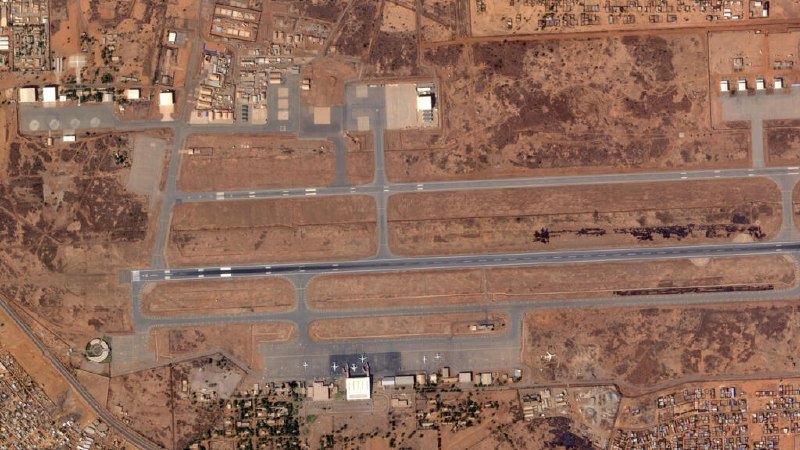
Sustained gunfire and explosions echoed across several districts of Niamey in the early hours of 29 August 2026, with witnesses reporting that the loudest bursts were concentrated near a military base at Diori Hamani International Airport, the same compound jihadists have attacked twice this year. By 06:33 UTC France 24 had confirmed the reports; by 08:27 UTC the Status-6 open-source channel, relaying a thread from the conflict-research account casusbellii, was describing the situation as an apparent ongoing coup attempt and promising running updates. The shooting has not been publicly claimed by any faction, and the junta in Niamey has, according to the available source items, not issued a public statement at the time of writing.
What matters here is less the gunfire itself than the political vacuum around it. Niger is already run by a military government that took power in July 2023, has spent the subsequent three years in open rupture with the Economic Community of West African States (ECOWAS), and has bound its foreign and security policy tightly to Mali and Burkina Faso through the Alliance of Sahel States (AES). A second seizure of power inside that junta would not be a routine reshuffle; it would be a stress test of a military-led order that has bet its legitimacy on anti-Western sovereignty and on a Russian-aligned security partnership, and that has yet to demonstrate it can deliver security inside its own capital.
What we know from Niamey
The most detailed public account remains France 24's, datelined 29 August 2026: residents reported hearing sustained gunfire and explosions in Niamey overnight, with the activity clustered around a military base at the international airport that has been targeted twice this year by jihadist groups. The Africa Intelligence Telegram relay, posted at 06:00 UTC the same morning, used near-identical language, calling the bursts "sustained" across "several areas" of the capital and sourcing the account to witnesses on the ground. Status-6's casusbellii thread, picked up at 08:27 UTC, escalated the framing to an "ongoing coup" without yet naming a perpetrator or a putschist platform.
Three things are worth holding onto. First, the geographic concentration near the airport base, which is also the seat of Niger's air power and the principal logistics hub for the junta's external partners, suggests an internal target rather than a jihadi infiltration; the jihadist pattern this year, by contrast, has been dispersed, opportunistic, and rural. Second, no side has so far claimed responsibility. In Sahelian coup cycles, the silence in the first hours is typically broken either by a uniformed spokesman reading a communique on state television or by a putschist colonel posting a video from a barracks; neither had appeared in the available source items by mid-morning UTC. Third, the reporting chain (France 24, Africa Intelligence relay, Status-6) is consistent on the basic facts and divergent only on framing, which gives the underlying event reasonable confidence while leaving the political interpretation open.
The junta's isolation problem
A coup attempt inside Niger's junta does not land on a blank slate. The military government led by General Abdourahamane Tchiani has spent the three years since the July 2023 takeover pulling the country out of the Western security architecture: out of the Francophone West African monetary framework that anchored Niamey to Paris, out of cooperation agreements with European special forces, and out of the political community of ECOWAS, which imposed heavy sanctions and threatened intervention before settling into a frozen standoff. In its place Niamey has leaned on Bamako and Ouagadougou through the Alliance of Sahel States, and on Russian private military and training presence that has expanded visibly since 2023.
That posture creates two structural vulnerabilities. The first is internal: a junta that derives much of its legitimacy from the claim that it ended a corrupt civilian order has a thin domestic cushion when its own officers begin to dispute the succession. The second is external: with ECOWAS leverage reduced to non-military pressure and French and American bases gone or winding down, the principal remaining security partners are the AES allies and Russian contractors, neither of which has a demonstrated capacity to stabilise a Sahelian capital in the middle of a firefight. A successful putsch would therefore not just replace one general with another; it would expose how shallow the sovereigntist project's institutional roots are. A failed putsch would, by the same logic, give the existing junta a usable internal-enemy narrative to consolidate further.
A regional pattern, not a one-off
The Sahel has now seen a dense clustering of military takeovers in a short window: Mali in 2020 and again in 2021, Guinea in 2021, Burkina Faso in 2022, and Niger in 2023, with Chad's own constitutional succession in 2024 sitting at the edge of the same pattern. What began as a wave of coups has hardened into an explicit bloc of military-led governments that recognise one another, coordinate on sanctions resistance, and have moved toward a joint political project through the AES. That is the context in which Niamey is now being tested: the question is whether the bloc can absorb a shock inside one of its three capitals, or whether the shock reveals that the coordination has been personality-driven and brittle.
The structural reading is that what is now called the Sahelian turn is less a coherent ideological project than a convergence of domestic grievances, anti-Western sentiment, and a Russian and Turkish commercial and security presence willing to fill the space ECOWAS and France used to occupy. A coup attempt inside Niamey tests that convergence from the inside out. If the AES partners close ranks quickly and the Russian and Turkish security footprint helps stabilise the capital, the bloc emerges more cohesive. If the partners hedge, or if the putschists find a foreign backer, the bloc fragments along the same lines that defined the earlier wave.
What to watch next
The first-order signal is communique-shaped. Either a Niamey-based spokesman will read a statement on state television claiming an attack has been repelled and ordering calm, or a rival officer will post a video declaring that the existing leadership has been removed. Until one of those appears, the situation sits in the ambiguous window in which rumours move faster than facts and armed factions jostle for control of the radio station, the airport, and the presidential guard.
The second-order signal is regional. Mali's junta in Bamako and Burkina Faso's leadership in Ouagadougou have direct incentives to back the existing Niamey order, partly out of bloc solidarity and partly because the alternative is to legitimise putschs that could be turned on them. Any rapid public statement from Bamako or Ouagadougou in the next 24 to 48 hours will be read as a tell. A statement from Moscow, either directly or through the Wagner-era successor networks now operating in the Sahel, will be similarly loaded; silence from those quarters would itself be informative.
The third-order signal is economic and humanitarian. Niger is landlocked, heavily aid-dependent, and exposed to the wider Sahel insurgency that has displaced populations across the Liptako-Gourma tri-border region. A prolonged power struggle in Niamey would compound those pressures in ways that fall hardest on civilians, not on the officers contesting the capital.
What the sources do not establish
The available source items are consistent on the basic facts: gunfire, explosions, witnesses, an airport-adjacent military base, and the framing of an apparent coup attempt. They do not identify a putschist faction, name a commander, or carry a statement from the Niamey junta. They do not specify casualty figures, and they do not establish whether any part of the airport base has been taken or remains under loyalist control. Until a communique or an independent wire dispatch with on-the-ground reporting fills those gaps, the responsible read is that a serious confrontation is underway inside the Nigerien capital and that the political outcome is genuinely open.
Desk note: Monexus is framing this as an internal-juntas stress test rather than as a jihadi attack, on the geographic evidence in the available sources. Coverage will be updated if a communique or a named putschist platform emerges in the next 24 hours.
Wire provenance
This editorial synthesis draws on the following public wire/social posts:
- https://www.france24.com/en/africa/20260829-gunfire-and-explosions-heard-near-military-base-in-niger-s-capital
- https://t.me/france24_en/18404
- https://t.me/africaintel/15222
- https://t.me/osintlive/567880
- https://f24.my/C7zi.g