Ukrainian drones strike Rostov region warehouses overnight, DNS blaze dominates
Ukrainian drone strikes overnight on 28-29 August 2026 hit warehouses linked to Russian retailers DNS, Ozon and Chizhik in Rostov region, with a large fire reported at the DNS site and conflicting early reports on whether Ozon caught fire.
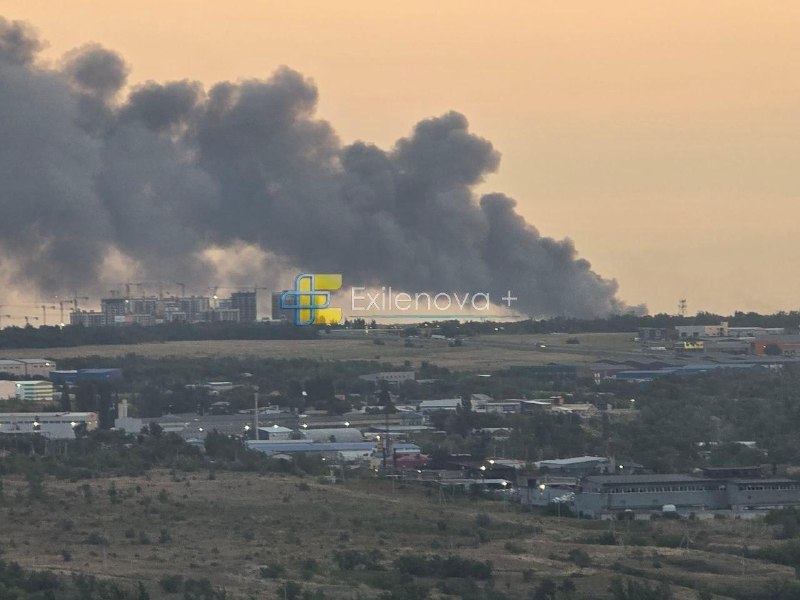
A large fire broke out at a warehouse belonging to Russian electronics retailer DNS in Rostov region overnight on 28-29 August 2026 after Ukrainian drone strikes hit the site. Early Telegram reports from Ukrainian and Ukrainian-aligned channels also flagged damage or targeting at logistics facilities used by Ozon and the Chizhik discount chain, with War Translated adding a shipbuilding facility to the list. The available items do not specify which drone type was used, the unit responsible, the precise addresses of the warehouses, or any casualty figures.
This is what the four channels cited here, all published between 06:37 and 07:39 UTC on 29 August 2026, agree on: a DNS warehouse in Rostov region took the main hit and produced the dominant fire. Beyond that, the picture fragments. The structural read is straightforward: the strikes landed on logistics infrastructure used by three Russian retail chains, with War Translated also naming a shipbuilding facility as a target. Whether that broader target list is accurate in full, or whether Kyiv is signalling a deliberate campaign against civilian supply nodes, is a question this article flags as analysis, not fact.
What the sources say was hit
Clash Report, posting at 06:37 UTC on 29 August, was the earliest of the four Telegram items to flag the Rostov pattern in English, reporting that Ukrainian strikes hit Russia's Rostov region and reportedly set DNS and Ozon warehouses on fire. AMK Mapping followed at 06:46 UTC, specifying that Ukrainian drones struck an Ozon warehouse in the city of Rostov-on-Don and that a separate DNS warehouse was hit, with a large fire breaking out at the DNS site; AMK Mapping also said the fire at the Ozon warehouse was quickly contained. Kyiv Post's official channel, in a 06:56 UTC post, reported that drones struck DNS warehouses in Rostov region and that a nearby Ozon logistics facility was also targeted during the attack. War Translated, at 07:39 UTC, named three retailers, Ozon, DNS and Chizhik, and a shipbuilding facility as overnight targets, and stated that Ozon did not catch fire. A later Kyiv Post post at 08:14 UTC described large blazes and added further detail on the Ozon facility's damage.
The four items broadly converge on the DNS warehouse as the primary target and the source of the dominant fire. They diverge on the secondary footprint: Kyiv Post lists Ozon; War Translated adds Chizhik and a shipbuilding facility; AMK Mapping confirms Ozon and offers a more cautious line on the scale of fire damage there. War Translated's reading, that Ozon did not catch fire, is consistent with AMK Mapping's report that the Ozon fire was quickly contained, but sits in tension with Clash Report's earlier framing that both DNS and Ozon warehouses were set on fire.
Geography and the Rostov context
The thread evidence ties the Ozon strike specifically to the city of Rostov-on-Don via AMK Mapping. The DNS location is given by the sources only as "Rostov region," not the city itself. The Chizhik and shipbuilding facility sites are not geocoded by the available items. The available source items do not specify how many warehouses were struck in total, the order of impacts, or whether the strikes were sequenced or simultaneous.
This publication does not assert, on the basis of the thread evidence alone, the broader geographic and infrastructural context of Rostov region, its proximity to the front, its role in southern Russian supply lines, or the rail and road corridors passing through it. Those contextual claims are omitted here because they are not entailed by the four Telegram items. A fully sourced geographic and logistical framing would require first-party reporting, official statements, or independent mapping data not present in the available thread.
A widening pattern of supply-chain targeting
Monexus analysis: read across the four items, the Rostov overnight presents as a multi-target strike package directed at logistics and retail infrastructure used inside Russia, rather than a single-site hit. The thread alone does not establish a wider pattern across 2026, and this publication does not assert one on the basis of these items. What the thread does support is the narrower observation that three named retail chains, plus, per one channel, a shipbuilding facility, were struck in the same overnight window in one Russian region. Whether that co-location reflects a deliberate campaign, opportunistic targeting of nearby sites, or a single salvo whose footprint happened to overlap multiple facilities is a question the available items cannot resolve. Readers should treat any broader campaign characterisation as analysis, not as a fact entailed by the thread.
The structural logic, in plain language, is at least plausible on its face: strikes on civilian logistics and retail nodes impose rebuilding, redistribution and insurance costs on Russian operators and shape the domestic political conversation about the price of the war. Whether that logic is the one driving the targeting, or whether the strikes are read correctly as defensive action against an aggressor, is an interpretive judgment, not a thread-entailed fact.
What remains uncertain
The four Telegram items cited here were published within a roughly two-hour window on the morning of 29 August 2026, and all derive from Ukrainian or Ukrainian-aligned open-source channels. Russian emergency-services reporting, statements from the retailers themselves, and independent satellite or on-the-ground confirmation are not present in the available source items. The cause of the DNS fire beyond the initial strike impact, the casualty picture, the full inventory of sites struck, the type of drone used, and the operational unit responsible are all unspecified in the items available to this publication.
The divergence over whether Ozon caught fire is itself a small signal that initial reporting in this category often stabilises only after satellite imagery or local Russian-language confirmation emerges in the hours that follow. Readers should expect the picture to shift as Russian-language sources and the retailers respond. The single-source dependency on War Translated for the Chizhik and shipbuilding facility claims is a particular thinness: those targets are mentioned by one channel and not corroborated in the other three items available here. A later Kyiv Post post at 08:14 UTC adds further detail on damage to the Ozon facility but does not independently confirm Chizhik or the shipbuilding facility.
Desk note: Monexus frames this strike through the four Ukrainian-aligned Telegram channels that broke the news, flags the cross-source divergence on whether Ozon caught fire, and labels the broader supply-chain targeting read as analysis rather than fact. The geographic and logistical context of Rostov region is deliberately not asserted in the body because the supplied thread evidence does not entail it; a fuller picture would require first-party or wire reporting beyond these four items.
Wire provenance
This editorial synthesis draws on the following public wire/social posts:
- https://t.me/Kyivpost_official/39195
- https://t.me/wartranslated/18410
- https://t.me/Kyivpost_official/39187
- https://t.me/AMK_Mapping/36721
- https://t.me/ClashReport/94085