Russia strikes a Kyiv warehouse; a single X post carries Moscow's UN-administration line
A Russian drone strike on a Kyiv-area warehouse killed at least 27 people on 29 August 2026. The same news cycle carried one X post, on a third-party feed, attributing a UN-administration formula to the Russian Foreign Ministry.
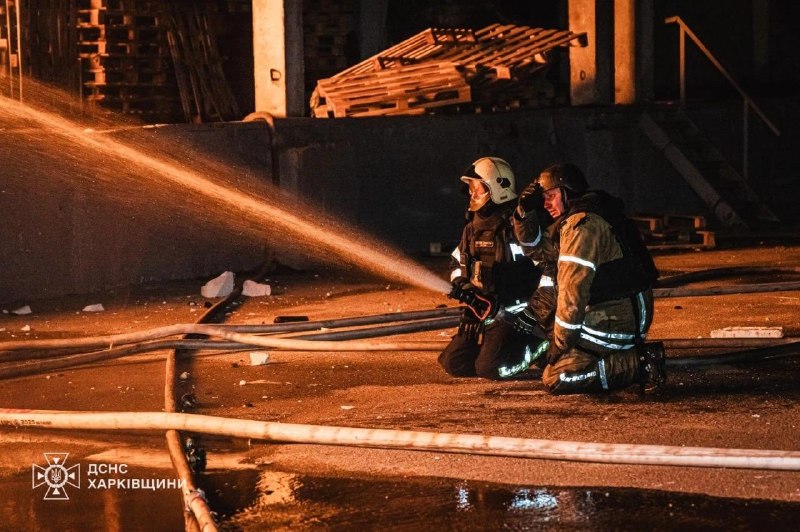
A Russian drone strike on a warehouse on the outskirts of Kyiv killed at least 27 people on 29 August 2026 and forced hundreds of residents to evacuate, according to Ukrainian authorities cited by Deutsche Welle and France 24. The blast set off a large fire and a chain of secondary explosions, sending a black plume over the capital's suburbs and drawing emergency crews from across the city.
The same news cycle carried a single claim, distributed via an X account called Sprinterpress, that the Russian Foreign Ministry regards the introduction of external administration over Kyiv under United Nations auspices as a possible route to a settlement of the war. The post carries no link to an official Foreign Ministry text, no document number, and no on-the-record Russian spokesperson, and this publication has not independently established that the formulation originated with the Russian state rather than with the feed itself. Read together, the two items compress the war's diplomatic paradox into a single news cycle: the same country alleged to be floating a trusteeship is, on the same day, the country striking the territory whose sovereign status that trusteeship would purport to settle. Whether that compression is a coordinated signal or a coincidence of timing in the wire feed is not, on the available evidence, a question this publication can answer.
What hit the warehouse, and what is known
Deutsche Welle's reporting on 29 August frames the strike as a Russian attack that ignited a warehouse complex and triggered a fire large enough to require mass evacuation of surrounding residential blocks. France 24, citing Ukrainian authorities, gives the same death toll and the same evacuation scale.
The two outlets converge on the essentials: at least 27 dead, hundreds evacuated, the target a logistics facility on Kyiv's periphery. France 24 explicitly identifies the weapon as a drone; DW's headline language refers more broadly to a "Russian strike." Neither report, in the items available to this desk, specifies the operator unit, the drone type, or the contents of the warehouse. The available source items do not specify whether the facility had civilian, military, or dual-use status, and the cited dispatches do not name a Russian formation responsible.
DW's first published headline on the morning of 29 August carried the word "dozens"; the same outlet's subsequent headline in the same window fixed the floor at 27. France 24 carried the same number in both its wire piece and its English Telegram channel, with the Telegram post timestamped 2026-08-29T10:04 UTC and the wire article timestamped 2026-08-29T08:57 UTC. That is the figure on the public record at the time of writing; it is a floor, not a final tally, and floors in wartime reporting on both sides have a habit of moving.
The Sprinterpress line on UN administration
The diplomatic item is thinner than the strike reporting. The only evidence in the thread is a single post on X by the account @SprinterPress, timestamped 2026-08-29T10:34 UTC, which attributes to "the Russian Foreign Ministry" the view that "the introduction of external administration in Kyiv, under the auspices of the UN, could pave the way for a settlement in Ukraine." The post contains no quotation marks around the formulation, no link to a Foreign Ministry press release, no document number, and no named spokesperson. The feed itself is a third-party account, not an outlet that this publication has independently authenticated as a wire of Russian state communications.
That provenance matters. External administration, in UN practice, is the legal architecture used when a state loses effective control over its own government, its territory, or both. Trusteeship is not mediation. It is the substitution of one sovereign authority for another, and in the post-1945 settlement it has been reserved for territories whose status the international community had agreed was, in some fundamental sense, in question. The substantive content of the claim, if accurate, is significant. The sourcing supporting it, on this desk's reading, is not yet strong enough to treat the formulation as a confirmed Russian state position rather than as a claim about one.
The natural reading of a single unsourced X post attributing a sovereignty-rearrangement formula to a foreign ministry is to wait for the text. The natural reading of the same post, in a news cycle in which the same actor is striking Ukrainian civilians, is that something in Moscow wants the formulation in circulation. Both readings are compatible with the evidence; neither is forced by it. This publication treats the claim as an attributed-but-unverified position pending an official Russian text or a Security Council document.
The structural frame
The two items sit inside a familiar pattern of the war's late stage. Battlefield lines on the ground have largely frozen into a grinding positional fight, while the contest over the legal and political status of Ukrainian territory is escalating in parallel. Russian negotiating openings in recent years have increasingly emphasised the international architecture of the settlement rather than the battlefield facts: who sits at the table, who speaks for whom, what institution certifies the outcome. The shift is structural. A settlement certified by a UN body in which Russia retains veto power is, in effect, a settlement Russia cannot lose, which is the underlying logic any genuine Moscow proposal on this architecture has to clear.
The Monexus analysis is straightforward on the broader pattern. A proposal that the aggressor's own institution appoints the administration for the victim is not a de-escalation. It is the codification, in the language of international law, of the outcome the aggressor has been unable to win on the ground. The analytical question for the next forty-eight hours is not whether that framing is consistent with Russia's posture; it is whether the Sprinterpress post represents an opening position, a leaked trial balloon, or an unattributed formulation that has acquired circulation it does not yet deserve.
What to watch on Monday
Three watchpoints follow from the 29 August reporting. First, the casualty figure. Western wire reporting converged on 27 by mid-morning UTC; fuller numbers will be published by Ukrainian authorities over the weekend, and the floor has historically risen as search teams reach deeper into the warehouse footprint. Second, the diplomatic reaction. The trusteeship formulation appeared on a sympathetic X feed; whether it represents an opening position, a leaked trial balloon, or a baseline against which a softer Russian proposal will later be measured is not specified in the available source items, and this publication has not independently established which of those three readings the Kremlin intends. Third, the Security Council itself. If Russia formally tables text calling for UN-led administration over a member state, the Western P3 will circulate a counter-text within hours, and the procedural fight over who gets to put the issue on the Council's agenda will itself be the substance of the next forty-eight hours. As of the cited reporting, no such formal text is in the public record.
The deeper risk is that the warehouse and the UN-administration line are read in separate memos. They are not, in this publication's reading, separate in motive. One is the action the Russian armed forces are taking, on 29 August, against the civilians that the government in Kyiv is responsible for protecting. The other is the argument being circulated in international forums about why that government has, in some formulations, no standing. The two communications are aimed at the same audience: foreign capitals still trying to decide whether the war is at a negotiating inflection or in an open-ended phase of escalation. The 29 August answer from Moscow, on the record in the air over Kyiv and ambiguous on the diplomatic feed, is that it intends to keep doing both. The record on which of those two tracks is the substantive Russian position is, for now, thin.
What remains uncertain
The source items are unusually thin on the warehouse's specific function, the precise drone type used, and the identity of any unit involved. The available dispatches do not specify whether the facility was a known logistics node, a grain store, or a mixed-use industrial site; Ukraine's air force typically publishes interception and attribution data several hours after an incident, and that data is not yet in the cited reporting. The diplomatic item is, on the available evidence, a single X post by a third-party feed attributing a sovereignty-rearrangement formula to the Russian Foreign Ministry without quotation, document number, link, or named spokesperson. Readers should treat the warehouse strike as a confirmed event on the public record and the trusteeship formulation as an attributed-but-unverified position pending an official Russian Foreign Ministry text or a Security Council document.
Desk note: Monexus treated the strike and the trusteeship framing as parts of a single news event, not two, while flagging the diplomatic item as a single X post whose provenance this publication has not independently authenticated. The wire led with the warehouse; the diplomatic line rests on a thinner record.
Wire provenance
This editorial synthesis draws on the following public wire/social posts:
- https://www.dw.com/en/russian-strike-on-warehouse-near-kyiv-kills-dozens/a-78556008?maca=en-rss-en-all-1573-rdf
- https://www.dw.com/en/russian-strike-on-warehouse-near-kyiv-kills-at-least-27/a-78556008?maca=en-rss-en-all-1573-rdf
- https://www.dw.com/en/russian-strike-on-a-warehouse-near-kyiv-killed-at-least-27-people-and-forced-hundreds-more-to-evacuate/a-78556008?maca=en-rss-en-all-1573-rdf
- https://www.france24.com/en/europe/20260829-russian-strike-on-warehouse-near-kyiv-kills-at-least-27-people-hundreds-evacuated
- https://t.me/france24_en/18406
- https://x.com/SprinterPress/status/2093648457160446304
- https://www.dw.com/en/russian-strike-on-warehouse-near-kyiv-kills-dozens/a-78556008?maca=en-rss-en-all-1573-rdf
- https://www.dw.com/en/russian-strike-on-warehouse-near-kyiv-kills-at-least-27/a-78556008?maca=en-rss-en-all-1573-rdf
- https://www.dw.com/en/russian-strike-on-a-warehouse-near-kyiv-killed-at-least-27-people-and-forced-hundreds-more-to-evacuate/a-78556008?maca=en-rss-en-all-1573-rdf
- https://www.france24.com/en/europe/20260829-russian-strike-on-warehouse-near-kyiv-kills-at-least-27-people-hundreds-evacuated
- https://t.me/france24_en/18406
- https://x.com/SprinterPress/status/2093648457160446304