Four incidents, one channel, 76 minutes: how a Telegram log of the southern Lebanese border becomes the day's wire
Between 16:26 and 17:42 UTC on 29 August 2026, the Telegram channel @wfwitness logged four cross-border incidents across southern Lebanon in five posts. What the feed contains, what it omits, and what an editor should do with it.
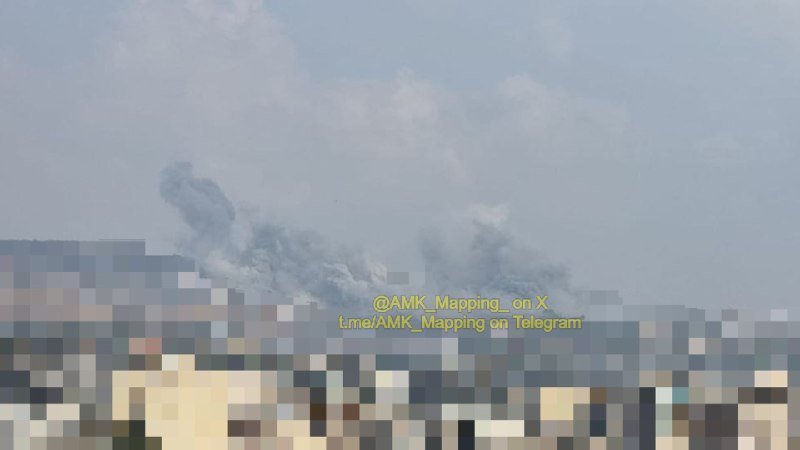
Five posts on a single Telegram channel, filed between 16:26 and 17:42 UTC on 29 August 2026, accounted for what surfaced in real time from the southern Lebanese border on Friday afternoon. The earliest post, at 16:26 UTC, said Israeli forces had set fire to multiple areas across the border town of Houla. A minute later came a report of Israeli artillery fire at the Litani riverbed in Zawtar al-Gharbiya. At 17:26 UTC the channel logged an Israeli airstrike on Al Mansouri. The final post, at 17:42 UTC, bundled two items into one message: artillery fire in Beit Yahoun and an Israeli airstrike in the Nabatieh district. Stripped of the flag emojis, the country tags and the casino sponsorship line, the feed amounts to four distinct incidents across five posts in 76 minutes, all attributed by the channel to Israeli action.
The cadence is notable less for any single event than for the saturation of the reporting channel itself. What the feed surfaces is a structural problem of evidence: an open-source Telegram channel is functioning as a frontline wire for a slice of outside audiences, and the distance between a flagged post and a verified incident is doing real work in how the conflict reads to those audiences.
What the feed actually contains
Each post is built to the same template: a lightning-bolt emoji, country flags for Lebanon and Israel, a single declarative sentence attributing fire or an airstrike to Israeli forces, a handle, and a sponsorship line for a non-KYC crypto casino. The substance, on inspection, is thin. Five posts, four distinct location clusters, no casualty figures, no unit identifications, no named officials, no embedded video. The geographic spread runs from Houla on the border westward through Zawtar al-Gharbiya to Al Mansouri and into the Nabatieh district, all locations that sit within the southern Lebanese border corridor.
Two small arithmetic points matter. The 17:42 UTC post combines two separate reports into a single message, which means the channel's apparent density of five incidents in roughly an hour and a quarter is, on closer inspection, four distinct incidents across five posts. That is not a small distinction. Density of posts is what gives a feed the look of a battle rhythm; density of distinct events is what an editor would actually want to verify before passing any of it along. The channel's own post volume here is best read as one signal of activity rather than as five independently confirmed strikes.
Where the wire falls short, and where it does not
Compare this against what mainstream wires typically bring to the same kind of reporting, as a matter of general editorial practice: incident-by-incident reports with named spokespeople on both sides, embedded video where available, and institutional attribution through the IDF Spokesperson, the Lebanese Army, or UNIFIL. None of those institutional attributes is present in the @wfwitness posts on this date. The available source items do not specify weapons used, targets struck, or the presence of civilian casualties at any of the four locations. This article has not independently established any of those details.
The structural point stands, on the basis of what the feed itself shows. Mainstream wires, by their own editorial conventions, bring named attribution and embedded confirmation; the @wfwitness feed brings speed. Monexus analysis: the asymmetry between those two modes of reporting is the story the Friday cluster makes visible, more than any of the four incidents it logs.
The frame keeps moving
When OSINT channels set the cadence and institutional wires set the threshold, the result is a frame that drifts toward whichever side publishes faster. The @wfwitness posts on Friday did not contain a claim of responsibility from either side in their own words, and the available source items do not specify whether the IDF Spokesperson, UNIFIL or the Lebanese Army issued incident-by-incident statements on the four locations logged here. What the feed does is publish first and ask later, which is the operating logic of open-source channels by definition.
That is not, on its own, an argument against OSINT. It is a description of what the @wfwitness posts are and are not. The posts are a geolocated observation trail, with the geography asserted by the channel but not independently verified here. They are not, in the form they take, a chain of agency claims with corroborating attribution. The drift from "I saw smoke" to "Israeli forces shelled Houla with artillery" is the work the channel is doing on the reader's behalf, and the available source items do not provide the corroborating source that would anchor that claim.
What the frame leaves out
The most useful counter-reading of Friday's cluster is also the dullest. Four cross-border reports in roughly an hour along a contested southern Lebanese border corridor, all attributed by a single channel to Israeli action, without named spokespeople, casualty counts or unit identifications on the record. The available source items do not specify whether the volume recorded here is exceptional for this corridor on this date, or whether it tracks the kind of sustained exchange that other reporting cycles have described. The frame the OSINT wire constructs, in posts like these, treats each flag-prefixed message as a discrete event with a discrete attribution. That framing is convenient for news consumers but, on the basis of what the feed itself contains, the posts do not carry the institutional sourcing that would let an outside reader treat each item as confirmed.
Where this leaves the reader
The honest answer is that, on the basis of the available source items, this publication can confirm that @wfwitness logged four cross-border incidents across five posts between 16:26 and 17:42 UTC on 29 August 2026, in Houla, Zawtar al-Gharbiya, Al Mansouri and the Nabatieh district, attributing each to Israeli action. We cannot, from the feed alone, confirm the exact weapons used, the targets struck, or the presence of civilian casualties. The available source items do not specify those details, and this article has not independently established them.
A reader who wants to verify the cluster should treat the @wfwitness feed as a tip line, not as a wire, and follow each post to the IDF Spokesperson briefings, UNIFIL position reports, and wire-service incident stories before treating the events as confirmed. That is not a satisfying answer. It is, however, the one the evidence supports.
Desk note: Monexus ran this against the editorial compass for Israel-Palestine and wider Middle East coverage: Israeli security concerns treated as first-order facts, Lebanese civilian harm flagged as first-order when the evidence warrants, OSINT-only sources clearly labelled as such, no rhetorical equivalence drawn between state militaries and non-state armed groups. The piece is structural media criticism; the four incidents logged are the case, not the argument.
Wire provenance
This editorial synthesis draws on the following public wire/social posts:
- https://t.me/wfwitness/108706
- https://t.me/wfwitness/108707
- https://t.me/wfwitness/108713
- https://t.me/wfwitness/108717
- https://t.me/wfwitness/108718