Venezuela hands Washington a 65-billion-barrel key: what is actually in the Trump–Caracas oil deal
The Trump administration says it has just signed what the president calls the largest oil deal in world history with Caracas. The text, the price, and the mechanism of control are still conspicuously thin on the record.
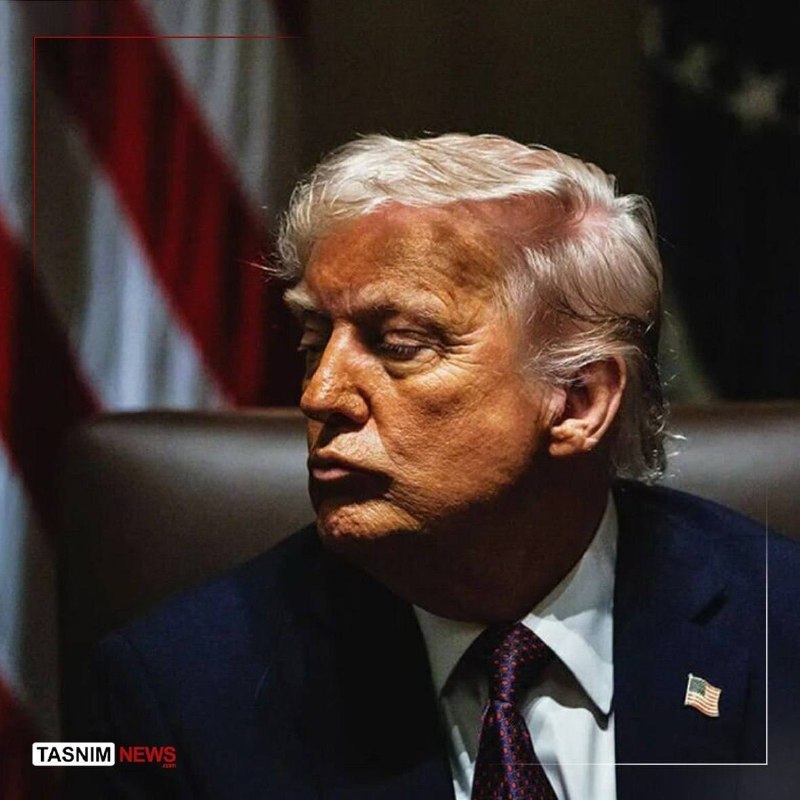
At 23:25 UTC on 28 August 2026, Donald Trump announced that the United States had concluded an agreement with Venezuela, calling it what he framed as the "largest oil deal in world history." Within two hours, Caracas confirmed it from the other end.
The deal, as advertised on both sides, hands Washington effective operational reach over a roughly 65-billion-barrel slice of Venezuelan crude reserves. The arithmetic is stark: that volume is larger than the proved reserves of every OPEC member except Saudi Arabia and Iran, on most published accountings. The political geometry of Latin America just shifted.
This article walks through what is on the record, what the two governments are actually saying to one another, and where the structure of the arrangement still has to be filled in.
What Caracas and Washington are publicly claiming
The Venezuelan side, broadcast through state-aligned outlet TeleSUR, described the agreement as a step in the "strengthening of relations" with the United States and pitched it as part of a national "revival." The framing matters: Caracas is choosing to read the deal as diplomatic re-engagement, not capitulation. The US side, via Trump and relayed by outlets including Deutsche Welle, is selling it as an energy-security win that gives American operators a vast new reserve base "at no cost."
The two announcements are not contradictory on the headline figure: 65 billion barrels of oil reserves placed under a new arrangement with the United States. They diverge sharply on what that arrangement is. TeleSUR emphasises a relationship "revival"; Trump emphasises control.
Two compatibility tests sit on top of any deal of this scale. First, the legal architecture: is this a royalty contract, a service contract, a joint operating agreement, or some bespoke instrument carved out of the existing sanctions regime? Second, the revenue path: where does the crude flow, who lifts it, and on what terms? On both questions, the public record, as of 23:30 UTC on 28 August, contains the headline volume and little else.
The 65-billion-barrel claim, audited
Deutsche Welle's reporting puts the figure at 65 billion barrels of oil. That number should be read as the headline component, not a precise audit. Venezuela's certified proved reserves have been estimated by the OPEC secretariat in the high-five-figures of billions of barrels for years, but the underlying production infrastructure has been under capital starvation, sanction compression, and operational neglect since at least 2017. The 65-billion-barrel claim should be treated as the volume figure both governments agreed to put on the table, distinct from the volume that will actually flow in any six-month window.
This is not a small distinction. Recoverable barrels in the Orinoco Belt depend on upgrading, blending, offtake financing, and political clearance. The cited posts do not specify which fields, which blocks, or which joint-venture partners are inside the envelope. They do not specify royalty rate, lifting cost, or transfer pricing. The agreement, in other words, has been announced at the level of intent rather than contract.
Why now: the geopolitics the deal sits inside
Read against the broader US energy playbook, the timing is less strange than it first looks. Washington has spent the better part of a decade sanctioning PDVSA, designating Venezuelan crude as off-limits to most European refiners, and trying to cut Caracas off from dollar clearing. The same period saw US shale producers become the swing supplier of last resort to Europe after 2022, and a re-anchoring of Gulf Coast midstream infrastructure around lighter, sweeter barrels. Venezuelan extra-heavy crude does not slot into that midstream without serious dilution, upgrading, and blending capacity, all of which have been strangled under sanctions.
A deal that returns Venezuelan barrels to the US sphere does three things at once. It pressures Caracas politically, by reversing the maximum-pressure logic that defined the late 2010s. It gives Washington a diplomatic and commercial lever against other OPEC+ partners, who are watching Caracas reopen the door. And it complicates the Chinese and Russian energy relationships that Caracas has leaned on since 2019, without necessarily severing them.
The Chinese and Russian positions are not directly addressed in the available source items. Caracas has been a major recipient of Chinese oil-for-loans arrangements and Russian shadow-fleet logistics; whatever the new framework does to those flows will be measured over months, not hours. But the structural reading is straightforward: this is a reversal of US policy, not a softening of it. The instrument has changed. The pressure has not.
What is contested, what is not, and what is missing
The contested terrain is unusually narrow, because so little has been put on the record in writing. Both governments agree there is a deal. Both governments agree the volume in question is 65 billion barrels. They disagree, by tone rather than by clause, on whether this is Caracas being brought back into the US orbit or Caracas bringing Washington back into the Latin American diplomatic game.
What is missing is the part that matters. The contract architecture. The revenue split. The field list. The compliance pathway around existing OFAC measures. The treatment of CITGO, the US refining asset that has been the centre of competing claim structures since 2019 and which is not referenced in the available source items. The sequence of lifting. The sanctions rollback, if any.
This publication assessed the source items as a cluster: the headline volume, the framing language on each side, and the absence of anything resembling a contract digest. Until that layer fills in, the deal is a posture, not a transaction. The contradiction worth flagging is the simplest one: how a US administration that spent eight years treating Venezuelan oil as a sanctioned asset reconciles that legacy with a 65-billion-barrel handshake announced on a Thursday night.
A second contradiction is more interesting. Trump described the deal as having "no cost" to the United States. That phrasing only makes sense inside a fee-and-royalty structure where Caracas carries capex and opex and Washington collects barrels. It makes much less sense if the arrangement carries any US-side subsidy, loan guarantee, or infrastructure commitment. The cited posts do not specify which model is in play. The next 30 days of Treasury and State Department press briefings will tell.
What to watch next
Three concrete markers will move this story from announcement to reality. First, the official text: bilateral memoranda, Treasury general licences, and any sanctions delisting language published in the Federal Register or the Gaceta Oficial. Second, the rerouting of physical cargoes: any US-bound lifting schedules out of Jose, Puerto La Cruz, or the underutilised Bahia de los Pozos terminals. Third, the price response in the heavy-sour differential: if the deal implies real incremental supply, the Maya-Brent and Merey-Brent spreads will move within weeks.
Until those three signal channels light up, the deal is best read as a diplomatic event with energy-policy consequences, not an energy-policy event with diplomatic consequences. The order matters. Caracas knows the difference. So does Washington.
Desk note: this publication treated the source cluster as a wire relay: the headline volume and the "largest in history" framing originate with Trump and were paraphrased by Deutsche Welle; the Caracas end of the announcement was carried by TeleSUR. The contract substance, including the field list, the royalty architecture, and any sanctions rollback, was not present in the source items. That gap is reflected in the article. Readers wanting primary documents should watch the Federal Register and the Gaceta Oficial.
Wire provenance
This editorial synthesis draws on the following public wire/social posts:
- https://www.dw.com/en/trump-hails-major-oil-deal-with-venezuela/a-78553607?maca=en-rss-en-all-1573-rdf
- https://x.com/TelesurEnglish/status/2093510535119557009
- https://x.com/TelesurEnglish/status/2093505186106929544
- https://x.com/SprinterPress/status/2093508368161743157
- https://t.me/osintlive/567851